
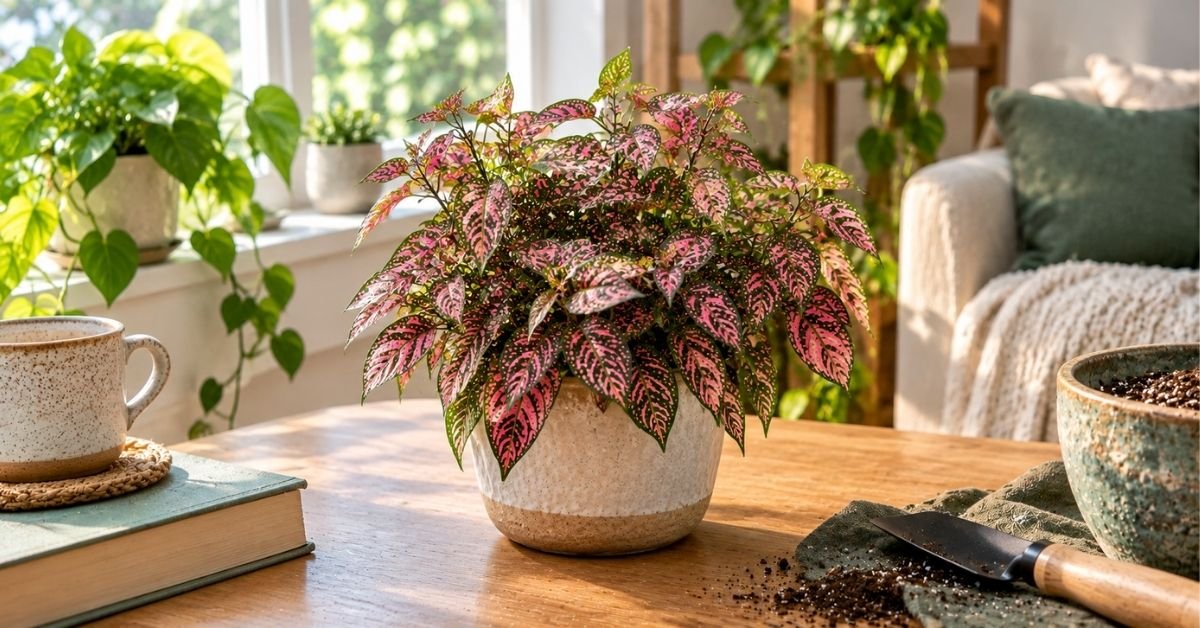
What is the pink polka dot plant? The pink polka dot plant, scientifically known as Hypoestes phyllostachya, is a vibrant tropical foliage houseplant celebrated for its brightly speckled, colorful leaves that bring striking pink, white, or red hues to indoor spaces.
I have grown these lively little plants for years. They add an instant burst of color to any room. If you want a houseplant that looks like a splash of confetti, this is the exact species you need. While they can look a bit delicate, they are surprisingly rewarding when you give them the right environment.
This guide covers everything you need to know about keeping your polka dot plant healthy, whether you are growing it on a bright windowsill or sourcing a new specimen locally.
Quick Care Summary for Skimmers
| Care Factor | Expert Recommendation |
| Light | Bright indirect light (Direct sun burns foliage; low light fades pink colors) |
| Watering | Keep evenly moist. Water when the top half-inch starts to dry |
| Humidity | Moderate to high (50%+ ideal; use pebble trays or humidifiers) |
| Propagation | Stem cuttings in water or potting soil |
| Pet Safety | 100% Non-toxic to cats and dogs (ASPCA confirmed) |
Indoor Care Requirements for Your Pink Polka Dot Plant
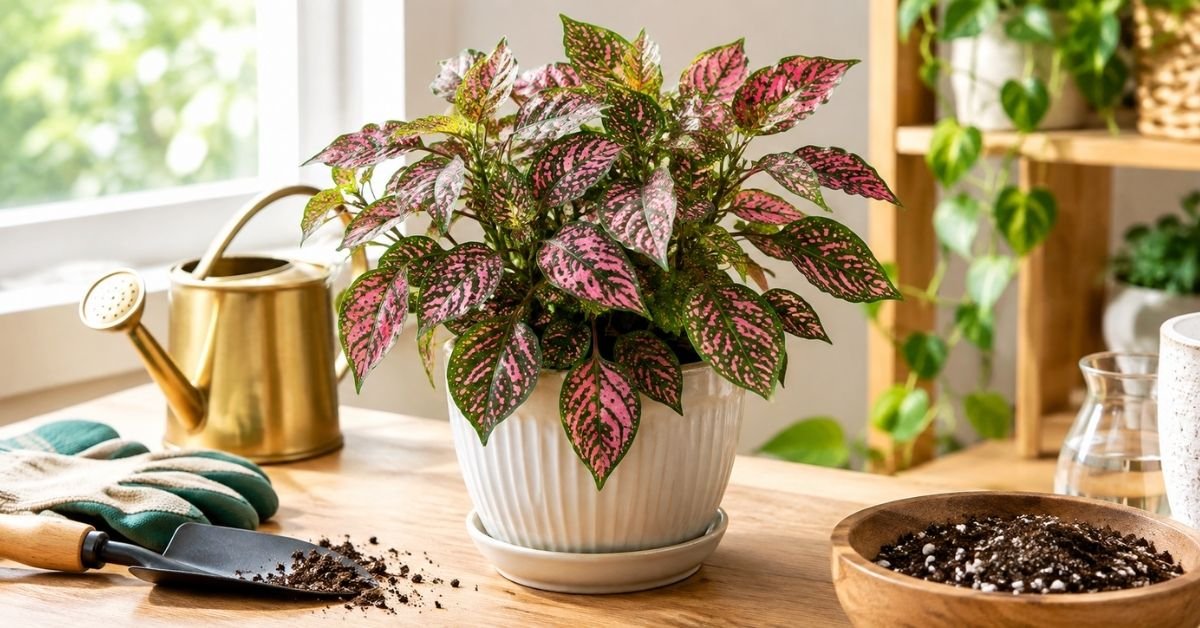
Growing a pink polka dot plant indoors comes down to mastering light and moisture. These plants originate from the shaded forest floors of Madagascar, South Africa, and Southeast Asia. They love warmth and ambient light.
You should place your pot near an east-facing or west-facing window where it can receive bright indirect sunlight for several hours a day. If the light is too dim, the bright pink patterns on the leaves will fade into a dull, muddy green. If the light is too harsh, the delicate foliage will scorch and develop dry brown patches.
Personal Pro-Tip: I keep my indoor polka dot plants about two feet back from a bright window. This protects them from the scorching afternoon sun while still giving them enough energy to maintain their bright neon coloration.
Sourcing a Pink Polka Dot Plant Near Me and Finding Local Nurseries
If you are trying to find a pink polka dot plant near me, your best local option is checking independent garden centers or local plant shops during the spring and summer growing seasons. Big-box hardware stores and grocery store floral departments also stock them regularly as inexpensive tabletop arrangements.
When you browse local inventory, inspect the plant closely. Look for vibrant, firm leaves without any drooping stems or sticky residue on the underside. According to Royal Horticultural Society (RHS) guidelines for purchasing indoor plants, you should always check the drainage holes at the bottom of the nursery pot to ensure the roots are healthy and not severely root-bound.
Personal Pro-Tip: If you cannot find a healthy plant locally, check specialized online houseplant retailers. They ship small starter plugs safely packaged in protective cardboard tubes straight to your doorstep.
How to Propagate a Polka Dot Plant at Home
Propagation is one of the most satisfying parts of owning a polka dot plant. Because these plants tend to get a bit leggy over time, you can easily use their pruning trimmings to create brand-new plants for free.
Take a sharp pair of clean pruning shears and snip a 4-inch stem tip right below a leaf node. Strip away the bottom leaves, leaving just a few small leaves at the top of the cutting. Place the stem in a small glass of filtered water or push it directly into a small pot filled with moist indoor potting soil. Keep the cutting in warm, humid conditions, and you will see new roots develop within two to three weeks.
Personal Pro-Tip: I like to place a clear plastic ziplock bag loosely over my soil-grown cuttings for the first week. This acts like a mini greenhouse, trapping the moisture and preventing the tender leaves from wilting before the roots form.
Tailoring Pink Polka Dot Plant Care in the UK and US
Managing pink polka dot plant care requires adjusting your routine based on your local climate and home environment. Whether you live in a chilly British flat or a temperature-controlled American home with central air conditioning, managing drafts is critical.
In the UK, indoor heating during long winters dries out the air significantly, which can cause leaf edges to crisp up. In the US, summer air conditioning systems have the exact same drying effect. Keep your pots away from drafty windows, exterior doors, and direct heating or cooling vents. Maintaining a steady indoor room temperature between 65°F and 75°F keeps the plant comfortable year-round.
Personal Pro-Tip: Grouping your polka dot plants together with other tropical houseplants creates a natural micro-climate. They share moisture and help each other cope with the dry indoor air caused by modern heating and cooling systems.
Common Mistakes When Growing Your Polka Dot Plant
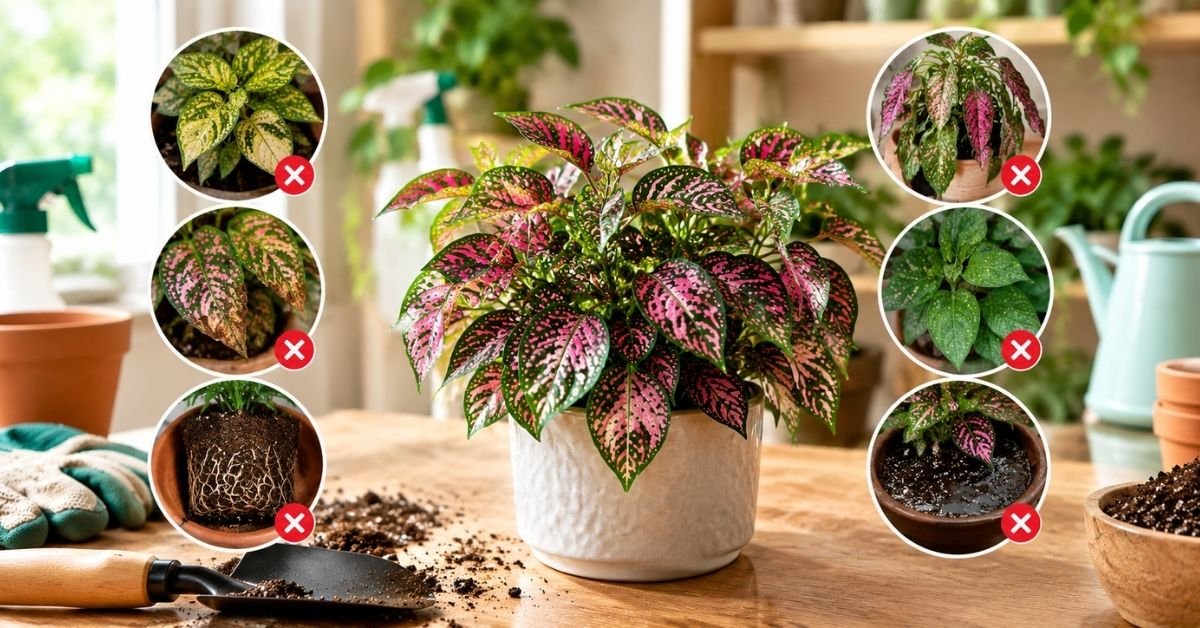
Even though these plants are widely available, many people struggle to keep them alive past the first few months.
The biggest mistake is letting the plant dry out completely. Unlike succulents, a polka dot plant is a dramatic green creature. If you forget to water it, the entire plant will collapse flat against the soil in a dramatic faint. While a thorough watering will usually revive it within hours, letting this happen repeatedly stresses the plant and causes premature leaf drop.
Another common error is ignoring the pruning shears. Left alone, Hypoestes phyllostachya grows tall, sparse, and floppy. You must pinch back the growing tips regularly to encourage the plant to branch out into a dense, bushy mound.
Personal Pro-Tip: Never use heavy garden compost or outdoor dirt for your indoor polka dot plant. Use a light, fast-draining indoor potting soil mixed with a handful of perlite to ensure optimal root health.
Troubleshooting Your Pink Polka Dot Plant Flower and Foliage Issues
Your plant will communicate its stress levels directly through its physical appearance.
Why Are the Leaves Fading to Green?
Fading color is a clear sign of insufficient light. The plant is producing extra chlorophyll to capture more sunlight. Move the pot closer to a bright, indirect light source.
Why Are the Leaves Turning Crispy and Brown?
Crispy edges mean the ambient humidity is too low or your home is too hot. Set up a pebble tray beneath the pot or run a small room humidifier nearby.
Will My Plant Produce a Polka Dot Plant Flower?
Yes. Mature plants will occasionally produce small, tubular, pale purple or pink flowers. While the blooms are not particularly showy, they are a normal sign of maturity. Many indoor gardeners pinch off these flower spikes so the plant redirects its energy into growing lush, colorful foliage.
Personal Pro-Tip: If your plant suddenly drops a massive amount of lower leaves, check your watering schedule. It is either sitting in standing water that caused root rot, or it suffered through a severe drought.
Polka Dot Plant Benefits and Pet Safety
Beyond adding stunning aesthetic value to your interior decor, growing indoor greenery offers proven mental health benefits. Tending to plants reduces stress, improves indoor focus, and brings a calming touch of nature into urban living spaces.
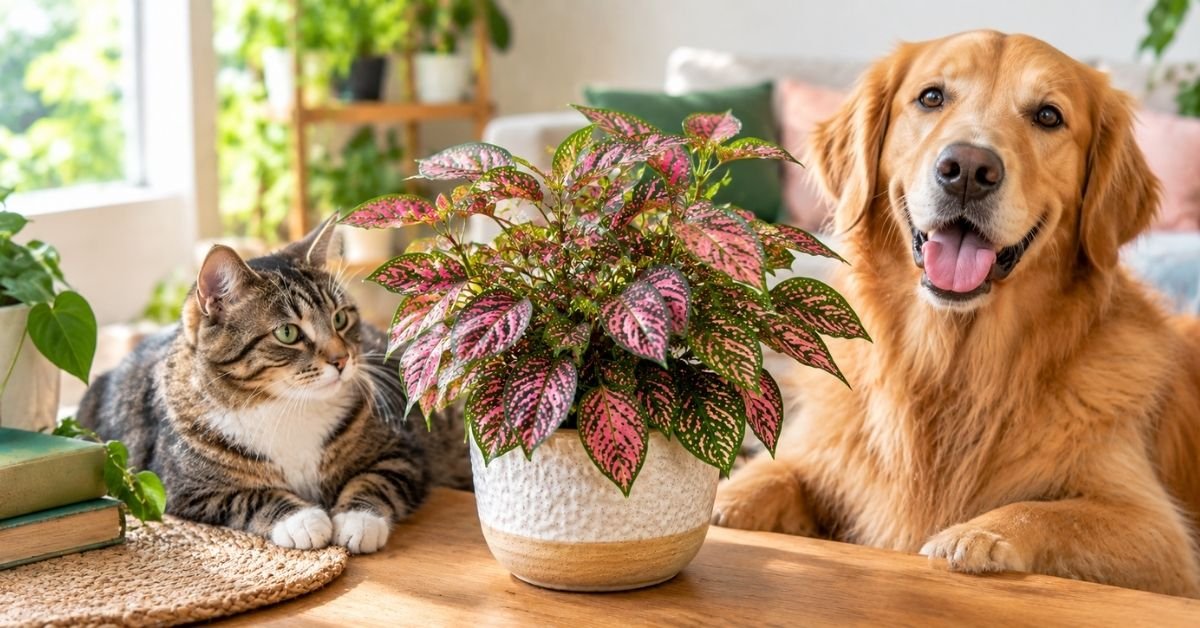
For pet owners, safety is always a top priority. According to the ASPCA animal poison control database, the polka dot plant is 100% non-toxic to cats, dogs, and horses. You can display this vibrant species safely without worrying about harming curious pets if they happen to nibble on a stray leaf.
Personal Pro-Tip: Even though the plant is entirely pet-safe, cats love to bat at the delicate stems. Place your pot on a secure plant stand or hang it in a bright corner to keep adventurous paws from knocking it over.
7 Frequently Asked Questions About Pink Polka Dot Plants
Q1: How often should I water my polka dot plant?
You should water your plant whenever the top half-inch of the potting soil feels dry to the touch, which usually translates to every 5 to 7 days depending on your indoor temperature.
Q2: Can I grow this plant outdoors?
You can grow it outdoors as a colorful annual in garden beds or containers during the summer, but you must bring it back indoors before autumn temperatures drop below 50 degrees Fahrenheit.
Q3: Why are the stems getting so long and skinny?
Long, skinny stems mean your plant is searching for light. Move it to a brighter spot and pinch back the top growth to encourage a bushier shape.
Q4: Should I mist the leaves to raise humidity?
Misting is generally inefficient and leaves sitting water on the velvety foliage, which can lead to fungal leaf spots. A room humidifier or pebble tray is much more effective.
Q5: How do I make the pink color brighter?
Provide your plant with bright, indirect sunlight and feed it with a balanced, water-soluble houseplant fertilizer diluted to half-strength once a month during the spring and summer.
Q6: Are polka dot plants perennials?
Yes, they are tender perennial tropical plants. While they often decline after a couple of years indoors, you can easily keep them going indefinitely by propagating new stem cuttings.
Q7: Can I grow these plants in water permanently?
While you can root cuttings in water easily, long-term growth requires nutrient-rich potting soil. Transfer your rooted cuttings to soil after a few weeks for the best results.
Final Thoughts on Growing Your Polka Dot Plant
Caring for a pink polka dot plant is an rewarding experience that transforms any indoor space with bright color. By balancing your watering routine, offering bright indirect light, and remembering to pinch back the stems, you can keep your Hypoestes thriving for years.
Have you tried growing a polka dot plant in your home yet? Let me know about your experience in the comments below, or drop a question if your plant is looking a little dramatic today. I would love to help you get your indoor garden looking its absolute best!

Amin Khalid is a professional horticulturist and the founder of LeafyWisdom. With a deep passion for home gardening and horticultural research, he specializes in providing practical, easy-to-follow care guides for indoor plants. Amin’s goal is to simplify gardening for everyone and help fellow plant lovers build their own thriving green spaces.

No responses yet