
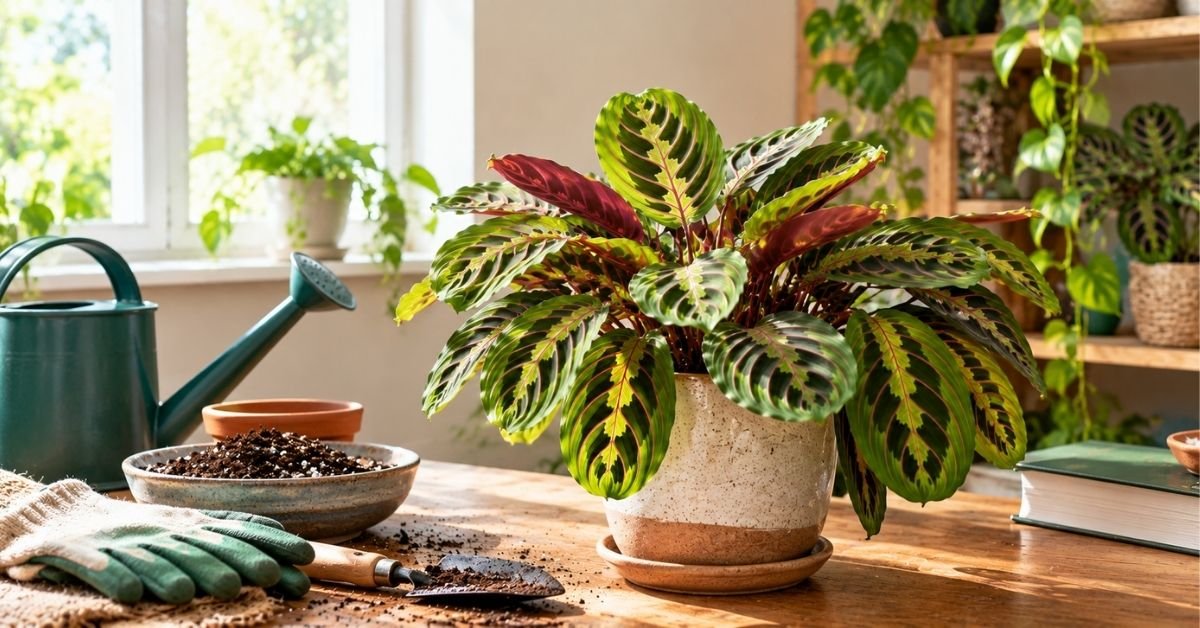
What is the secret to good prayer plant care? The best prayer plant care involves providing bright indirect light, keeping the potting soil consistently moist but never soggy, and raising the ambient humidity while strictly avoiding harsh faucet water.
I have grown dozens of these stunning tropicals in my own home. Their patterned leaves look like they were painted by hand. The real magic happens at night when the plant actually folds its leaves upward like hands coming together to pray. This daily movement is called nyctinasty. It is fascinating to watch.
But I will be completely honest with you. Getting a Maranta leuconeura to grow well in a typical American home takes a bit of strategy. Our houses are usually dry and drafty. This guide will show you exactly how to bypass those obstacles and create a perfect indoor environment for your plant.
Quick Care Summary for Skimmers
| Care Factor | My Expert Recommendation |
| Light | Medium to bright indirect light. Avoid direct afternoon sun. |
| Watering | Keep soil consistently moist. Water when the top 1 inch dries out. |
| Water Type | Distilled, filtered, or rainwater. Highly sensitive to tap minerals. |
| Humidity | High (50% or more). Use pebble trays or humidifiers. |
| Pet Safety | 100% Non-toxic to cats and dogs. |
Ideal Light Requirements for a Healthy Prayer Plant
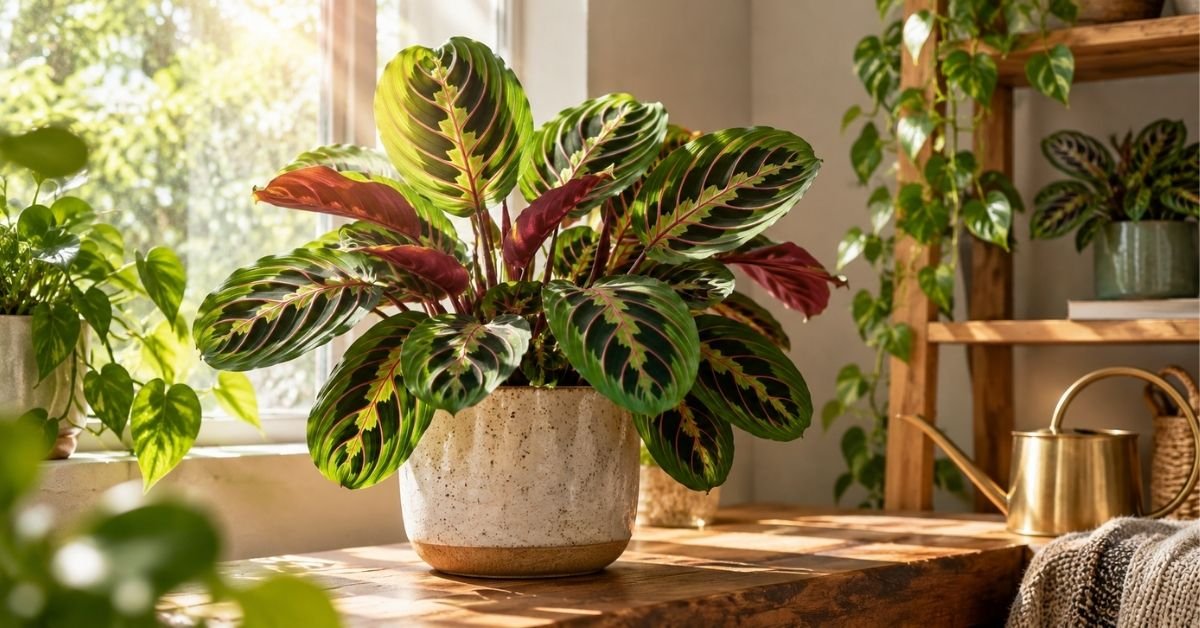
Getting the lighting right is the first step in successful prayer plant care. In their natural habitat, these plants grow on the floor of the Brazilian rainforest. They are completely shaded by the massive tree canopy above them.
This means your indoor Maranta needs bright indirect light. Placing the pot directly on a south-facing windowsill will burn the delicate foliage. The intense sun will literally bleach the vibrant red and green patterns right off the leaves. You want a spot near an east-facing or north-facing window where the light is gentle. If your only option is a bright southern window, pull the plant back a few feet or put up a sheer white curtain to diffuse the harsh rays.
Personal Pro-Tip: I like to test the light by holding my hand about 12 inches above the plant at noon. If my hand casts a sharp, dark shadow, the light is too intense. A soft, fuzzy shadow is exactly what you want.
How to Water Your Maranta: The Tricky Part of Prayer Plant Care
Watering is where most beginners struggle with this specific species. You must keep the soil slightly moist at all times without turning the pot into a muddy swamp.
Do not let the potting soil dry out completely. If the dirt pulls away from the sides of the plastic nursery pot, you have waited too long. I usually water mine when the top one inch of soil feels dry to the touch.
The type of water you use is just as important as the frequency. Prayer plants are incredibly sensitive to the fluoride, chlorine, and heavy minerals pumped through American municipal water systems. If you water a Maranta straight from the kitchen faucet, the edges of the leaves will quickly turn brown and crispy. You should use rainwater, distilled water, or reverse osmosis water.
Personal Pro-Tip: If buying distilled water gets too expensive, you can treat your own tap water. I fill an open pitcher from the faucet and let it sit on the counter for 24 hours before watering. This allows a lot of the chlorine to evaporate into the air.
Soil and Fertilizer Needs for Prayer Plants
A massive part of proper prayer plant care involves giving the roots oxygen. Heavy, compacted dirt will suffocate them.
Never use cheap outdoor garden dirt. You need a high-quality indoor potting soil mixed with amendments to improve drainage. My go-to recipe for the Maranta family is simple. I mix two parts standard indoor potting soil with one part perlite and one part peat moss. The peat moss holds onto just enough moisture, while the perlite ensures excess water drains out instantly.
These plants are moderate feeders. You should fertilize them every two weeks during the active spring and summer growing seasons. Use a balanced, water-soluble houseplant fertilizer diluted to half the recommended strength. Stop fertilizing entirely when winter arrives and the plant stops actively pushing out new growth.
Personal Pro-Tip: Flush the soil every few months. Take the pot to the sink and run distilled water through it for three minutes. This washes away leftover fertilizer salts that can burn the sensitive roots.
Humidity Hacks: Keeping Your Maranta Plant Happy
Tropical plants need humidity. The average US home sits at about 30 to 40 percent indoor humidity. Your prayer plant really wants that number to be closer to 60 percent.
Let us address a major myth right now. Misting your plant with a spray bottle does not work. Misting only raises the humidity for about ten minutes until the water evaporates. Even worse, leaving stagnant water droplets on velvety Maranta leaves invites fungal leaf spot diseases.
Instead of misting, use a pebble tray. Fill a wide, shallow saucer with small rocks and pour water over them. Set your plant pot on top of the rocks. The bottom of the pot must sit above the water line, not in it. As the water evaporates, it creates a constant, localized bubble of humidity around the foliage.
Personal Pro-Tip: If you have central heating running constantly in January, a pebble tray will not be enough. I always run a small ultrasonic room humidifier near my tropicals during the winter months to prevent crispy foliage.
The Nightly Movement Test: A Unique Maranta Feature
The nyctinasty movement is not just a fun party trick. It is a vital health gauge.
Healthy plants fold their leaves up at night to conserve moisture and protect themselves. When the sun comes up, they lower their leaves back down to catch the light. Watching this cycle is highly rewarding.
Personal Pro-Tip: If your plant suddenly stops folding its leaves upward at night, it is stressed out. Use this lack of movement as an early warning system. Check your watering schedule and light levels immediately if the leaves stay flat in the dark.
Common Mistakes in American Homes Ruining Your Prayer Plant
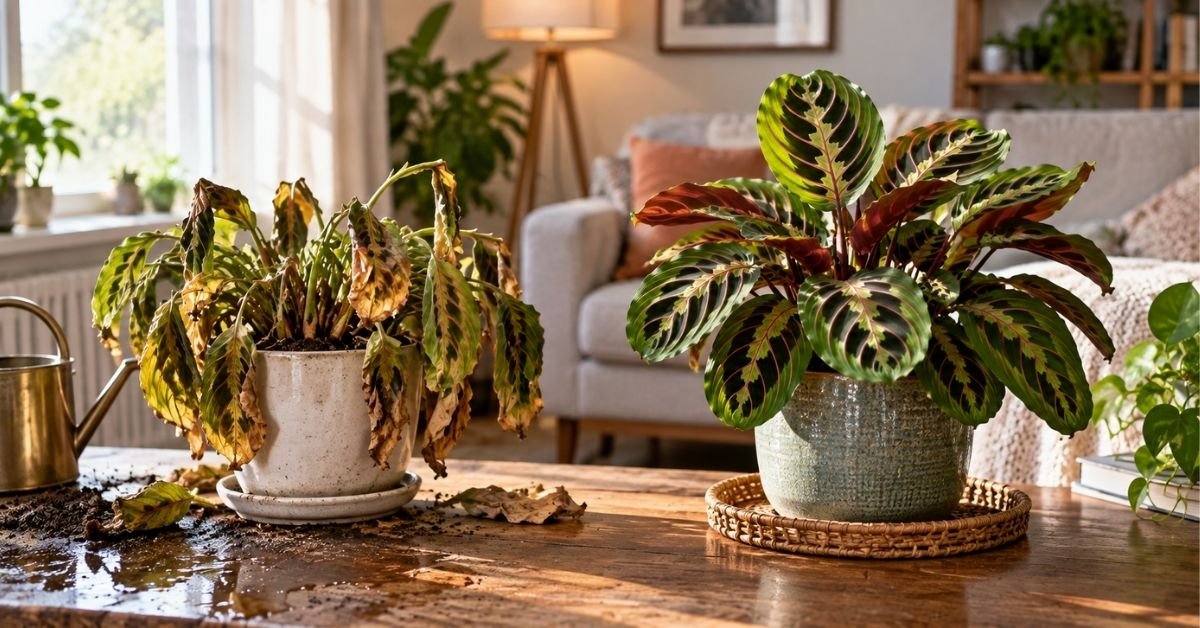
Our modern conveniences are the biggest enemy of prayer plant care.
The most common killer is the HVAC system. Air conditioning vents blast icy, dry air all summer long. Forced-air furnaces pump out hot, bone-dry air all winter. If your Maranta sits directly in the path of one of these vents, it will go into severe shock. The leaves will curl inward and drop off. Keep your pots at least five feet away from all climate control vents.
Another frequent mistake is confusing this plant with a Calathea. They look similar and both fold their leaves. True Marantas naturally grow outward and trail down over the edges of their pots. Many people think their plant is dying because it is flopping over, so they tie it up to a stake. Let it trail naturally. It looks beautiful hanging from a bookshelf.
Personal Pro-Tip: Temperature matters just as much as drafts. These plants hate the cold. If you live in a colder region, move the plant away from drafty windows at night so it stays in a comfortable 65 to 85 degree range.
Troubleshooting Prayer Plant Care Problems
Your plant will tell you exactly what it needs if you know how to read the signs.
Why Are My Prayer Plant Leaves Turning Yellow?
Yellow leaves usually indicate overwatering. Check the potting soil immediately. If it feels wet and smells foul, the roots are rotting. You need to let the soil dry out more between waterings. Yellowing can also be a sign of poor drainage. Make sure your pot has large drainage holes at the bottom.
What Causes Brown Crispy Edges on a Maranta?
This is the most common issue I see. Crispy brown edges mean the air is too dry or you are using harsh faucet water. Switch to distilled water and set up a humidifier right away.
Why Is My Prayer Plant Curling Its Leaves During the Day?
If the leaves look like little tightly rolled cigars during daylight hours, the plant is trying to protect itself. It is either severely underwatered, or the room is way too hot and bright. Check the soil moisture and move it to a shadier, cooler spot.
Personal Pro-Tip: Do not panic if a single old leaf at the base of the plant turns yellow and dies. This is part of the natural life cycle. Just snip it off near the soil line.
Toxicity Warning: Is the Prayer Plant Safe for Pets?
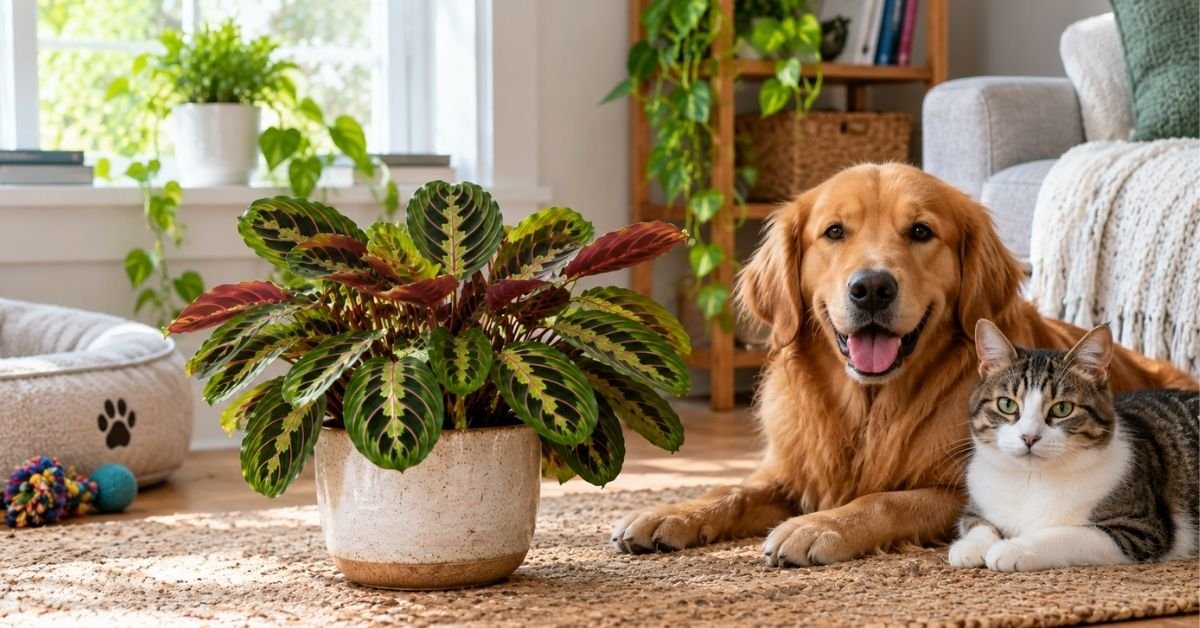
This is my favorite part about recommending this specific species.
According to the ASPCA animal poison control center, the Maranta leuconeura is completely non-toxic to cats, dogs, and horses. It is also safe to have curious toddlers around. If your cat decides to take a bite out of a leaf, the worst thing that will happen is a ruined leaf.
Personal Pro-Tip: Even though the plant is safe, eating large amounts of any plant material can give a cat an upset stomach. I still try to keep my most prized plants on high shelves just to protect the beautiful patterns from tiny teeth marks.
7 Frequently Asked Questions About Prayer Plant Care
Q1: Can I put my prayer plant outside?
You can only keep this plant outdoors year-round if you live in USDA Hardiness Zones 11 or 12. In the rest of the US, you can place it on a shaded patio during summer, but bring it indoors before temperatures dip below 60 degrees Fahrenheit.
Q2: How fast does a Maranta grow?
They are moderate to fast growers when kept in optimal conditions. During the warm spring and summer months, you can expect to see new leaves unfurling almost every week.
Q3: How do I propagate a prayer plant in water?
It is very easy to propagate a Maranta. Simply cut a stem just below a leaf node, place the stem in a glass of room-temperature water, and wait for white roots to grow over the next three to four weeks.
Q4: Does this plant bloom indoors?
Yes. A happy mature plant will occasionally shoot out tiny white or pale purple flowers on long stalks. They are very small and completely normal.
Q5: When should I repot my Maranta?
These plants have shallow root systems and do not mind being slightly cramped. You generally only need to repot them every two years when the roots start circling the bottom of the pot.
Q6: Why are the colors fading on my leaves?
Faded, washed-out colors are a direct result of too much sunlight. The intense light is bleaching the natural pigments. Move the pot to a darker corner of the room.
Q7: Can a prayer plant survive in a dark bathroom?
No. While they tolerate low light better than many tropicals, they still need some natural indirect sunlight to survive. A bathroom with a small frosted window is perfect, but a windowless room will eventually kill it.
Final Thoughts on Growing Your Maranta
Mastering prayer plant care takes a little bit of trial and error. Once you dial in your watering routine and figure out exactly which window provides the perfect lighting, these plants become incredibly rewarding to grow. You just have to listen to what the leaves are telling you.
I want to hear about your indoor gardening journey. Have you noticed your plant folding up at night yet? Drop a comment below and share your experience with us, or ask a question if your foliage is starting to look a little crispy. I would love to help you get your plant back on track!

Amin Khalid is a professional horticulturist and the founder of LeafyWisdom. With a deep passion for home gardening and horticultural research, he specializes in providing practical, easy-to-follow care guides for indoor plants. Amin’s goal is to simplify gardening for everyone and help fellow plant lovers build their own thriving green spaces.

No responses yet