
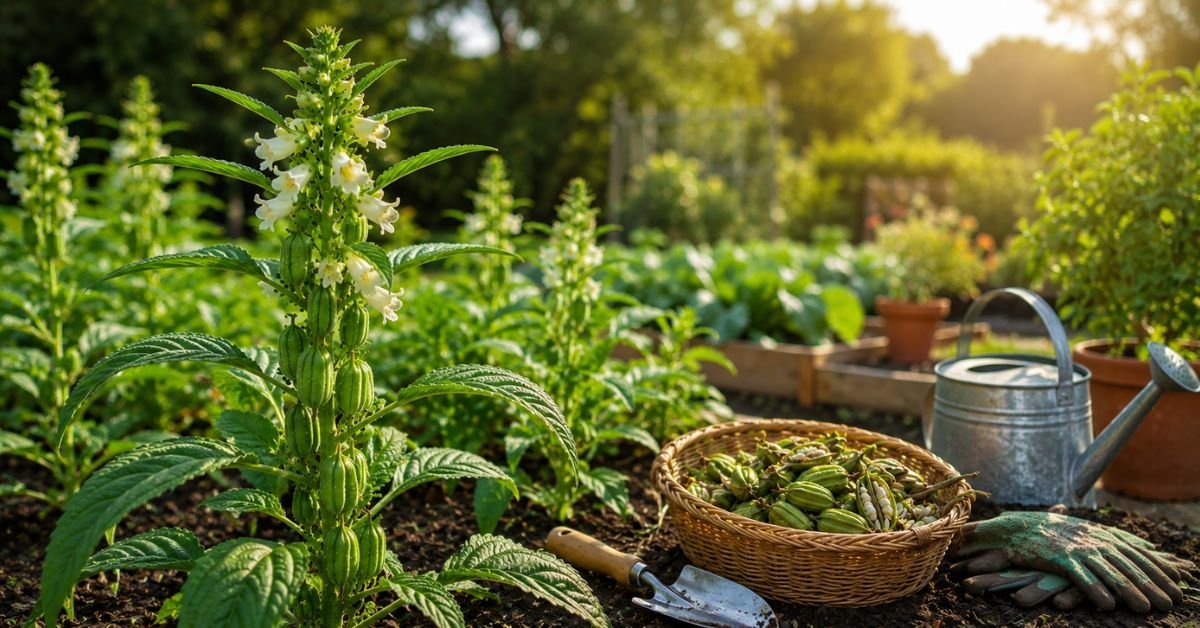
Ever wondered how those tiny sesame seeds on your favorite bagel actually grow? Mastering sesame plant care is surprisingly simple, even if you have never grown an oilseed crop before. In this guide, I will walk you through everything you need to know to grow, tend, and harvest your own fresh sesame seeds right in your home garden.
| Quick Care Facts | What You Need to Know |
| Botanical Name | Sesamum indicum |
| USDA Hardiness Zones | Zones 7–10 (Grown as a summer annual elsewhere) |
| Sunlight | Full sun (8+ hours of direct light) |
| Best Soil | Well-draining potting soil or sandy loam |
| Watering | Low. Loves dry spells between soakings |
| Pet Safety | Non-toxic to cats and dogs (ASPCA safe) |
I used to think sesame seeds were just something factory-packaged on top of my hamburger buns. That changed five years ago when I planted my first row of Sesamum indicum in my home garden plot.
It completely blew me away.
The plant produces gorgeous, pale pink and white tubular flowers that look like exotic bellflowers. Neighbors kept walking by asking what ornamental flower I was growing. I loved telling them I was actually working on my seasonal seed crop.
If you want a low-maintenance, heat-loving project this summer, this plant is an absolute blast. Here is my completely original, battle-tested routine for sesame plant care.
Understanding Sesame Plant Care Across US Zones
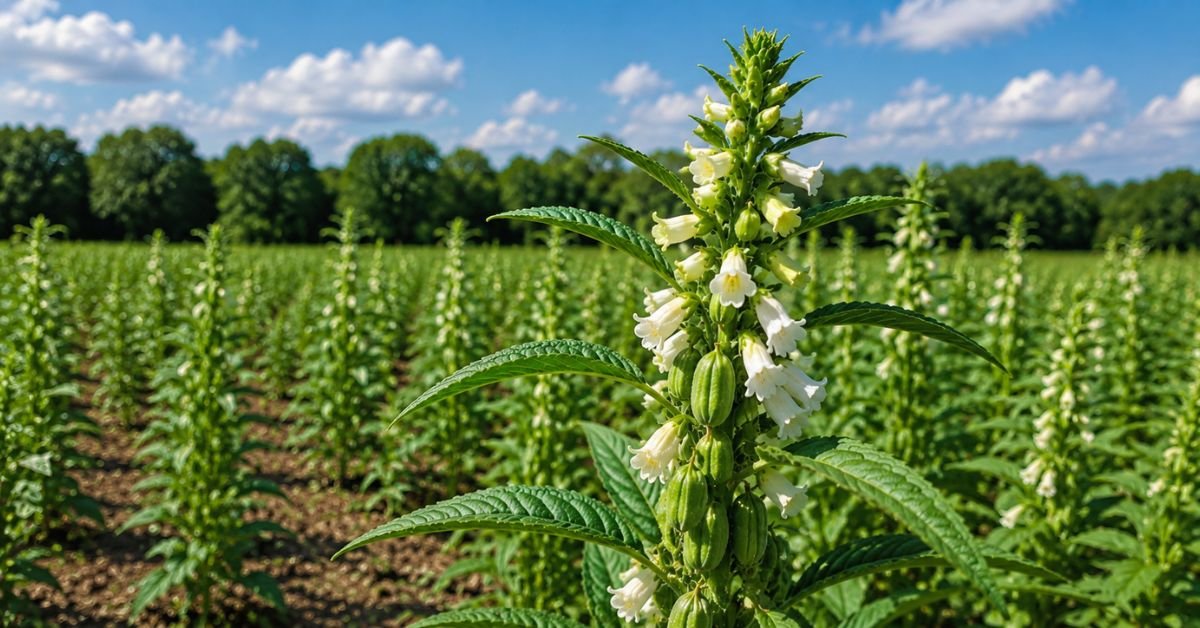
This plant is native to warm tropical climates, meaning heat is its best friend. If you live down South or out West in USDA Hardiness Zones 7 through 10, you can sow seeds straight into your garden beds once the ground heats up.
Living in a colder northern region? Don’t sweat it. You just need to jumpstart your growing season. Start your seeds indoors about a month before your region’s last expected spring frost.
Personal Pro-Tip: Always sow indoor seeds in biodegradable peat pots. Sesame taproots are extremely sensitive. When I transfer my seedlings out to the yard in late May, I plant the whole pot right into the ground. No root shock, no wilted plants.
Light Needs for Growing Healthy Sesame
Do not try to hide this plant in partial shade. It wants full, intense heat.
Aim for at least eight hours of unfiltered sunlight every day. If your yard lacks light, the central stem gets long, spindly, and fragile. Good lighting keeps the stalk sturdy enough to hold heavy seed pods later in late summer.
Soil and Watering Steps for Sesame Plant Care
Soil structure makes or breaks this crop.
If you choose patio containers, stick to a lightweight potting soil. Skip dense topsoils or heavy clay that traps moisture. Outdoors in garden beds, a loose, sandy loam works wonders.
When it comes to watering, less is definitely more. I have killed my fair share of plants by overwatering, but sesame handles dry spells like a champ.
Wait until the soil dries out deep beneath the surface before pulling out the hose. When you do water, direct the flow straight from your outdoor faucet to the base of the stem. Damp foliage leads to leaf spot quickly.
Personal Pro-Tip: Do the simple finger check. Push your index finger two inches deep into your potting soil. If you feel any dampness at all, leave your watering can in the shed.
Smart Fertilizer Choices for Sesame Care
You don’t need expensive feeding regimens here.
Over-fertilizing produces massive green leafy plants that completely forget to set flowers. If your dirt is stripped of nutrients, a single dose of balanced organic fertilizer right when bloom buds open in mid-summer is all you need.
Where Most People Fail with Sesame Plant Care
Over my years advising home gardeners across the US, I see two massive mistakes repeat themselves every single spring.
First, folks rush to plant outdoors during early spring spells. Sure, the air feels warm in April, but if the dirt is under 70°F, your seeds will rot in the cold mud. Wait for true early-summer heat.
Second, indoor air conditioning creates serious problems. If you start seeds inside, keep them away from cold blasts coming off your AC vents. Cold drafts stunt young seedlings in hours.
Personal Pro-Tip: Put your seed trays on a heated propagation mat inside. It creates that warm, southern-soil atmosphere right on your kitchen counter.
Quick Fixes for Common Sesame Plant Care Problems
Things go wrong even for experienced growers. Here is how I diagnose issues when inspecting garden plots:
- Foliage turning yellow: Too much water. Let the soil dry out completely and check that your pots have drain holes.
- Crispy, browning leaf edges: Strong hot winds paired with weeks of neglected water. Give the root zone a deep soak.
- Seed pods popping open early: This natural opening is called “shattering.” You held off on harvesting too long! Cut the stems as soon as the lower pods turn tan and dry.
Personal Pro-Tip: Pods ripen from the ground up. I harvest the lower mature pods mid-season while the top of the stalk is still blooming. This stops seeds from falling into the dirt and blowing away.
Toxicity Check: Safe for Dogs and Cats?
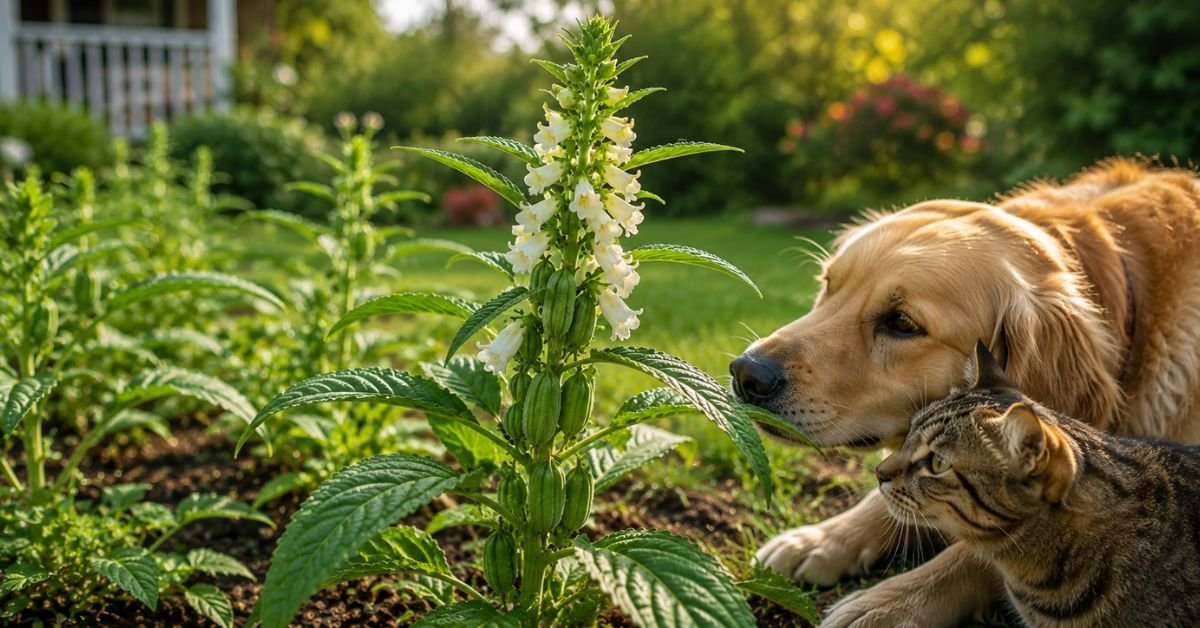
Pet safety is a top priority in my home, especially with my dogs running through garden beds.
You can rest easily. The ASPCA lists the sesame plant as completely non-toxic to dogs and cats.
If your pet snatches a loose pod off the stem, it won’t poison them. Just keep an eye out so they don’t eat huge piles of raw foliage, which can cause minor stomach upset in curious pets.
Frequently Asked Questions About Sesame Care
Q1: What USDA Hardiness Zones are best for sesame?
Zones 7 through 10 offer the long, warm seasons needed for direct outdoor planting. In Zones 6 or colder, start your seeds indoors early.
Q2: Can I grow sesame indoors year-round?
It rarely works out. These plants need massive amounts of direct sun and reach up to five feet tall. Indoor AC and window glass limit their growth dramatically.
Q3: How many seeds do you get from one sesame plant?
A healthy plant produces dozens of pods along its central stem, giving you hundreds of individual seeds per stalk.
Q4: Does sesame plant care require pruning?
No pruning necessary! They naturally grow on a main vertical stem. Just let them grow upright freely.
Q5: What kind of pests eat sesame plants?
Aphids sometimes cluster on soft flower buds. I just spray them off with a quick blast from the garden hose or apply mild neem oil spray.
Q6: Do I need multiple plants for pollination?
No. Sesame blooms are self-pollinating. A single pot on a sunny balcony will set seeds just fine on its own.
Q7: Can I plant raw sesame seeds from the grocery store?
Yes, as long as they are unhulled, raw, and unroasted. Roasted grocery seeds are dead and won’t germinate. I prefer using fresh seed packets from trusted US seed companies for consistent germination.
Final Thoughts
Adding sesame to your garden is one of the most fun summer experiments you can try. It thrives in scorching summer sun that wilts standard garden veggies.
Keep your soil dry, plant late enough to dodge spring chills, and keep seedlings clear of cold AC vents. Grab a pack of seeds this season and give it a shot!

Amin Khalid is a professional horticulturist and the founder of LeafyWisdom. With a deep passion for home gardening and horticultural research, he specializes in providing practical, easy-to-follow care guides for indoor plants. Amin’s goal is to simplify gardening for everyone and help fellow plant lovers build their own thriving green spaces.

No responses yet