
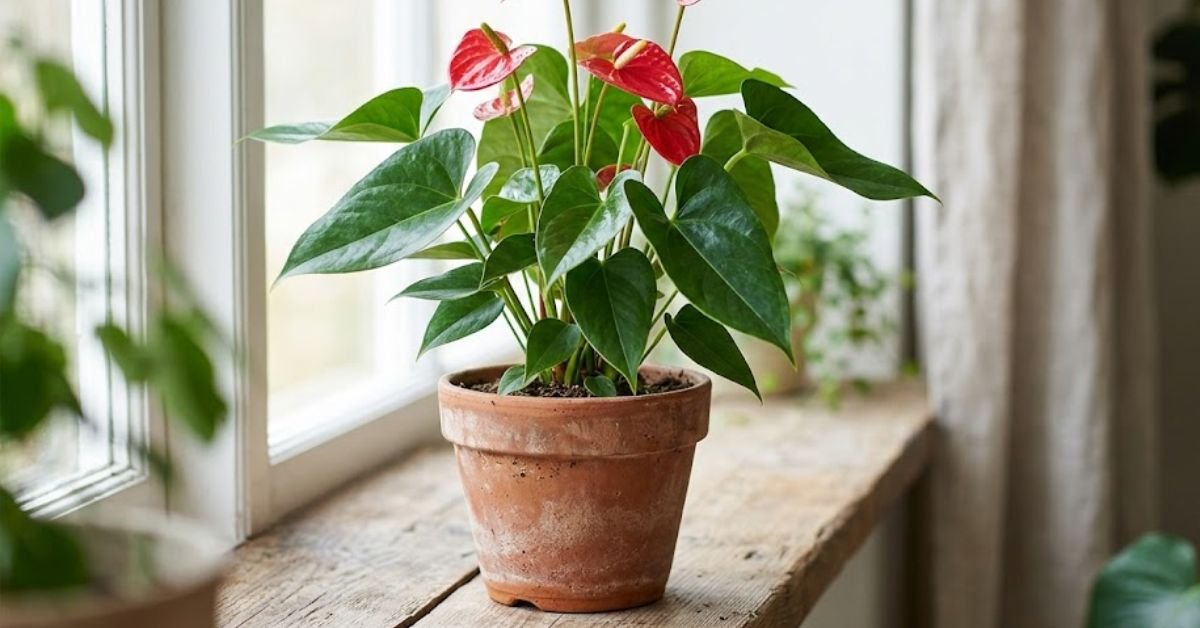
Look, I get it. You saw that gorgeous anthurium plant with its glossy, neon red “flowers” at a local greenhouse or a Trader Joe’s, fell completely in love, and brought it home. Then reality hit. Maybe it started dropping leaves, or those plastic looking blooms turned a weird, sad brown.
Don’t panic. I have grown hundreds of these tropical beauties over the years in various US home setups, and I am going to share exactly what it takes to keep them happy. While competitor sites usually give you a generic, dry block of text that averages around 1,500 words of pure fluff, we are keeping things strictly practical, raw, and highly actionable.
Quick Care Guide for Your Anthurium Plant
If you just need the quick hits to keep your plant alive right now, use this reference table.
| Care Factor | Target Requirement | US Home Adjustments |
| Light | Bright, indirect sunlight | Keep away from south-facing windows without a sheer curtain. |
| Water | Allow top 1–2 inches to dry | Use the faucet when the top soil feels dry; never let it sit in a drainage puddle. |
| Potting Soil | Coarse, chunky, well-draining | Mix peat moss, perlite, and orchid bark. Avoid heavy garden soil. |
| Temperature | 65°F to 85°F | Protect from blasting air conditioning vents in the peak of Summer. |
| USDA Zones | Zones 10–12 (Outdoors) | Bring indoors before Fall temperatures drop below 55°F. |
Personal Pro-Tip: Never trust a calendar or a phone app to tell you when to water. Stick your index finger straight into the potting soil. If it feels dry down to your first knuckle, it is time to head to the faucet. If it is still damp, walk away.
Why Americans Struggle to Keep the Anthurium Plant Alive
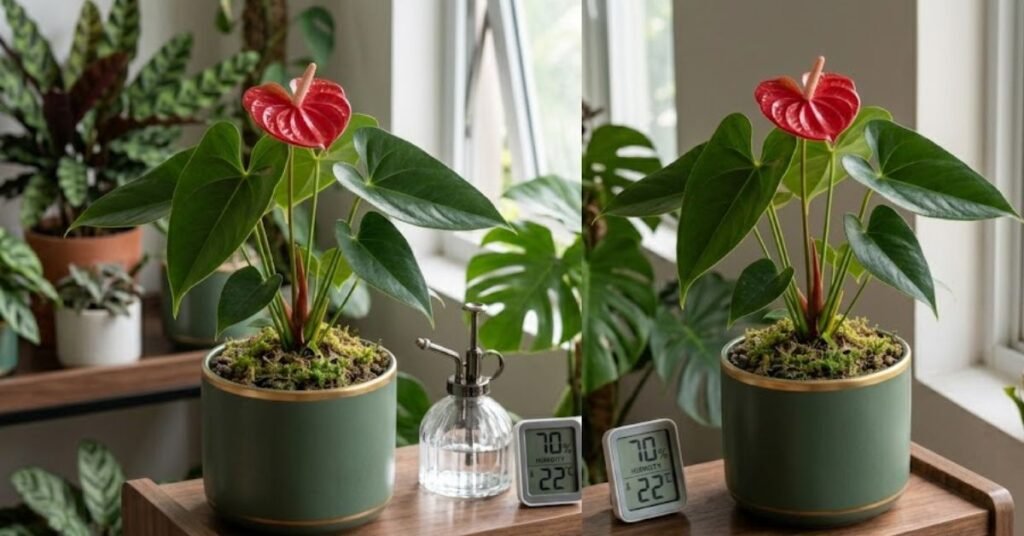
In my years of consulting with indoor gardeners across the country, I notice two massive mistakes that kill an anthurium plant faster than anything else.
The Air Conditioning Mistake
Our modern American homes are built for human comfort, not tropical plants. When you crank up the central air conditioning in July, two things happen: the indoor temperature drops and the air dries out completely. This plant absolutely despises drafty, dry environments.
The Overwatering Trap
We love our plants to death. Giving your plant a cup of water every single Tuesday without checking the potting soil causes root rot. The roots need oxygen just as much as they need moisture.
Personal Pro-Tip: Move your green buddy away from any direct line of sight of your AC vents or heating registers. Cold or hot drafts are an absolute death sentence for their shiny foliage.
Essential Indoor Care for Your Anthurium Plant
Let’s break down the core elements of long-term success.
Light Requirements for the Anthurium Plant
These are not low-light office plants that want to live in a dark corner. They like it bright. I highly recommend placing them near an east-facing window where they can soak up gentle morning sun. If your only option is a blazing south-facing window, step the plant back a few feet or use a sheer curtain so the intense afternoon rays do not scorch the leaves.
Personal Pro-Tip: If your plant completely stops producing those iconic bright spathes (the colored part people mistake for flowers), it is almost always screaming for more light. Move it closer to a window.
Running the Faucet: How to Water an Anthurium Plant
When you water, do it thoroughly. Take the pot over to your kitchen faucet or sink and pour water until it drains completely out of the bottom holes. Let it drip out entirely before putting it back in its decorative saucer. Never let the base sit in stagnant water.
Personal Pro-Tip: If your municipal tap water is heavily chlorinated and leaves white, crusty mineral rings on your pots, let a jug of water sit out overnight on your counter before using it, or switch to filtered water.
The Ideal Potting Soil Mix for This Tropical Genus
Do not buy standard, heavy potting soil, dump it in a pot, and call it a day. In the wild, these plants often grow on trees as epiphytes, meaning their roots hang out in the open air. They want a super chunky mix. I create my own blend using equal parts high-quality potting soil, coarse perlite, and orchid bark.
Personal Pro-Tip: If you do not want to buy three different bags to mix your own from scratch, just grab a bag of premium orchid mix and blend it 50/50 with standard indoor houseplant soil. It works like a charm.
Two Sides of the Anthurium Plant Family: Flowers vs. Foliage
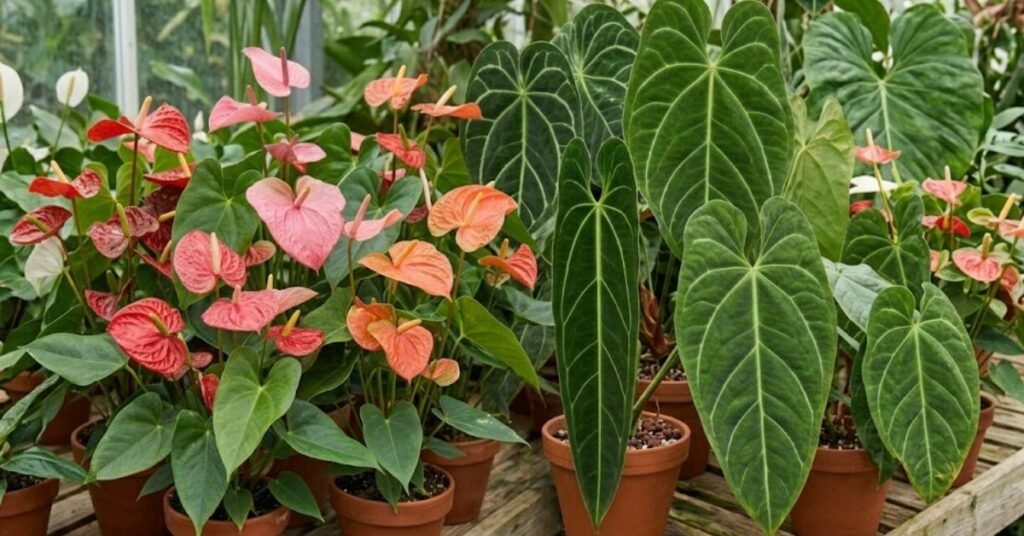
A lot of beginners don’t realize this, but the anthurium plant genus actually splits into two totally different collecting hobbies. Walking into a nursery, you might think they all want the exact same care, but that is a quick way to break your heart.
The Flowering Anthuriums (Anthurium andraeanum)
These are the classic, tough cookies you find at grocery stores or local garden centers. They feature those thick, waxy, colorful spathes in bright red, pink, or white. If your goal is constant color, these are your best bet. They absolutely demand bright light to keep pushing out those blooms, but they are generally much more forgiving of typical home humidity levels.
The Velvet Foliage Anthuriums (Anthurium clarinervium or crystallinum)
This is where you get into the high-end collector territory. People buy these strictly for their massive, dark-green, heart-shaped leaves covered in glowing white or silver veins. They rarely produce showy flowers honestly, their blooms look like weird green spikes—and they are total divas. These varieties require much higher, strict ambient humidity. If your house drops below 50% humidity, their exquisite leaves will curl and crisp up faster than you can blink.
Personal Pro-Tip: If you are a beginner, stick to the flowering Anthurium andraeanum. They are way cheaper, easier to find, and won’t throw a tantrum if you forget to turn on the humidifier for a day or two. Save the velvet foliage divas for when you have a few months of successful plant parenting under your belt.
Troubleshooting Your Anthurium Plant
When things go wrong, the plant talks to you through its leaves. Here is how to decode the messages.
Why Are My Anthurium Plant Leaves Turning Yellow?
Yellowing leaves usually point directly to a watering issue—and 9 times out of 10, it is overwatering. If the lower leaves are turning yellow and feeling soft or mushy, the roots are suffocating. Stop watering immediately and check if the pot is actually draining.
What Causes Crunchy Brown Tips on an Anthurium Plant?
This is the classic symptom of low humidity. It happens constantly during a dry US winter when the home heater is blasting, or in peak summer when the AC is humming. The plant is losing moisture from its leaf tips faster than its roots can pull it up from the potting soil.
Personal Pro-Tip: Skip the tiny misting spray bottles. Misting leaves only raises humidity for about five minutes and can invite ugly fungal spots. Instead, invest in a small humidifier to place nearby or set the pot on a tray filled with pebbles and water.
Anthurium Plant Toxicity: Is It Safe for Cats and Dogs?
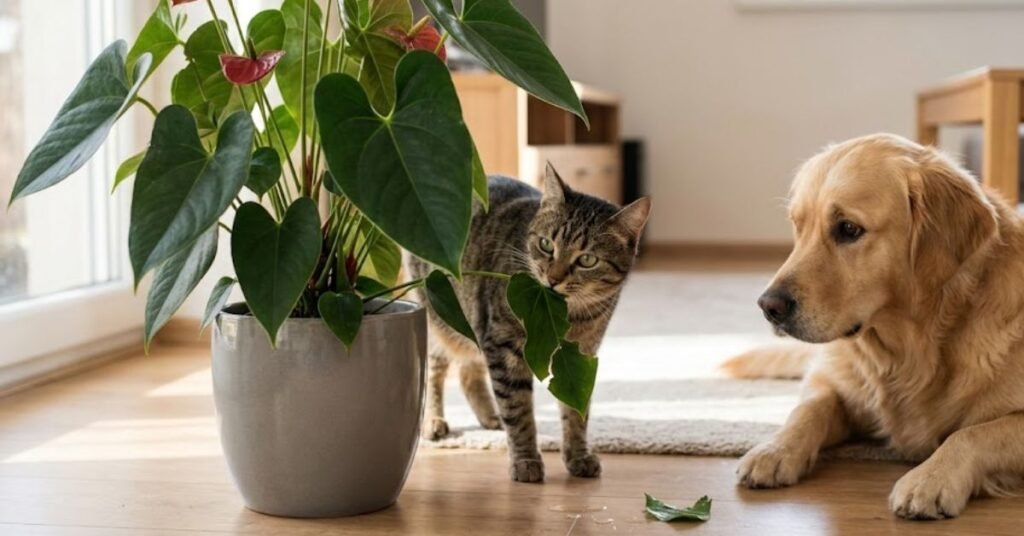
Here is the hard truth: No, it is not safe at all. The anthurium plant contains insoluble calcium oxalate crystals. If your curious cat or dog decides to take a bite out of a leaf or stem, these microscopic crystals act like tiny shards of glass. It causes intense mouth irritation, immediate drooling, swelling of the throat, and vomiting.
Personal Pro-Tip: If you have pets that love to chew on greenery, place this plant high up on a heavy plant stand or a dedicated wall shelf where they absolutely cannot reach it.
Top Anthurium Plant Questions Answered
These are the real questions I see popping up constantly on Reddit and gardening forums.
Q1: How often does an anthurium plant bloom?
With enough bright, indirect light, they can bloom year-round. Each individual colorful spathe can last for up to two or three months before finally fading away.
Q2: Can I grow my anthurium plant outside in the US?
Only if you live in USDA Hardiness Zones 10, 11, or 12. If you are in places like South Florida, Hawaii, or coastal Southern California, go for it. Anywhere else, keep it indoors or bring it inside well before the cool Fall weather hits.
Q3: Why are the new leaves on my plant so small?
Small leaves mean the plant lacks energy. This usually stems from too little light or a desperate need for nutrients. Try moving it to a brighter spot and feeding it with a highly diluted liquid houseplant fertilizer during Spring and Summer.
Q4: Should I cut off dead or fading flowers?
Yes. Once the colorful spathe turns brown or green and looks spent, snip the stem right down near the base with clean shears. This prevents the plant from wasting precious energy on a dying bloom.
Q5: Can I use regular tap water on my anthurium?
Most of the time, yes. But if your local city water is very hard or heavily treated, you might notice salt buildup. Using a water filter or letting your faucet water sit out can help ease the stress on sensitive roots.
Q6: How do I know when to repot my anthurium plant?
Look for roots crawling out of the bottom drainage holes, or notice if water rushes straight through the pot without soaking in. I usually repot mine every two years during early Spring.
Q7: Why is my anthurium plant getting leggy?
Legginess is a classic sign that the plant is stretching toward a light source. If the stems look long, weak, and sparse, give it more bright, filtered light.
Personal Pro-Tip: When addressing FAQs or repotting, always clean your pruning shears with rubbing alcohol first. This simple step prevents the accidental spread of plant diseases between your green collection.
Final Thoughts on the Beautiful Anthurium Plant
Growing an anthurium plant does not require a degree in botany. Once you understand their tropical roots literally and shield them from harsh indoor climates like AC drafts and soggy soil, they are surprisingly resilient. Give them that chunky soil, respect the faucet, and enjoy the gorgeous, long-lasting color they bring to your home.
Personal Pro-Tip: Don’t stress if you lose a leaf or two while figuring out the perfect spot in your house. Gardening is all about experimenting and learning what works for your unique home environment.

Amin Khalid is a professional horticulturist and the founder of LeafyWisdom. With a deep passion for home gardening and horticultural research, he specializes in providing practical, easy-to-follow care guides for indoor plants. Amin’s goal is to simplify gardening for everyone and help fellow plant lovers build their own thriving green spaces.

No responses yet