
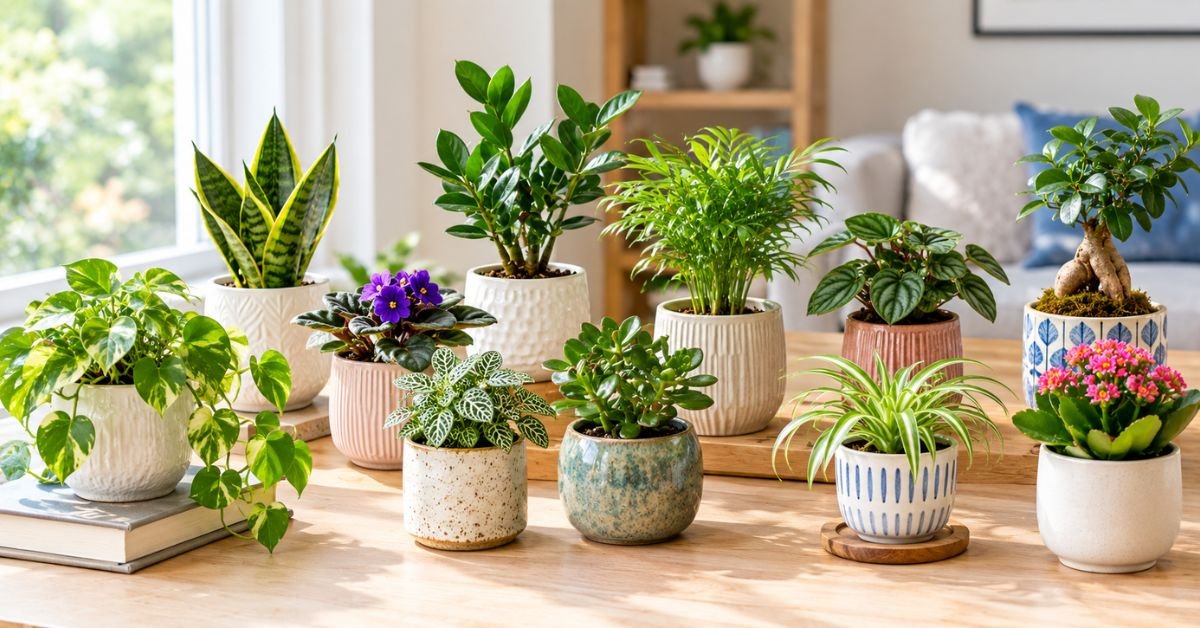
Finding a small house plant is easy. Finding one that stays manageable, looks healthy, and genuinely fits your space months later is a different story.
A plant can look tiny at the garden center and still become surprisingly large indoors. Some grow upward, some spread sideways, while trailing plants can occupy several feet of shelf space even when the pot itself is small.
When I choose a small house plant for an indoor space, I look at four things first: mature size, growth habit, light requirements, and watering needs. A plant that physically fits your shelf but struggles with its environment is not really a good small-space choice.
In this guide, I’ll show you 12 compact indoor plants and explain how to care for them, where to place them, and how to keep a small house plant healthy without letting it quickly outgrow its space.
Quick Guide to Small House Plants
| Plant | Typical Indoor Size | Light | Watering | Humidity | Pet Safety | Best Spot |
| African Violet | 6–12 in. | Bright indirect | Moderate | Moderate | Generally non-toxic | Desk or windowsill |
| Fittonia | 3–6 in. | Low to bright indirect | Moderate–high | Higher | Generally non-toxic | Shelf or terrarium |
| Baby Rubber Plant | 6–12 in. | Medium to bright indirect | Moderate | Average indoor | Generally non-toxic | Desk or shelf |
| Watermelon Peperomia | 8–12 in. | Bright indirect | Moderate | Moderate | Generally non-toxic | Tabletop |
| Haworthia | 3–8 in. | Bright indirect | Low | Low–moderate | Generally non-toxic | Sunny windowsill |
| Echeveria | 3–6 in. | Bright light | Low | Low | Generally non-toxic | Sunny windowsill |
| Miniature Snake Plant | 6–18 in. | Low to bright indirect | Low | Low | Toxic if eaten | Desk or shelf |
| Polka Dot Plant | 8–14 in. | Bright indirect | Moderate | Moderate–high | Generally non-toxic | Shelf or tabletop |
| Prayer Plant | 8–15 in. | Bright indirect | Moderate | Higher | Generally non-toxic | Shelf |
| Pilea | 8–16 in. | Bright indirect | Moderate | Moderate | Generally non-toxic | Tabletop |
| String of Turtles | 4–6 in. tall, trailing | Bright indirect | Low–moderate | Average indoor | Generally non-toxic | Hanging shelf |
| Miniature Jade Plant | 6–12 in. | Bright light | Low–moderate | Low | Toxic if eaten | Sunny windowsill |
Actual size varies by cultivar, light, pot size, pruning, and growing conditions.
1. African Violet: A Flowering Small House Plant
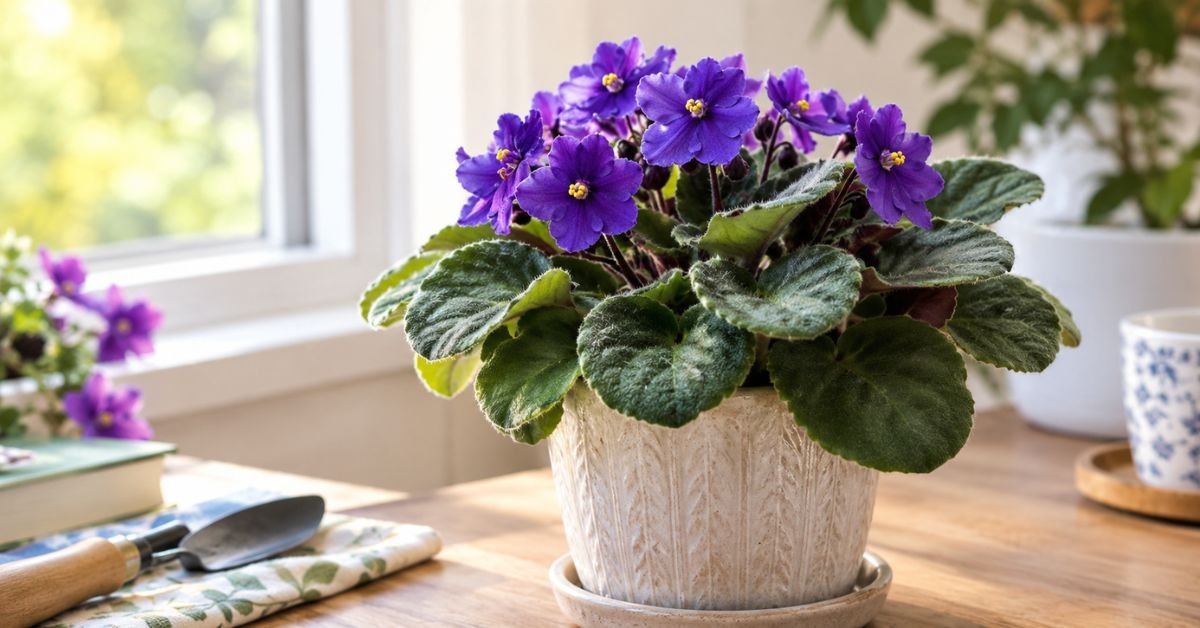
This is one of my favorite choices when someone wants a small house plant that also brings flowers into a limited space.
It grows as a compact rosette rather than producing one large upright stem, so it can fit nicely on a desk, coffee table, or bright windowsill.
African Violet Care for Small Indoor Spaces
Light: Give it bright, indirect light for several hours each day. An east-facing window can work particularly well. Strong midday or afternoon sunlight through glass may scorch the leaves.
Water: Water when the upper portion of the potting mix begins to dry. Avoid keeping the soil constantly wet. Bottom watering can work, but do not leave the pot sitting in water afterward.
Soil: Use a light, airy, well-draining African violet mix or another loose indoor potting mix.
Humidity: Average indoor humidity is usually acceptable, although very dry winter air can cause leaf-edge problems.
Temperature: Keep it away from cold drafts and sudden temperature changes.
Feeding: A diluted balanced houseplant fertilizer during active growth can support foliage and flowering.
Common Small House Plant Problems
Yellowing leaves combined with wet soil can point to overwatering. Long leaf stalks and sparse growth usually suggest insufficient light.
Best Placement for an African Violet
Small desks, kitchen windowsills, bedrooms, and compact spaces where you want flowers.
My Pro Tip for This Small House Plant
Rotate the pot every week or two so your African violet grows evenly instead of leaning toward the window.
2. Fittonia: An Easy Small House Plant
Fittonia, commonly called nerve plant, is one of the easiest choices when you need a small house plant for a shelf or other tight location.
Its colorful veined leaves stay close to the container, and it naturally forms a low mound instead of becoming a tall floor plant.
Fittonia Care for Small House Plant Collections
Light: Bright, filtered light is ideal, although Fittonia can tolerate lower light better than many succulents. Protect it from harsh direct afternoon sun.
Water: Do not allow the growing medium to remain completely dry for long periods. Water when the surface begins to dry, then allow excess water to drain.
Soil: Use a moisture-retentive but well-draining indoor potting mix.
Humidity: Fittonia benefits from higher humidity. A bright bathroom can be an excellent location if temperatures remain comfortable.
Temperature: Keep it warm and away from cold windows or strong HVAC airflow.
Feeding: Feed lightly during active growth rather than encouraging rapid growth with heavy fertilizer.
Common Fittonia Problems
A severely dry Fittonia may wilt dramatically. Constantly wet soil, however, can damage the roots.
Best Placement for This Compact House Plant
Small shelves, bathrooms, terrariums, and compact decorative displays.
My Pro Tip for Small House Plants
A small container is fine, but drainage is essential. A decorative pot without drainage can quickly turn a healthy plant into an overwatering problem.
3. Baby Rubber Plant: A Low-Maintenance Small House Plant
Baby rubber plant is a compact peperomia with thick leaves that hold some moisture, making it a forgiving small house plant for beginners.
It does not demand constant watering and works well when you want attractive foliage without a large container.
Baby Rubber Plant Care
Light: Bright to medium indirect light works well. Avoid strong direct afternoon sun.
Water: Allow the upper layer of soil to dry before watering again.
Soil: Choose a loose, well-draining indoor potting mix.
Humidity: Normal household humidity is generally sufficient.
Temperature: Keep it in a stable indoor environment and protect it from cold drafts.
Feeding: A diluted balanced fertilizer during active growth is usually enough.
Problems to Watch For With This Small Indoor Plant
Soft, yellowing leaves and persistently wet soil suggest too much moisture. Pale leaves and stretched stems can indicate insufficient light.
Best Placement for Baby Rubber Plant
Desks, bookshelves, side tables, and beginner plant collections.
My Pro Tip
Check the soil before watering rather than following a fixed weekly schedule.
4. Watermelon Peperomia for Small Indoor Spaces
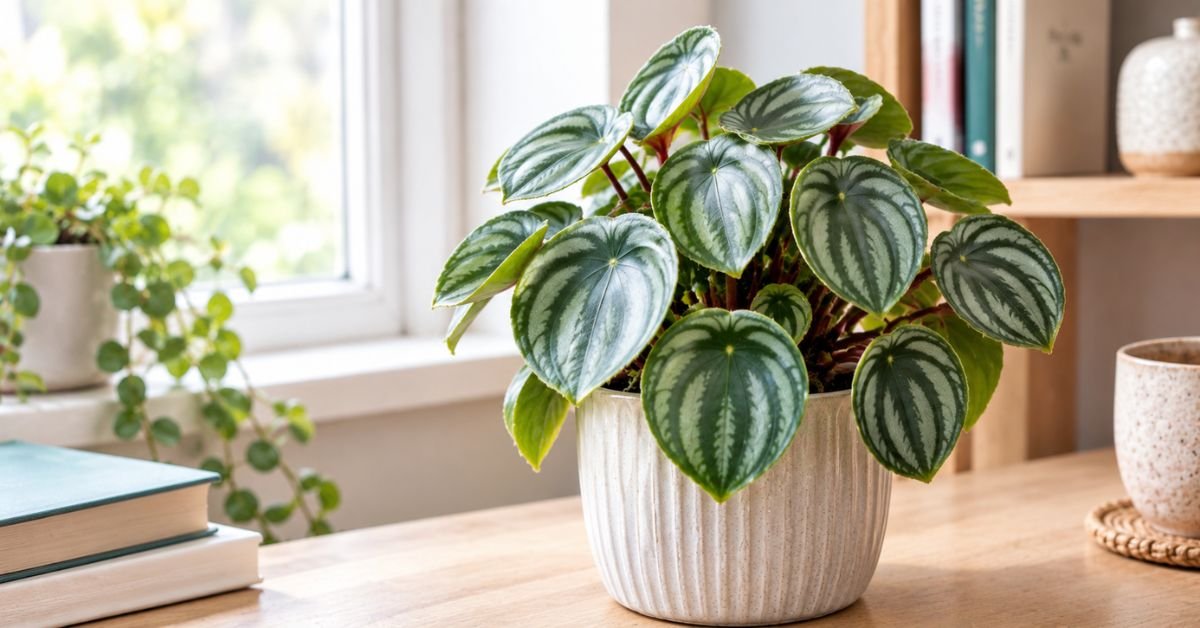
This is a decorative compact plant with rounded, striped leaves and a naturally manageable growth habit.
It works especially well on tabletops and shelves where a larger plant would quickly become inconvenient.
Watermelon Peperomia Care
Light: Bright, indirect light helps maintain strong foliage and compact growth.
Water: Allow the upper portion of the potting mix to dry before watering again.
Soil: Use a chunky, well-draining mix that allows air to reach the roots.
Humidity: Moderate household humidity is usually adequate.
Temperature: Protect it from cold drafts and sudden temperature changes.
Feeding: Feed lightly during active growth.
Common Problems With This Compact House Plant
Curling or drooping leaves can indicate watering stress. Pale foliage or stretched growth often points to insufficient light.
Best Placement for Watermelon Peperomia
Tabletops, shelves, bedrooms, and home offices.
My Pro Tip
Leave enough space around the leaves for air movement, especially if you keep several plants close together.
5. Haworthia: A Tiny Small House Plant for Bright Windows
When someone asks me for an especially compact small house plant, Haworthia is usually near the top of my list.
Its low rosette stays close to the soil surface and normally uses very little vertical space.
Haworthia Care for Compact Indoor Growth
Light: Bright light is best. A bright windowsill can work well, but introduce plants gradually to stronger direct sunlight.
Water: Let the growing medium dry thoroughly between waterings.
Soil: Use a fast-draining succulent or cactus mix.
Humidity: Normal indoor humidity is generally adequate.
Temperature: Protect it from freezing conditions and prolonged cold.
Feeding: Fertilize sparingly during active growth.
Common Haworthia Problems
Soft leaves, a mushy base, and persistently wet soil can indicate excess moisture. Stretching can indicate insufficient light.
Best Placement for This Tiny House Plant
Tiny shelves, desks, bright windowsills, and succulent displays.
My Pro Tip
Treat Haworthia like a succulent, not a thirsty tropical plant.
6. Echeveria for Bright Small Spaces
Echeveria gives you a compact rosette with plenty of visual impact, making it an excellent small house plant for a bright room.
Its main limitation is light.
Echeveria Care for Small Indoor Plant Displays
Light: Give it very bright light.
Water: Water thoroughly, then allow the soil to dry completely before watering again.
Soil: Use a gritty, fast-draining succulent mix.
Humidity: Average household humidity is generally fine.
Temperature: Protect it from freezing conditions.
Feeding: Use diluted succulent fertilizer sparingly during active growth.
Common Problems With Echeveria
A stretched, open rosette usually means the plant needs more light. Mushy lower leaves often indicate excessive watering.
Best Placement for This Compact Plant
Bright windowsills, sunny desks, and compact succulent collections.
My Pro Tip
Do not repeatedly prune stretched Echeveria. Fix the lighting problem first.
7. Miniature Snake Plant for a Small House Plant Setup
A compact snake plant cultivar can be a practical small house plant when the available light is less than ideal.
Miniature Snake Plant Care
Light: Low to bright indirect light can work.
Water: Let the potting mix dry thoroughly between waterings.
Soil: Use a loose, well-draining indoor mix.
Humidity: Normal household humidity is generally sufficient.
Temperature: Protect it from prolonged cold.
Feeding: Feed lightly during active growth.
Pet safety: Snake plants are toxic if eaten by cats or dogs.
Common Snake Plant Problems
Soft leaves, a mushy base, and foul-smelling wet soil are strong warnings of excessive moisture.
Best Placement for This Small Indoor Plant
Small apartments, office shelves, desks, and rooms with limited sunlight.
My Pro Tip
Low light does not mean high watering needs.
8. Polka Dot Plant for Colorful Small Spaces
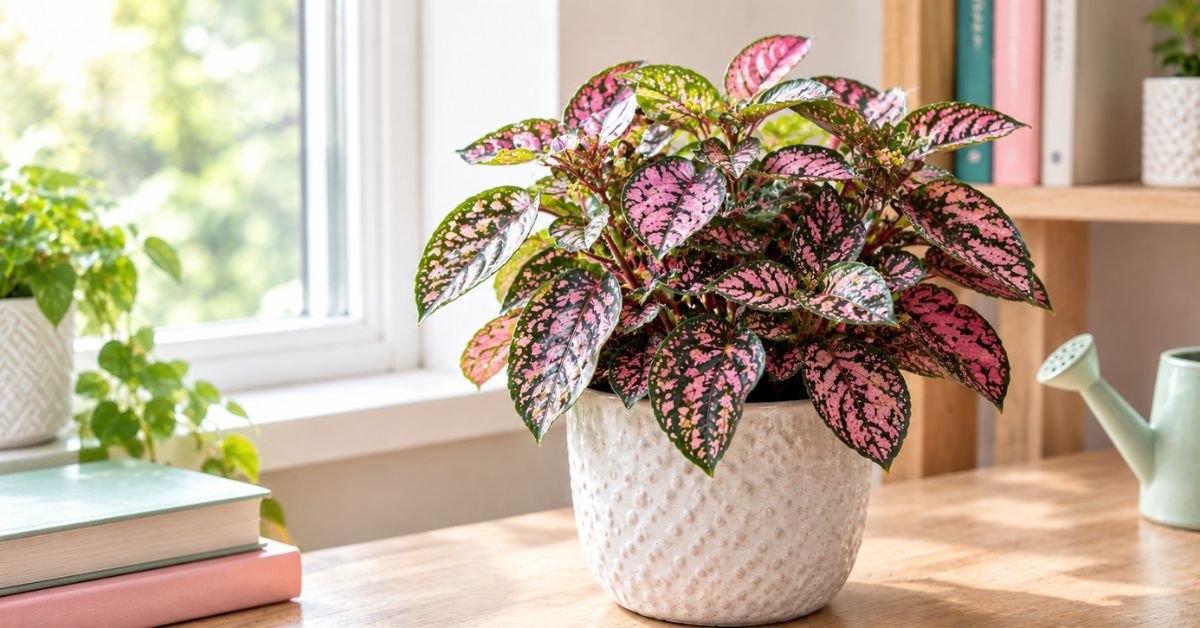
It is an excellent choice when you want a small house plant with more color than plain green foliage.
Polka Dot Plant Care
Light: Bright, indirect light helps maintain good leaf color.
Water: Keep the soil lightly and consistently moist, but never saturated.
Soil: Choose a well-draining indoor mix.
Humidity: Moderate to higher humidity can help.
Temperature: Keep it warm and away from cold drafts.
Feeding: Feed lightly during active growth.
Pruning: Pinch growing tips to encourage fuller growth.
Common Problems With This Compact House Plant
Leggy stems usually indicate insufficient light or a need for pinching.
Best Placement for Polka Dot Plant
Colorful shelves, desktops, bedrooms, and small plant groupings.
My Pro Tip
Pinch a little and often rather than waiting until the plant becomes long and floppy.
9. Prayer Plant for Shelves and Small Spaces
Plants can be excellent small-space plants because many remain relatively low and spread rather than becoming tall floor specimens.
Prayer Plant Care for Small Indoor Spaces
Light: Bright, indirect light is ideal.
Water: Keep the soil moderately moist but never waterlogged.
Soil: Use a moisture-retentive but well-draining indoor mix.
Humidity: Higher humidity is helpful.
Temperature: Keep it away from cold drafts and HVAC vents.
Feeding: Apply diluted balanced fertilizer during active growth.
Common Prayer Plant Problems
Brown leaf edges can result from inconsistent watering, dry air, or environmental stress.
Best Placement for This Small House Plant
Shelves, side tables, bedrooms, and bathrooms with suitable light.
My Pro Tip
Do not place a prayer plant directly under an HVAC vent.
10. Pilea as a Compact House Plant
This is a useful small house plant for a desk or tabletop with a little more room.
Pilea Care for Compact Growth
Light: Bright, indirect light is best.
Water: Allow some of the soil to dry between waterings.
Soil: Use a loose, well-draining houseplant mix.
Humidity: Average household humidity is normally adequate.
Temperature: Keep it away from strong drafts.
Feeding: Feed modestly during active growth.
Pruning: Remove damaged or crowded growth to maintain a tidy shape.
Common Pilea Problems
Long gaps between leaves and leaning growth often point to inadequate light.
Best Placement for Pilea
Desks, side tables, home offices, and shelves with enough depth.
My Pro Tip
Always consider mature width, not just height.
11. String of Turtles for Small Shelves
This is an excellent small house plant when floor and tabletop space are limited because it uses vertical space rather than a wide footprint.
String of Turtles Care
Light: Bright, indirect light is ideal.
Water: Allow the growing medium to dry substantially between waterings.
Soil: Use a very well-draining succulent-style mix.
Humidity: Average indoor humidity is usually sufficient.
Temperature: Keep it comfortable and away from cold drafts.
Feeding: Feed lightly during active growth.
Common Problems With This Trailing House Plant
Soft or translucent leaves can indicate excess moisture. Sparse growth can be related to insufficient light.
Best Placement for String of Turtles
High shelves, hanging planters, office shelves, and small apartments.
My Pro Tip
A small pot does not guarantee a small footprint. Trailing growth can eventually cover a surprising amount of shelf space.
12. Miniature Jade Plant for Bright Spaces
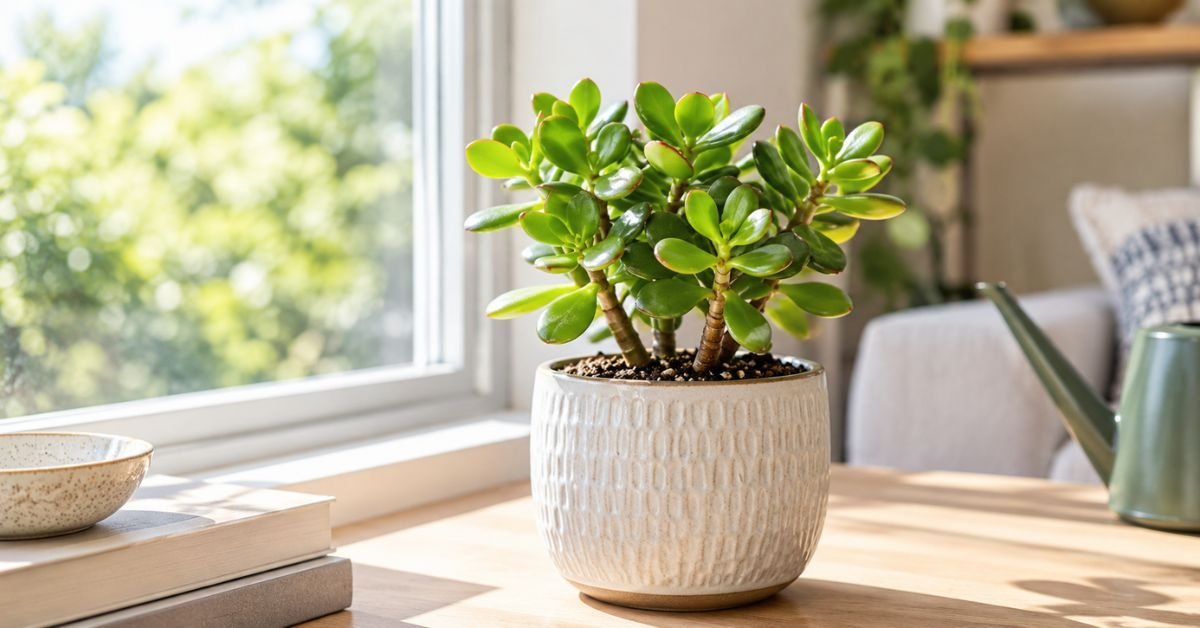
A compact jade plant is a good small house plant for a bright home where you want a succulent with a more woody appearance.
Miniature Jade Plant Care
Light: Give it several hours of bright light each day.
Water: Let the soil dry substantially between waterings.
Soil: Use a fast-draining cactus or succulent mix.
Humidity: Normal household humidity is generally adequate.
Temperature: Protect it from freezing temperatures.
Feeding: Feed lightly during active growth.
Pruning: Pruning can help maintain shape.
Pet safety: Jade plants are toxic if eaten by pets.
Common Problems With This Small Indoor Plant
Soft leaves combined with wet soil usually point to excessive watering. Long gaps between leaves generally indicate insufficient light.
Best Placement for Miniature Jade
Bright windowsills, sunny desks, and compact succulent collections.
My Pro Tip
If your jade is stretching toward the window, improve the light before repeatedly cutting it back.
How to Choose a Small House Plant for Your Space
The smallest plant is not automatically the best plant.
I recommend starting with your room, then choosing your plant.
Best Small House Plant for a Low-Light Room
Consider a compact snake plant or suitable prayer plant instead of selecting a tiny succulent that needs strong sunlight.
Best Small House Plant for a Bright Windowsill
Haworthia, Echeveria, African violet, and compact jade can all work depending on the sunlight.
Best Small House Plant for a Desk
African violet, Fittonia, peperomia, and Pilea are useful choices for desks and compact workspaces.
Best Small House Plant for a Shelf
Fittonia, Haworthia, prayer plant, and trailing plants can work well.
Best Small House Plant for a Very Small Apartment
Think about footprint, not just height.
An 8-inch plant that spreads 18 inches may use more useful space than a slightly taller upright plant.
Best Small House Plant for a Home With Pets
Check plant safety before bringing a new plant into the home. Some popular compact choices, including snake plant and jade, are not pet-safe if eaten.
How to Keep a Small House Plant Small
Choosing the right species is only the beginning.
1. Start With the Right Pot
Do not automatically move a tiny nursery plant into a huge container.
2. Give Your Small House Plant Enough Light
Poor light often causes weak, stretched growth.
3. Understand Your Compact Plant’s Growth Habit
A rosette-forming plant uses space differently from an upright plant or trailing vine.
4. Prune When Appropriate
Some small indoor plants respond well to pinching or pruning, while others should not be aggressively trimmed.
5. Avoid Overfertilizing Your Small House Plant
Excess fertilizer can encourage rapid, soft growth that becomes difficult to manage.
6. Repot Only When Necessary
A larger container is not automatically better for a compact indoor plant.
Common Small House Plant Mistakes
Choosing a Small House Plant Based on Current Size
A four-inch nursery plant is still young in many cases.
Using a Huge Pot for a Small Indoor Plant
Too much wet soil around a small root system can increase the risk of root problems.
Treating Every Small House Plant the Same
Haworthia and Fittonia may both be tiny, but their watering and humidity requirements are very different.
Ignoring Light Requirements
A small house plant can remain alive in poor light while gradually becoming weak and stretched.
Watering Your Small House Plant on a Calendar
Check the soil and plant instead of relying on a fixed weekly schedule.
Forgetting About HVAC
Avoid placing moisture-sensitive plants directly in the path of constant hot or cold airflow.
Choosing a Small House Plant Without Planning for Mature Growth
Trailing plants can start in a tiny pot and eventually occupy a surprising amount of shelf space.
Small House Plant FAQs
Q1. What is the best small house plant for beginners?
Peperomia, African violet, Haworthia, and some compact snake plant varieties can be good beginner choices. The best option depends on your light, watering habits, and available space.
Q2. Which house plants stay small?
Fittonia, many peperomias, Haworthia, African violet, Echeveria, and certain compact cultivars can remain relatively manageable indoors.
Q3. What is the smallest indoor plant?
There is no single smallest houseplant. Several miniature succulents and compact tropical plants can remain only a few inches tall, but width and growth habit matter too.
Q4. What small house plant is best for low light?
Compact snake plant varieties are among the more forgiving choices for lower-light conditions. Some prayer plants can also tolerate less intense light.
Q5. What small house plants are safe around cats and dogs?
African violet, Fittonia, many peperomias, Haworthia, and Echeveria are generally considered safer choices. Always verify the exact plant before bringing it into a pet’s environment.
Q6. How often should I water a small house plant?
There is no universal schedule. Check the soil and consider the plant type, pot size, light level, season, humidity, and indoor temperature.
Q7. How do I keep my house plant from getting too big?
Start with a naturally compact species or cultivar, provide appropriate light, use a suitable pot size, avoid excessive fertilizer, and prune only when the plant responds well to pruning.
Final Thoughts
The best small house plant is not necessarily the smallest plant you can find.
For me, the better question is:
Which plant can stay healthy, attractive, and manageable in the exact space I have?
That means looking beyond the nursery pot and considering mature size, growth habit, light, watering, humidity, and pet safety.
African violets, Fittonias, peperomias, Haworthias, Echeverias, compact snake plants, prayer plants, Pilea, and trailing options can all work beautifully in small spaces when their care requirements match the environment.
Start with your available light and physical space. Then choose the plant that naturally fits those conditions.
A slightly larger plant that thrives is always better than a tiny plant that struggles.

Amin Khalid is a professional horticulturist and the founder of LeafyWisdom. With a deep passion for home gardening and horticultural research, he specializes in providing practical, easy-to-follow care guides for indoor plants. Amin’s goal is to simplify gardening for everyone and help fellow plant lovers build their own thriving green spaces.