
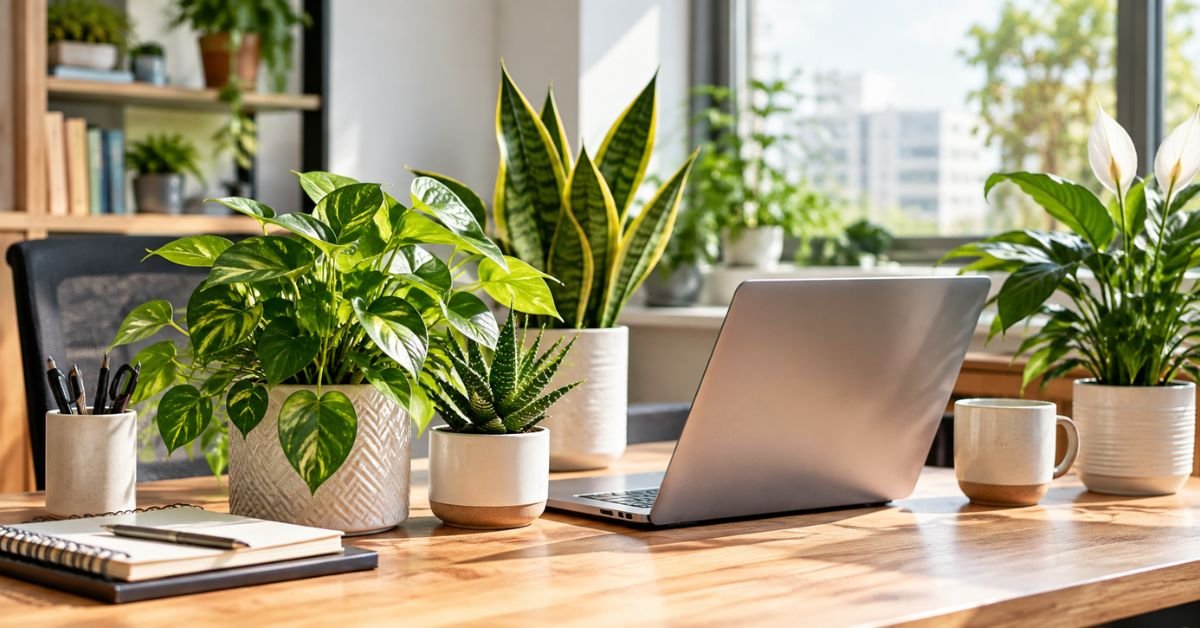
A desk plant is a resilient, compact houseplant capable of surviving low indoor lighting, erratic watering schedules, and the harsh climate of modern office buildings. People constantly ask me what makes the perfect desk plant for a typical US office. The answer is straightforward. The most successful workspace plants tolerate fluorescent bulbs, survive long holiday weekends without water, and withstand the constant blast of overhead air conditioning.
I have spent years consulting on interior landscaping for corporate offices and home workspaces. You cannot just grab a delicate fern from a garden center, drop it next to your monitor, and hope for the best. Most indoor office greenery originates from tropical USDA Hardiness Zones 10 through 12. They are used to humidity and warmth. Sticking them in a dry, artificially lit cubicle is a massive shock to their system.
If you want a vibrant green companion to help lower your workday stress, you need a realistic strategy. This guide covers exactly how to match the right species to your workspace and keep it alive year-round.
Quick Care Matrix for Your Desk Plant
| Care Factor | Expert Recommendation |
| Windowless Cubicle | ZZ Plant, Snake Plant, or Cast Iron Plant |
| Bright Window Desk | Jade Plant, Aloe Vera, or Haworthia |
| Standard Care Rule | Ignore it until the soil is completely dry |
| Watering Method | Water in the breakroom sink. Never water near electronics |
| Soil Mix | Fast-draining indoor potting soil mixed with perlite |
Personal Pro-Tip: Do not report a new office plant immediately. Leave it in its plastic nursery pot and drop that directly into a decorative ceramic container. This makes sink watering infinitely easier.
Matching the Right Office Plant to Your Lighting
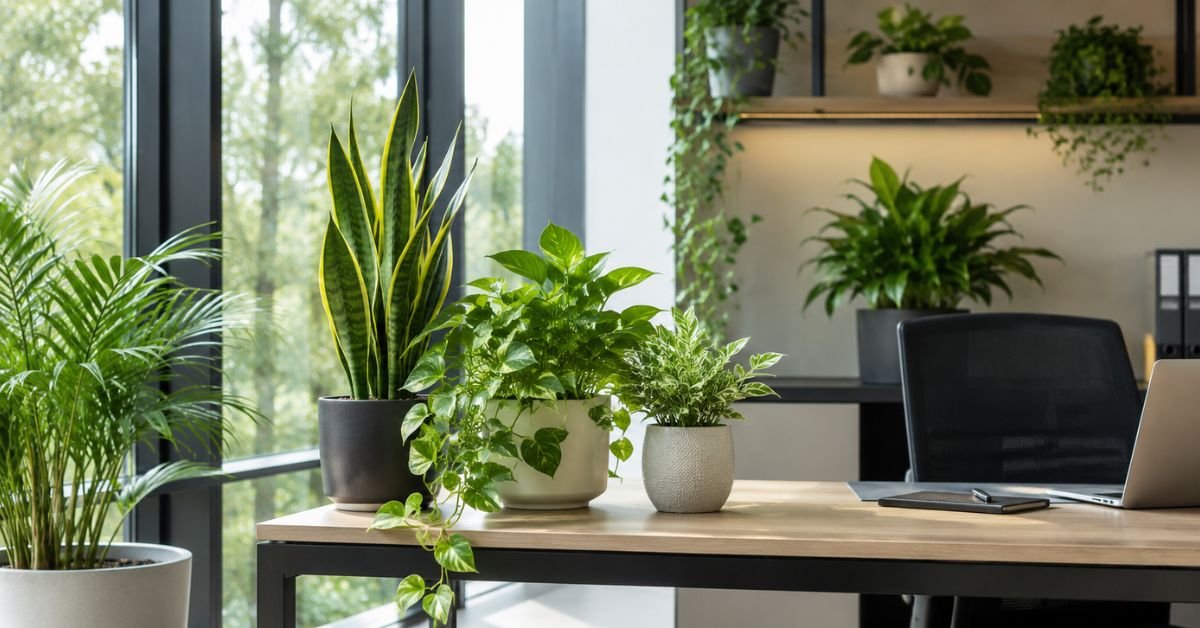
Lighting dictates everything in horticulture. The biggest error people make is buying a plant based on how it looks rather than how much light their desk actually gets.
If you work in a windowless cubicle illuminated only by overhead fluorescent panels, your choices are limited but highly durable. The ZZ Plant (Zamioculcas zamiifolia) and the Snake Plant (Sansevieria) are your absolute best options. Both of these structural plants can survive for months on artificial light alone. They grow slowly in these conditions but they will not die.
If you have a desk near an east or west-facing window, you unlock a lot more variety. Trailing plants like Golden Pothos and Heartleaf Philodendron will grow vigorously here. Their vines can be draped over filing cabinets or monitor stands.
If you are lucky enough to have a sunny south-facing corner office, treat it like a desert. Succulents like Jade Plants and Aloe Vera need that intense direct sunlight to maintain their shape. Putting a succulent in a dark cubicle is a guaranteed death sentence.
Personal Pro-Tip: Hold your hand six inches above your desk during the brightest part of the day. If you cannot see a sharp shadow behind your hand, your light levels are too low for anything other than a ZZ or Snake plant.
How to Water Your Desk Plant Properly
Watering a plant next to a laptop and a stack of important paperwork is a disaster waiting to happen. You should never water your plant directly on your desk using a coffee mug.
Instead, use the cachepot method. Keep your plant in a plastic nursery pot with drainage holes at the bottom. Place that cheap plastic pot inside a nicer decorative pot that has no holes. When it is time to water, lift the plastic pot out and take it to the office breakroom sink. Run room-temperature faucet water over the potting soil until it drains completely out the bottom.
Wait ten minutes for the excess water to drip away in the sink. Then return the dry plastic pot back to its decorative container on your desk. This prevents muddy water from leaking onto your electronics and stops the roots from sitting in stagnant puddles.
Personal Pro-Tip: If your office uses a water softener system for its tap water, do not use it on your plants. Softened water contains dissolved sodium that will rapidly build up in the potting soil and burn the roots. Use bottled spring water from the breakroom fridge instead.
Common Mistakes That Destroy Workspace Greenery
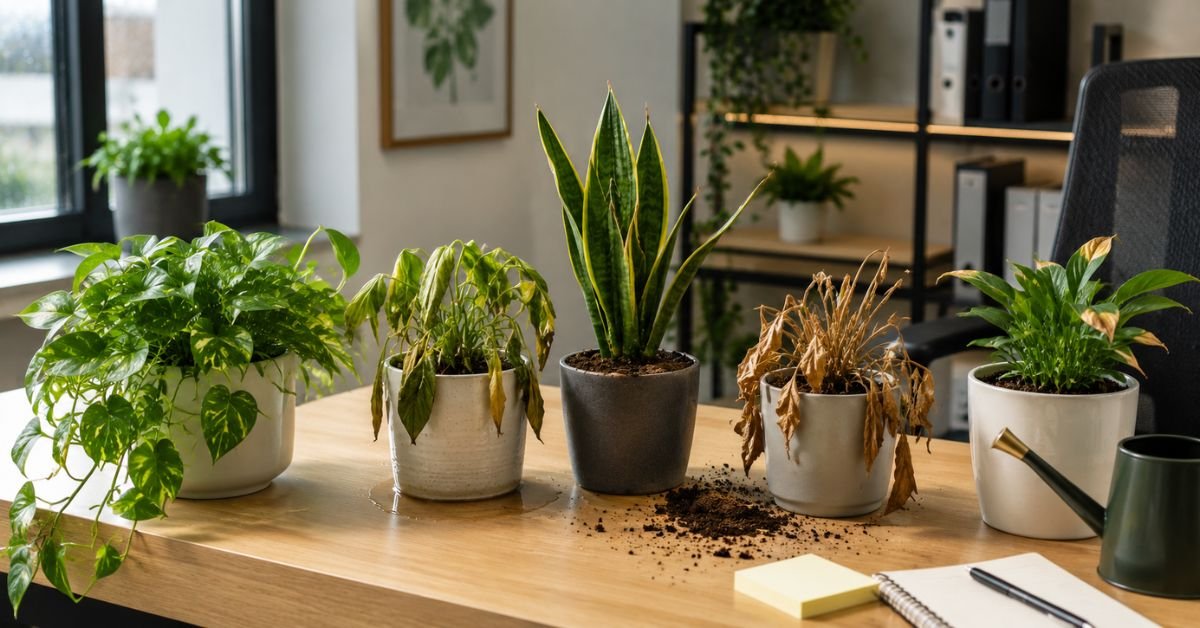
Americans typically kill their workspace plants through kindness. We tend to overwater them because we are bored at work.
Pouring a few drops of leftover drinking water into your plant pot every single day will suffocate the root system. Plant roots need oxygen just as much as they need water. When potting soil stays constantly soggy, it breeds bacteria and root rot. Always wait until the top two inches of soil feel completely dry before watering again.
Another massive killer is the office HVAC system. Commercial air conditioning vents blast frigid, bone-dry air all summer. In the winter, the heating system does the exact same thing with hot air. If your desk sits directly under an air vent, the aggressive drafts will literally suck the moisture out of the leaves faster than the roots can drink it up. Move your pot to a sheltered corner of your desk away from direct airflow.
Personal Pro-Tip: If you are leaving the office for a two-week vacation, give your plant a deep watering on Friday afternoon and move it away from the window. Reducing its light exposure temporarily slows down its metabolism so it drinks less water while you are away.
Troubleshooting Yellowing Leaves on Office Plants
Plants communicate their stress levels through their leaves. Learning to read these visual cues will save you a lot of frustration.
If your office plant develops soft, mushy yellow leaves at the base of the stem, you are overwatering it. The soil is staying too wet. Stop watering immediately. Check the bottom of your decorative pot to ensure the plant is not sitting in a hidden pool of stagnant water.
If the tips of the leaves are turning brown and crispy, the ambient air is too dry. This is incredibly common in US office buildings with aggressive climate control. While you cannot realistically set up a humidifier next to your work computer, you can group a few plants together. Placing three or four pots next to each other creates a small microclimate that traps local humidity.
If your trailing plants like Pothos start looking leggy with huge gaps between the leaves, they are starving for sunlight. They are stretching their vines out in a desperate search for energy. You need to move them closer to a window or bring in a small desktop grow light.
Personal Pro-Tip: Ignore a single yellow leaf at the very bottom of the plant. Old leaves naturally die off as the plant pushes its energy into new top growth. Just snip the ugly leaf off with clean scissors.
Toxicity Guidelines for Home Office Desk Plants
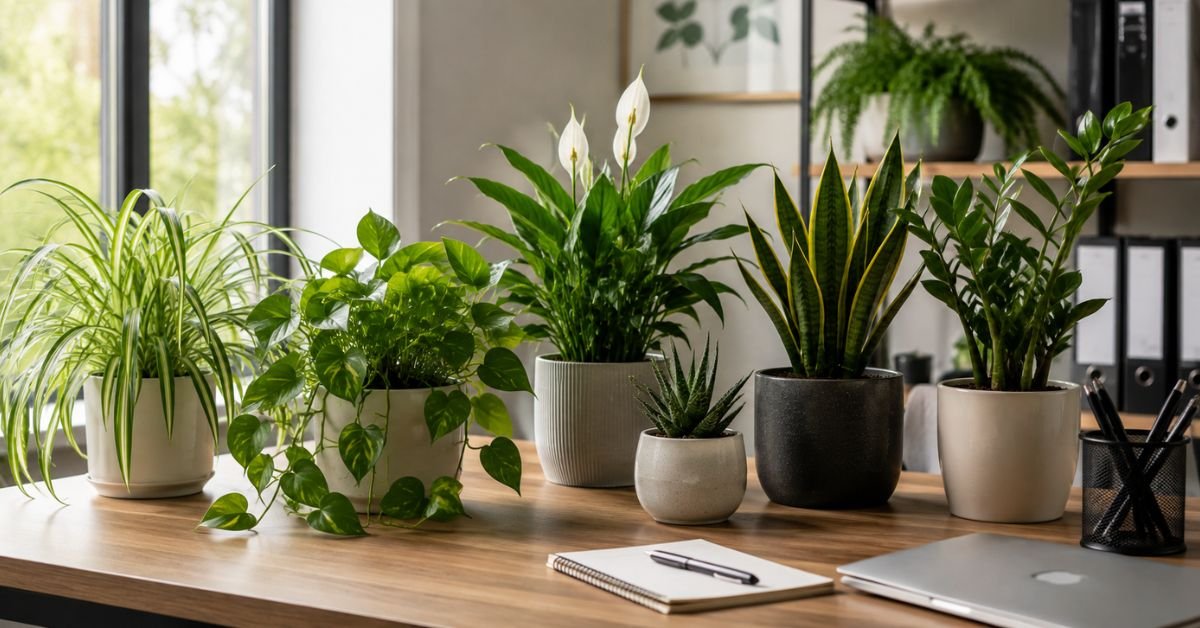
With the massive shift toward remote work, home offices have become the new standard. This introduces a major complication for pet owners.
A plant that was perfectly safe in a corporate cubicle might be a severe hazard if your cat likes to chew on leaves during your Zoom calls. According to the ASPCA animal poison control database, many popular low-light plants are highly toxic. The ZZ Plant, Snake Plant, Pothos, and Philodendron all contain insoluble calcium oxalates. If a dog or cat chews on them, it causes intense burning of the mouth, severe drooling, and vomiting.
If you share your home office with pets, you must choose non-toxic varieties. I always recommend the Peperomia family, Boston Ferns, or the Cast Iron Plant. These give you a lush, professional background for video calls while remaining 100% safe for curious animals.
Personal Pro-Tip: Even non-toxic plants can cause mild stomach upset if an animal eats enough of them. I always suggest keeping any home office greenery pushed to the back corner of your desk or elevated on a monitor stand out of direct reach.
7 Frequently Asked Questions About Desk Plants
Q1: How long can a desk plant survive over a holiday weekend without water?
Most thick-leaved species like the ZZ plant, Snake plant, or Jade plant can easily go three to four weeks without a single drop of water.
Q2: Will fluorescent office lights provide enough energy for a plant?
Yes, but only for specific low-light species. ZZ plants, Cast Iron plants, and Snake plants will survive purely on fluorescent ceiling lights, though they will barely grow.
Q3: Can I use coffee grounds to fertilize my office plant?
No. Uncomposted coffee grounds dumped directly on indoor potting soil will quickly grow mold and attract annoying fungus gnats to your workspace.
Q4: Why does my desk plant have tiny black flies crawling in the soil?
Those are fungus gnats. They breed in potting soil that is kept too wet. Let the top two inches of the soil dry out completely to kill their larvae.
Q5: Can I grow a flowering plant on my desk?
Unless you have a very bright south-facing window right next to you, most flowering plants will drop their buds and refuse to bloom in a standard office setting.
Q6: Does a desk plant actually clean the air in an office?
While plants do process airborne toxins, university studies show you would need dozens of plants crammed into a small office to create any measurable change in actual air quality.
Q7: Should I mist my desk plant with a spray bottle?
Misting is highly discouraged in an office setting. It creates a mess on your desk, risks damaging electronics, and the moisture evaporates far too quickly to actually benefit the plant.
Personal Pro-Tip: If fungus gnats become a serious problem in your office, mix a quarter-inch layer of decorative coarse sand over the top of your potting soil. The sand dries instantly and prevents the adult flies from laying eggs in the damp dirt below.
Final Thoughts on Keeping Your Desk Plant Alive
Bringing a piece of nature into your daily work routine is one of the easiest ways to improve your mood and lower your blood pressure. The key to long-term success is matching the right species to your specific lighting situation and resisting the urge to overwater it when you get bored. Keep your watering routine strictly in the breakroom sink, protect your foliage from aggressive AC vents, and your workspace garden will look fantastic for years.
What is currently growing on your desk? Drop a comment below to let me know which plant survives your office environment the best, or ask a question if your current green coworker is looking a little sad today!

Amin Khalid is a professional horticulturist and the founder of LeafyWisdom. With a deep passion for home gardening and horticultural research, he specializes in providing practical, easy-to-follow care guides for indoor plants. Amin’s goal is to simplify gardening for everyone and help fellow plant lovers build their own thriving green spaces.