
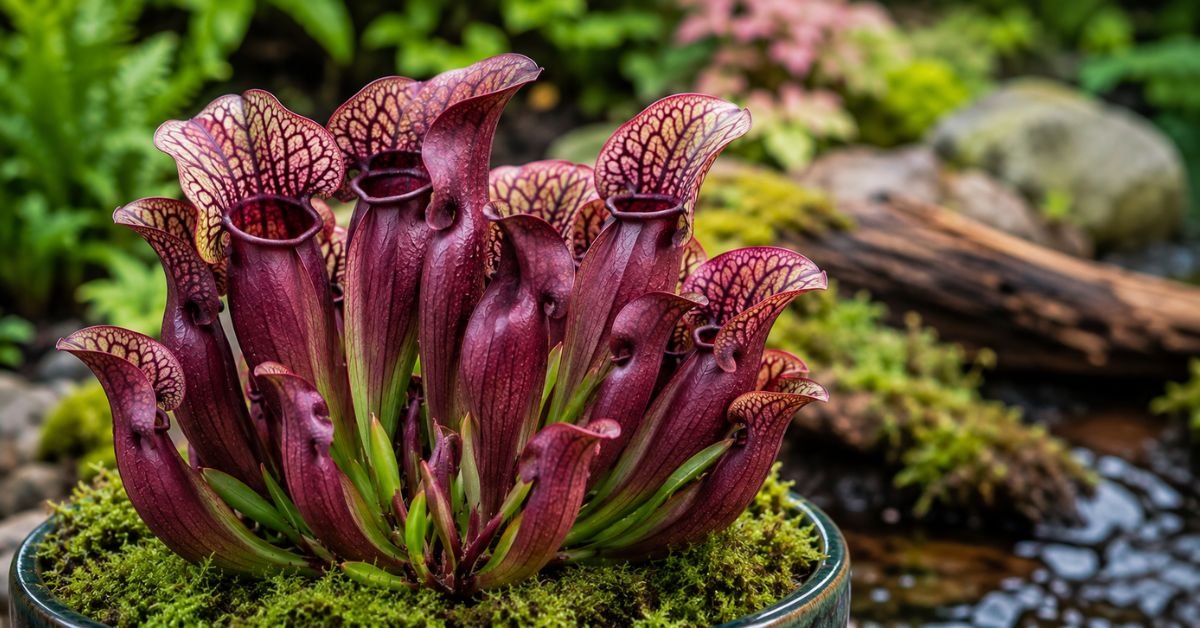
What is the secret to purple pitcher plant care? Successful purple pitcher plant care requires giving this carnivorous bog species full direct sunlight, keeping its soil constantly wet with mineral-free water, and providing a necessary 3 to 4 month cold winter dormancy period.
I have grown carnivorous plants for over a decade in my home gardens. Sarracenia purpurea stands out as one of the most rugged and visually striking native American bog plants you can own. Its squat, tub-shaped pitchers collect rainwater naturally and trap insects using stiff down-pointing hairs. While tropical houseplants sit comfortably on a warm living room shelf, this carnivorous native demands specific wetland conditions to stay healthy long-term.
Growing one of these bog natives is an extraordinary experience. You are essentially building a self-sustaining miniature ecosystem in a pot.
Quick Care Matrix for Purple Pitcher Plant Care
| Care Factor | Expert Recommendation |
| Light | Direct outdoor sunlight (6+ hours daily) or powerful grow lights |
| Watering | Keep continuously wet using the tray method (1 inch of standing water) |
| Water Type | Distilled water, reverse osmosis, or rainwater ONLY |
| Soil Mix | 50/50 mix of unfertilized sphagnum peat moss and perlite or silica sand |
| Hardiness | USDA Hardiness Zones 3 through 8 |
| Pet Safety | 100% Non-toxic to cats and dogs (ASPCA confirmed) |
Understanding Sarracenia Purpurea and Its Native Habitat
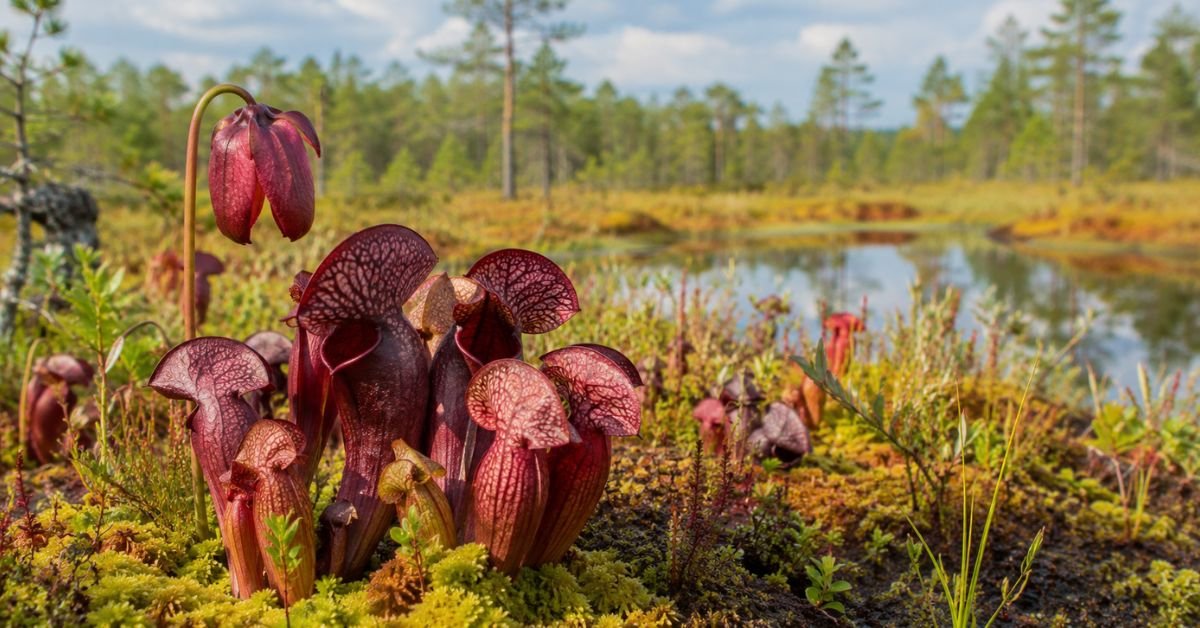
To keep your specimen healthy, you must understand where it comes from. The wild species grows in nutrient-poor, acidic peat bogs stretching from Canada down through the eastern coast of the United States.
Because bog soil lacks nitrogen and phosphorus, the plant evolved tubular leaves to catch bugs for nutrients instead of absorbing them through roots. United States Department of Agriculture (USDA) data lists the northern subspecies (Sarracenia purpurea subsp. purpurea) as hardy in USDA Hardiness Zones 3 through 8. These plants freeze solid under winter snow and wake up strong every spring.
If you live in northern states like Minnesota or Maine, you can keep your bog pots outside all year. Southern growers in warmer zones may need to manage winter temperatures differently to guarantee a proper cold rest period.
Personal Pro-Tip: Always check whether you own the northern or southern subspecies. Northern plants have hairier, squatter traps that handle sub-zero freezes. Southern varieties have smoother, taller pitchers that prefer milder winters.
Sun Requirements for Vibrant Pitchers
Sunlight powers the bright colors and stiff structure of this carnivorous species. In native bogs, nothing shades these plants from the sky.
You should place your container outdoors in a spot that receives at least six full hours of direct sunlight every day. Full sun triggers deep purple and crimson veining across the foliage. If your plant gets stuck in deep shade, the pitchers will stay pale green, turn floppy, and lose their ability to hold fluid.
Growing these plants indoors on a standard windowsill is challenging. Unless you have an unobstructed south-facing window, you will likely need high-output LED grow lights placed a few inches above the crown for 12 to 14 hours a day.
Personal Pro-Tip: If you move an indoor-grown plant outside in June, do not put it in harsh direct midday sun immediately. Acclimate it over a week in partial shade first, or the unaccustomed ultraviolet light will scorch the tender pitcher walls.
Watering Rules: Why Faucet Water Kills Bog Plants
Water quality makes or breaks your success with carnivorous species. Regular water from a city faucet contains minerals, fluoride, and salts that poison bog roots.
You must exclusively use rainwater, distilled water, or water purified by reverse osmosis. Total Dissolved Solids (TDS) in your water should measure below 50 parts per million. I keep a dedicated rainwater barrel behind my shed just for my carnivorous collection.
Unlike tropical house plants that prefer their potting soil to dry out between waterings, bog plants need constant moisture. Use the tray method. Set your plastic pot inside a deep saucer and keep about one inch of pure water in the saucer at all times during spring and summer.
Personal Pro-Tip: Pick up a cheap TDS meter online to test your water supply. If your bottled water reads above 50 ppm on the meter, do not pour it into your bog pots.
Crafting the Perfect Nutrient-Free Soil Mix
Standard potting soil will kill a purple pitcher plant within weeks. Commercial dirt mixes contain added fertilizers, compost, and lime that instantly burn sensitive bog roots.
You need a completely inert substrate that mimics acidic bog peat. My go-to recipe is simple and effective. Mix equal parts of unfertilized sphagnum peat moss and horticultural perlite or coarse silica sand. Make sure the peat moss label explicitly states that it contains zero added plant food or fertilizers.
Always choose plastic or glazed ceramic pots with large drainage holes. Avoid unglazed terracotta pots because the clay leaches mineral salts into the damp soil over time.
Personal Pro-Tip: Peat moss is hydrophobic when dry and repels water. Before potting your plant, dump the dry peat into a bucket, pour distilled water over it, and knead it with your hands until it turns into a wet sponge.
How to Handle Winter Dormancy Indoors and Outdoors
Temperate carnivorous plants must rest in winter. Between November and February, shortening days tell the plant to stop growing new leaves. Existing pitchers may turn brown and die back to the underground rhizome.
If you live in USDA Zones 3 to 8, leave your outdoor pots outside. Protect the roots from drying winds by burying the pots in garden soil or wrapping them in burlap once temperatures drop below freezing.
If you live in an apartment or keep your plants inside, you must provide 3 to 4 months of cold temperatures between 35°F and 45°F. You can place the pot in an unheated garage, a cold basement, or even use the refrigerator method.
Personal Pro-Tip: For the fridge method, gently unpot the plant in late autumn, trim off dead traps, wrap the damp root ball in a paper towel sprayed with sulfur fungicide, and seal it in a ziplock bag in your vegetable crisper drawer until spring.
Common Mistakes That Destroy a Purple Pitcher Plant
Most failures stem from treating this species like a normal houseplant or trying to force-feed it.
A frequent error is dropping raw meat, hamburger, or cheese into the traps. Human food rots inside the fluid, causing bacterial blooms that destroy the pitcher tissue. The plant gets all the nitrogen it needs from tiny insects like ants, flies, and beetles that fall in naturally.
Another mistake is letting dry indoor air from air conditioning or central furnace vents hit the foliage. Dry air strips humidity away faster than the roots can replace it, causing trap rims to dry out and turn crispy brown.
Personal Pro-Tip: Never apply chemical pest sprays or liquid houseplant fertilizers directly to the soil or foliage. A single application of standard fertilizer will kill the delicate root system.
Troubleshooting Purple Pitcher Plant Health Problems
Learning to spot early symptoms keeps your bog collection healthy through every season.
Why Are the Traps Turning Brown and Withered?
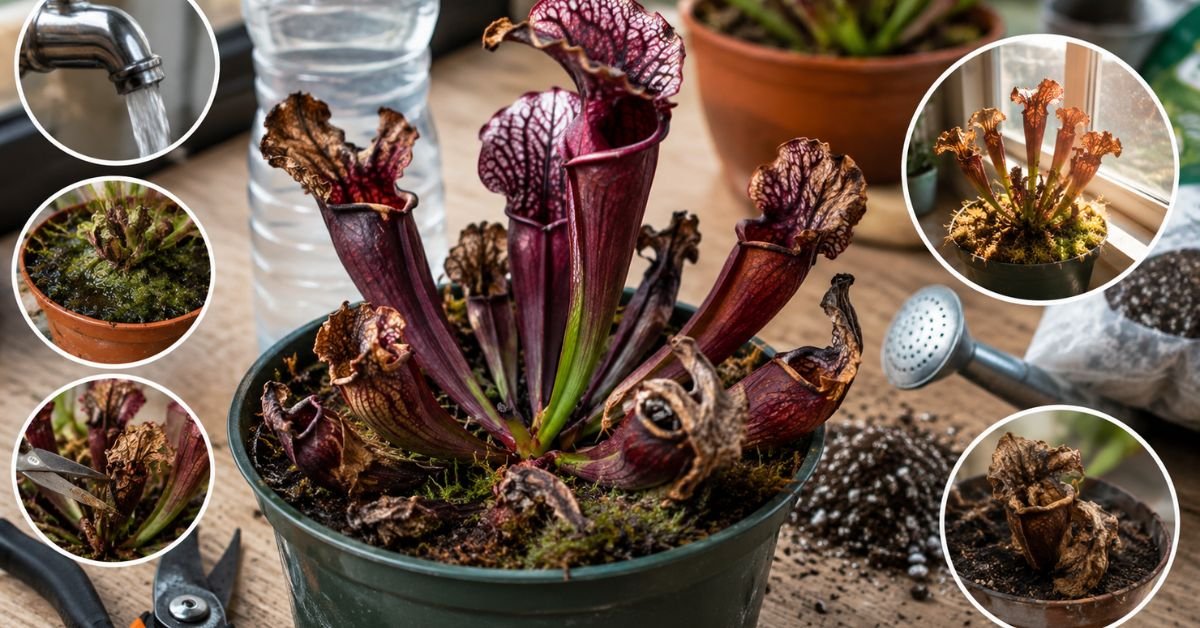
Old pitchers naturally brown and die as autumn arrives. Cut away brown, dead foliage with clean scissors near the soil line. If young pitchers turn brown during June, you are likely using mineral-heavy faucet water or letting the pot dry out.
Why Are Pitchers Floppy and Lacking Color?
Soft, pale green traps mean your plant is starving for light. Move the container to an outdoor spot that gets unshaded sunlight all morning and afternoon.
Why Is There Mold Inside the Pitchers?
Mold usually happens during winter dormancy if air circulation is dead still and moisture levels stay too high. Improve air movement around dormant plants and spray lightly with a natural sulfur-based fungicide if needed.
Personal Pro-Tip: Keep an eye on fluid levels inside active outdoor pitchers during hot July days. If heavy winds knock the pot over or evaporate the fluid, pour half an inch of distilled water directly into each trap opening.
Is the Sarracenia Purpurea Safe for Pets?
Safety is top of mind for pet owners adding unusual plants to their home or garden space.
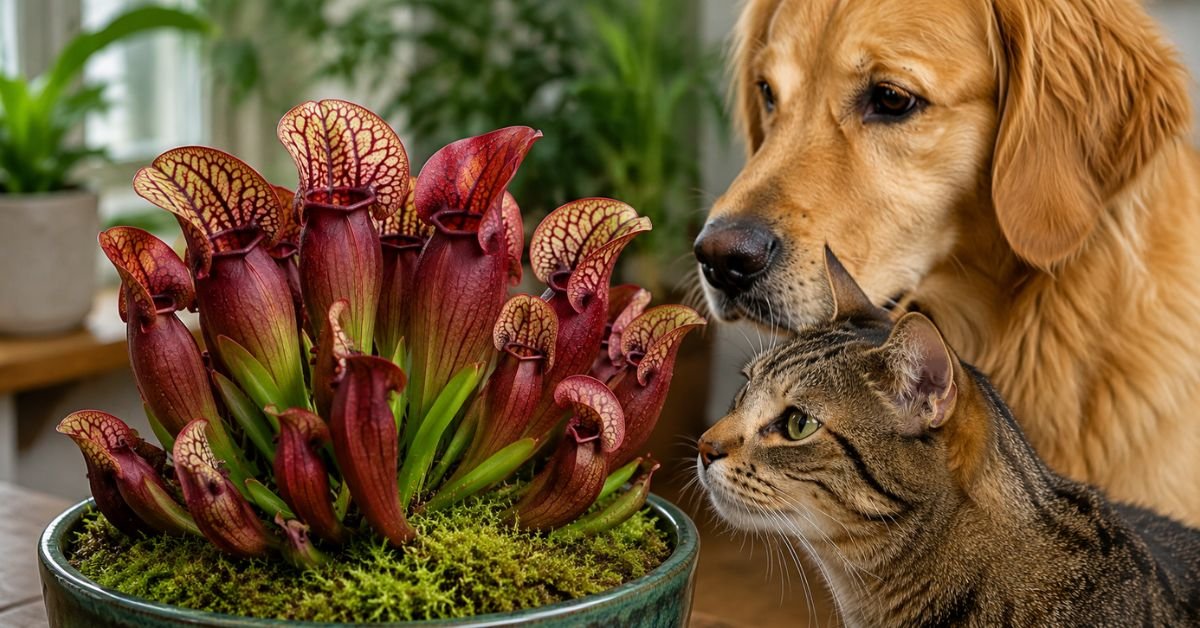
According to veterinary safety records from the ASPCA animal poison control system, Sarracenia purpurea is completely non-toxic to cats, dogs, and horses. It relies purely on mechanical traps and digestive enzymes designed for tiny insects, producing no toxic alkaloids that harm mammals.
Personal Pro-Tip: While the plant will not poison your cat, curious pets love to chew on stiff pitcher rims. Keep your pots elevated on plant stands so pets do not damage the foliage.
7 Frequently Asked Questions About Pitcher Plant Care
Q1: Can I grow a purple pitcher plant completely indoors?
It is difficult long-term because standard home light levels are too low. You need a south-facing window with direct sun or high-intensity LED grow lights running 12 to 14 hours daily.
Q2: What do I do if my purple pitcher plant flower appears in spring?
Tall nodding flowers are natural for mature plants. If your plant is healthy, enjoy the unusual blooms. If the plant seems small or weak, snip the flower stalk off so energy goes into pitcher growth instead.
Q3: Do I need to pour water inside the pitchers manually?
Wild Sarracenia purpurea traps catch rainwater naturally because their wide rims face straight up. If your outdoor plants are under an overhang or indoors, fill each trap one-third full with distilled water.
Q4: What insects does this carnivorous plant eat?
Outdoors, it catches ants, flies, wasps, beetles, and spiders. The insects are attracted to nectar along the rim, slip on smooth internal walls, and drown in the pooled fluid below.
Q5: How do I know if my plant is in dormancy or dead?
A dormant plant stops growing, turns brown at the leaf tips, but retains a firm, solid green or pink rhizome under the soil. A dead plant will have a soft, mushy, or black rhizome that smells foul.
Q6: Can I use bottled spring water for my bog garden?
No. Spring water contains added minerals like calcium and magnesium. These minerals build up in peat moss over time, eventually burning root tips just like faucet water does.
Q7: Why are the lower pitchers turning brown in autumn?
Leaf dieback in autumn is a completely normal part of entering winter dormancy. Trim the withered leaves away in early spring before new growth starts pushing up.
Final Thoughts on Your Carnivorous Gardening Journey
Growing a native bog species demands a different approach than caring for a traditional houseplant. Once you set up a mineral-free peat mix, use pure water, and give the plant direct sun and cold winter rests, these fascinating carnivores will reward you with years of stunning foliage.
Have you ever tried growing carnivorous bog plants in your garden or on a sunny patio? Drop a comment below to share your experience, or ask a question if your plant needs help!

Amin Khalid is a professional horticulturist and the founder of LeafyWisdom. With a deep passion for home gardening and horticultural research, he specializes in providing practical, easy-to-follow care guides for indoor plants. Amin’s goal is to simplify gardening for everyone and help fellow plant lovers build their own thriving green spaces.