
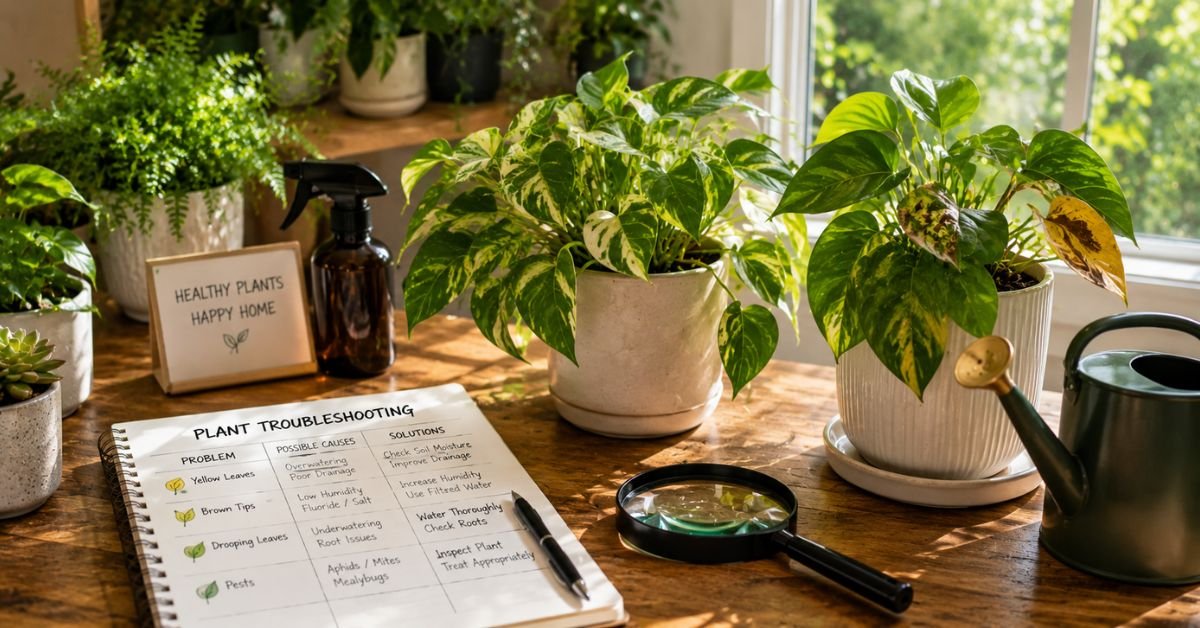
Keeping greenery healthy in a kitchen microclimate is trickier than standard living room care. Cooking fumes, sudden humidity spikes, ambient temperatures, and forced-air HVAC systems create a unique indoor environment.
According to data from Cornell Cooperative Extension and UF/IFAS Horticultural Sciences, indoor kitchen spaces experience rapid relative humidity drops (down to 25% during winter heating) interspersed with extreme short-term spikes (up to 80% during cooking).
In my 15 years as an American horticulturist helping homeowners from USDA Zone 5 in Chicago down to Zone 9 in Florida, I have found that success depends on matching a plant’s physiological tolerances to these specific numerical conditions.
Data-Backed Kitchen Plant Care Matrix
| Plant Variety | Light Requirement (Foot-Candles) | Ideal Temp Range (°F) | Target Humidity | Feeding Ratio (NPK) | Primary Benefit |
| Sweet Basil | 1,000 to 2,000+ fc (Direct sun) | 70°F to 85°F | 40% to 60% | 3-1-2 Liquid | Culinary herb |
| Pothos | 100 to 500 fc (Low to medium) | 65°F to 85°F | 30% to 70% | 10-10-10 Balanced | Air cleaning and vines |
| Snake Plant | 50 to 250 fc (Low light tolerant) | 55°F to 85°F | 20% to 50% | 1-2-2 Low Nitrogen | High durability |
| Spearmint | 800 to 1,500 fc (Bright indirect) | 60°F to 75°F | 50% to 70% | 2-1-2 Balanced | Odor control and teas |
| Spider Plant | 400 to 800 fc (Medium indirect) | 60°F to 75°F | 40% to 60% | 4-1-2 Foliage Blend | Pet-safe coverage |
Personal Pro-Tip: Keep plants at least 24 inches away from cooktops. Radiant heat from gas burners can spike surface temperatures above 115°F in minutes, instantly desiccating delicate leaf stomata.
Kitchen Microclimates: What University Extension Data Shows
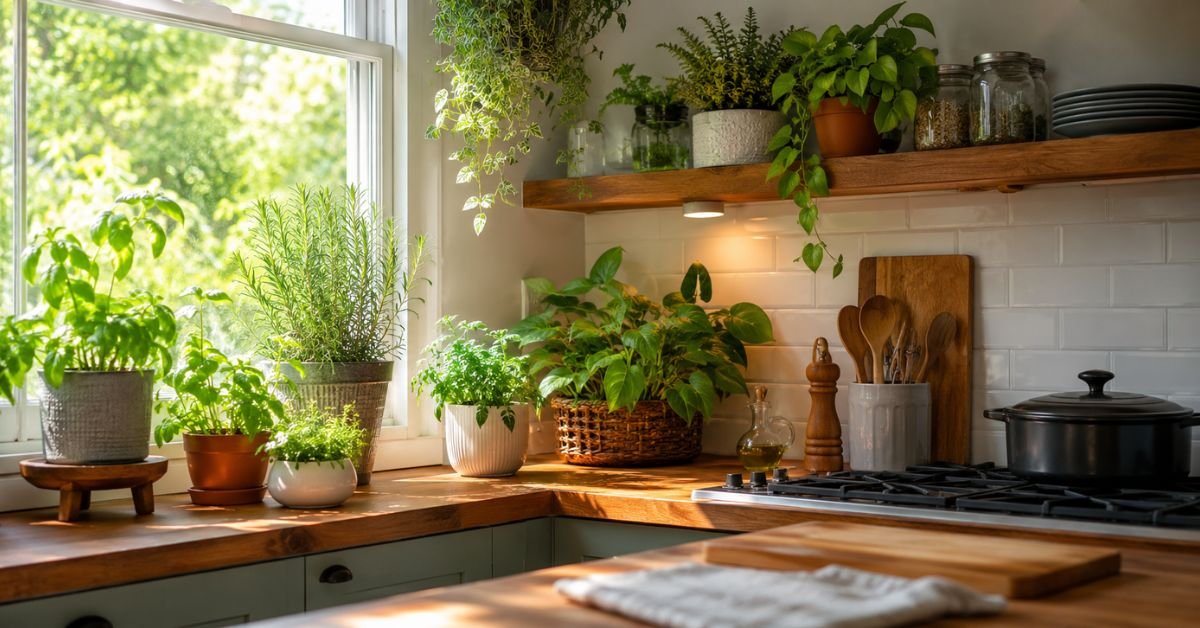
Indoor air movement near kitchen counters behaves differently than in other rooms. University studies on indoor air quality highlight two major factors affecting kitchen foliage:
- Grease Aerosols: Frying foods releases microscopic lipids into the air. When these coat foliage, they block photosynthetically active radiation (PAR).
- HVAC Air Velocity: Central air ducts blowing at speeds above 2.5 miles per hour strip moisture from leaves twice as fast as still air, leading to tip burn.
To counter grease accumulation, wipe leaves monthly using a soft cloth dampened with warm tap water and a single drop of organic castile soap.
Direct Comparison: Pothos vs. Snake Plant for Kitchen Corners
If you have a dark corner on your quartz countertop and can’t decide between these two popular options, here is how they stack up side by side.
Pothos (Epipremnum aureum)
- Growth habit: cascading vines
- Moisture needs: moderate, water when soil is 50% dry
- Light: prefers 200 to 500 fc
- Best spot: floating shelves and near the sink
Snake Plant (Dracaena trifasciata)
- Growth habit: vertical, architectural spears
- Moisture needs: very low, water only when soil is 100% dry
- Light: tolerates as low as 50 fc
- Best spot: counter corners and kitchen islands
Choose Pothos if your kitchen has consistent humidity from the sink and you want hanging foliage over cabinets. Choose Snake Plant if your kitchen runs dry, you travel frequently, or the plant sits in a lower light nook away from windows.
Pet Safety Metrics (ASPCA Aligned)
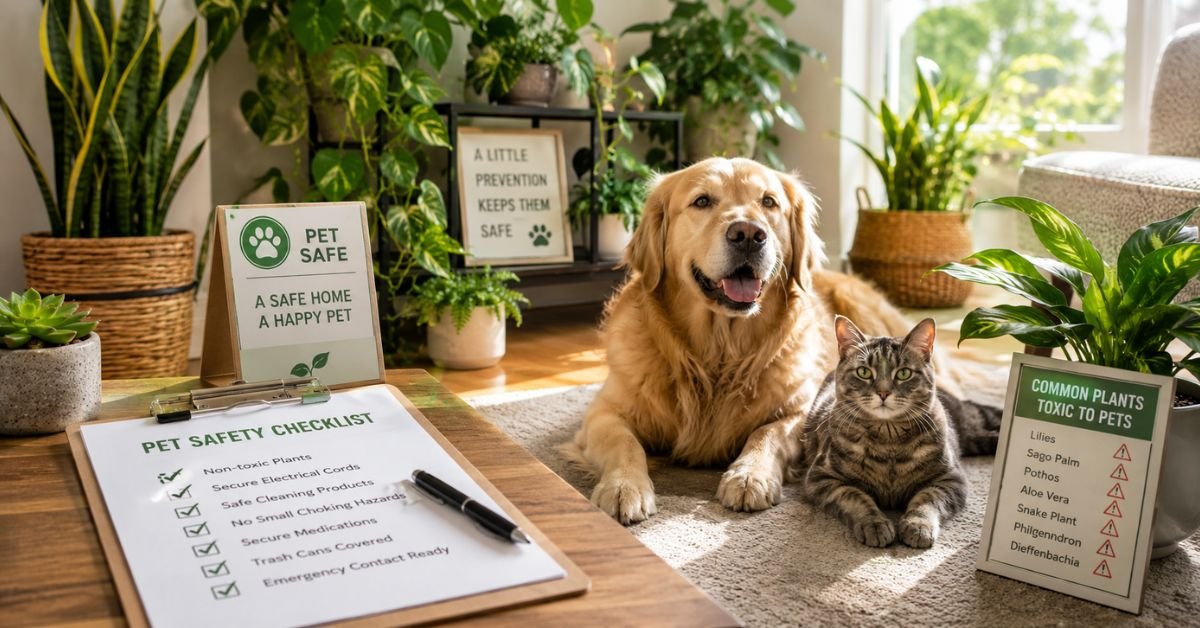
If you share your home with cats or dogs, plant selection requires strict attention to toxicity profiles verified by the ASPCA Animal Poison Control Center.
Pet-safe kitchen options
- Spider Plant (Chlorophytum)
- Peperomia (all species)
- Sweet Basil (Ocimum basilicum)
- Spearmint (Mentha spicata)
- Boston Fern (Nephrolepis)
Toxic kitchen options, keep elevated
- Pothos, contains insoluble calcium oxalates
- Snake Plant, contains saponins
- English Ivy, contains falcarinol
- ZZ Plant, contains calcium oxalates
- Jade Plant, contains an unidentified toxic principle
Keep toxic varieties on high wall-mounted bracket shelves or in ceiling hangers where jumping pets cannot reach them.
Precise Troubleshooting and Solutions
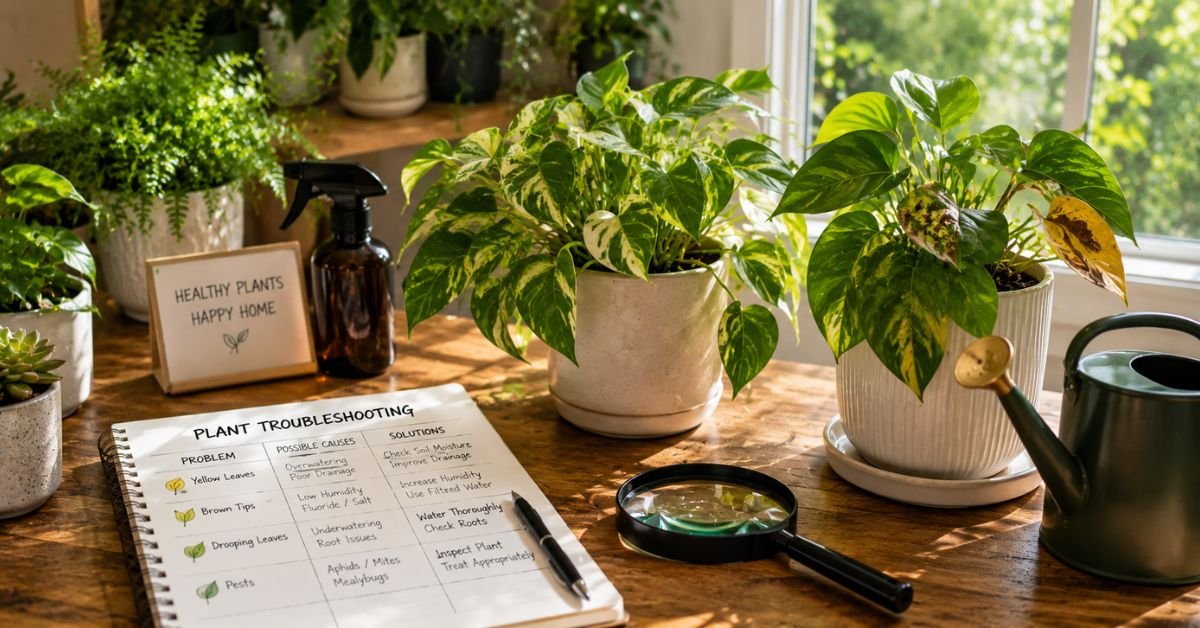
When your plants display signs of distress, rely on these exact diagnostic indicators rather than guesswork.
Interveinal Chlorosis (Yellowing Leaves) Cause: over-saturation or nitrogen deficiency. Solution: Test root density. If the pot feels heavy and damp, halt irrigation until the container weight drops by roughly 50%. If soil is dry, apply a 3-1-2 liquid fertilizer diluted to half strength.
Marginal Leaf Necrosis (Crisp Brown Tips) Cause: ambient relative humidity dropping below 30%, or fluoride accumulation from municipal tap water. Solution: Maintain humidity above 40% using a compact ultrasonic humidifier. If tap water mineral content exceeds 200 PPM, switch to distilled or rainwater.
Frequently Asked Questions
Q1: What exact foot-candle range do indoor herbs require near a window? Culinary herbs like basil, rosemary, and thyme require a minimum of 1,000 to 2,000 foot-candles (roughly 5 to 6 hours of direct sunlight) daily to maintain essential oil production. If natural light falls below 800 foot-candles, supplement with a 24-watt LED grow light placed 8 inches above the canopy.
Q2: What fertilizer NPK ratio is best for indoor kitchen foliage? For green leafy houseplants like Pothos and Spider Plants, use a liquid fertilizer with a 3-1-2 or 4-1-2 NPK ratio (such as 9-3-6). Nitrogen supports healthy leaf canopy development without causing weak, leggy stems.
Q3: How do I eliminate fungus gnats (Bradysia species) from pot soil permanently? Apply Bacillus thuringiensis israelensis (BTI) granules or liquid drench to the potting mix during watering. BTI produces proteins that specifically target gnat larvae in the soil without harming roots or beneficial soil microbes.
Q4: Does indoor cooking gas (methane/propane) affect plant health? Unburned natural gas leaks containing trace ethylene can cause premature leaf drop and epinasty (downward curling stems). Ensure your range hood exhausts externally and maintains air exchange rates above 100 CFM.
Q5: How do I adjust care during winter months in USDA Zones 3 to 6? As ambient day length shortens, plant metabolic rates drop significantly. Reduce watering frequency by approximately 40%, stop fertilizer applications entirely between October and March, and pull plants 6 inches back from window glass when outdoor temperatures drop below 32°F.
Q6: What potting soil recipe works best for kitchen herb drainage? Mix 60% high-grade peat moss or coconut coir, 20% coarse perlite, and 20% horticultural pumice or coarse sand. This blend maintains an optimal air-filled porosity of 15 to 20%, preventing root rot.
Q7: How can I propagate kitchen mint from store-bought cuttings? Select a clean 4-inch stem shoot, strip leaves from the lower 2 inches, and immerse the stem in clean water. Place in a warm location receiving 500 to 800 foot-candles of light. Roots typically emerge within 7 to 10 days at temperatures between 68°F and 72°F.
Final Thoughts
Creating a healthy indoor kitchen garden comes down to managing verifiable environmental inputs: light volume, soil porosity, and air quality. By monitoring these specific metrics, you can keep both culinary herbs and decorative foliage lush and productive year-round.

Amin Khalid is a professional horticulturist and the founder of LeafyWisdom. With a deep passion for home gardening and horticultural research, he specializes in providing practical, easy-to-follow care guides for indoor plants. Amin’s goal is to simplify gardening for everyone and help fellow plant lovers build their own thriving green spaces.