
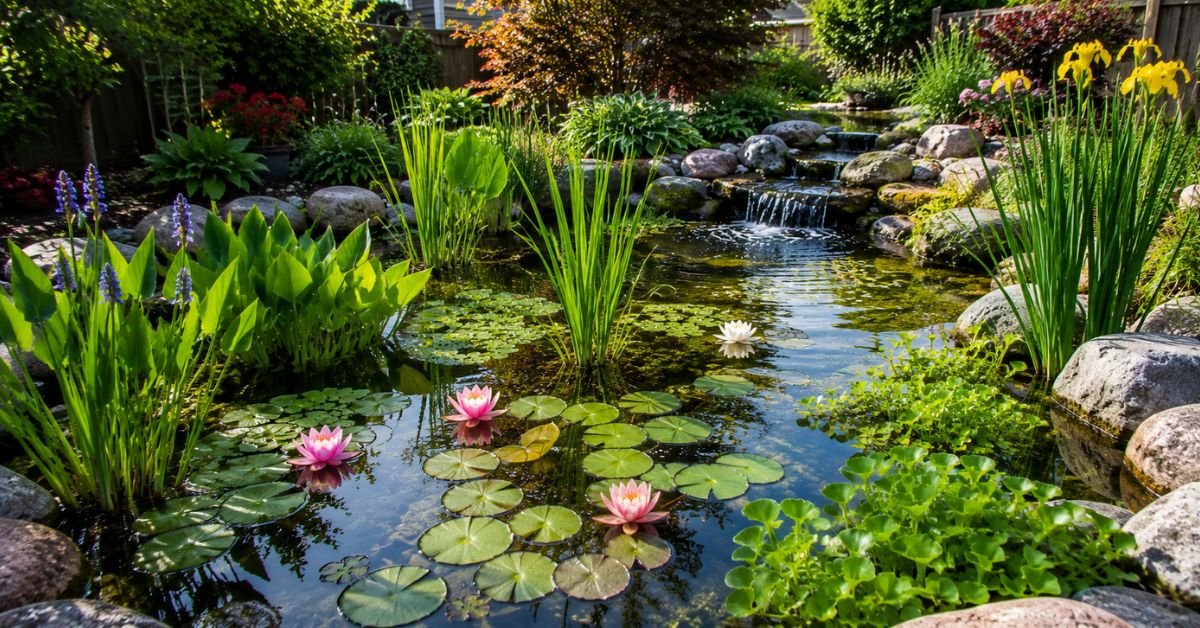
I remember staring at the green, murky mess in my backyard a few summers ago. It smelled exactly like a swamp, and my first attempt at growing pond plants was an absolute disaster.
I had spent a whole weekend digging a beautiful water garden. I filled it straight from the garden faucet. Then, I crossed my fingers. I completely underestimated the power of aquatic greenery, assuming the expensive mechanical filter would do all the work.
I learned the hard way. A water feature is a living ecosystem, and the secret to crystal-clear water isn’t chemicals. It’s the vegetation. Today, I want to share exactly how to grow a balanced water garden without making the same costly mistakes I did.
Quick Care Cheat Sheet for Skimmers
| Detail | What You Need to Know |
| Water Depth | Bog plants like 1-6 inches of water. Lilies want 12-36 inches. |
| Sunlight | 6+ hours of full sun for the best blooms. |
| USDA Zones | Hardy types survive Zones 3-8 easily. Tropicals need Zones 9-11 (or a warm garage in Winter). |
| Soil Needs | Heavy aquatic clay. Never use standard houseplant soil. |
Personal Pro-Tip: Don’t buy everything at once. I start every Spring by buying my surface floaters first, letting them multiply, and then adding my heavy bottom-dwellers a few weeks later once the water warms up.
The Core Categories of Pond Plants
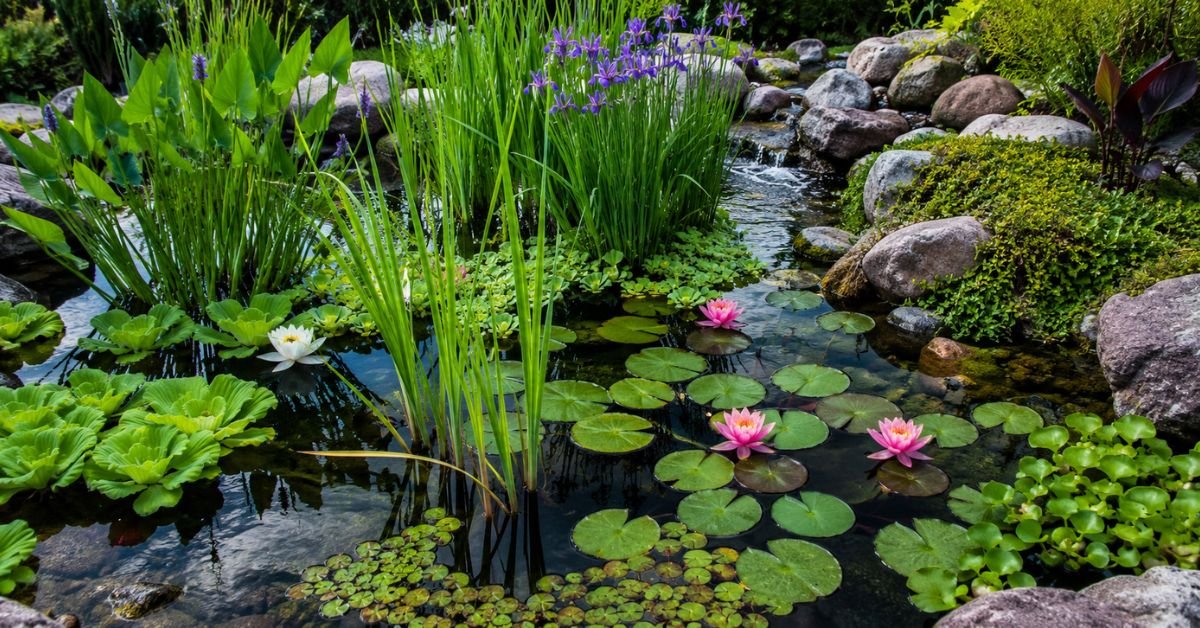
You need a diverse mix to keep things balanced. Think of it like building a healthy meal. You need different ingredients to do different jobs.
Floating Pond Plants
These are your natural sunshades. Their roots dangle freely in the water while the leaves sit on the surface. Water Hyacinth and Water Lettuce are incredibly popular across the US for this exact reason. They block the brutal July sun and literally starve out green algae by eating up the nutrients.
Deep Water Pond Plants
Here is where the magic happens. Water lilies and lotuses get planted in heavy pots resting at the very bottom of the water. They shoot long stems upward, finishing with massive, showy blooms on the surface. If you buy hardy varieties, they will easily survive freezing mid-western winters as long as the tuber at the bottom doesn’t freeze solid into ice.
Marginal Pond Plants
These live in the shallow edges. Creeping Jenny, Marsh Marigold, and Pickerelweed soften the harsh look of black rubber liners or ugly rocks. They also give frogs a safe place to rest.
Submerged Oxygenators
You won’t even see these. Hornwort and Anacharis live entirely under the surface. They pump pure oxygen directly into the water, which your koi and beneficial bacteria desperately need.
Personal Pro-Tip: I aim to cover about 50% to 60% of the water’s surface with foliage. If you cover more than that, you risk cutting off the oxygen exchange at the surface.
Why Americans Kill Their Pond Plants
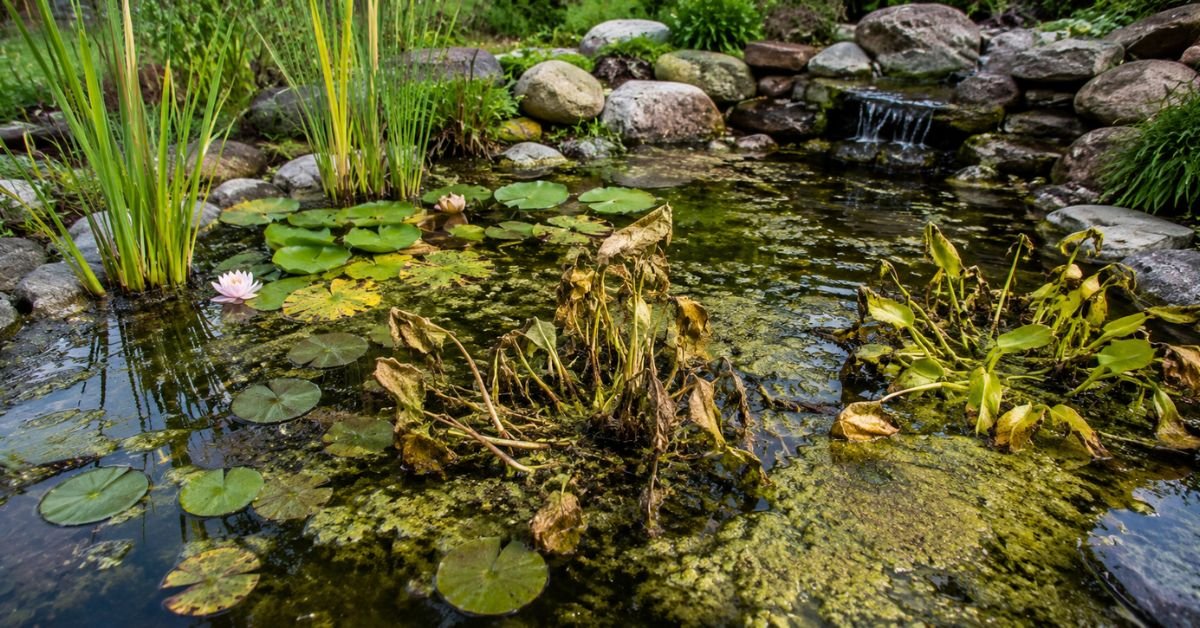
I see the same exact failures every single season. Usually, it comes down to a few basic misunderstandings about how aquatic ecosystems work.
Using the Wrong Soil
Do not grab a bag of standard indoor potting soil for your lilies. Just don’t do it. Standard soil is full of perlite, peat moss, and wood chips. The second you drop that pot into the water, a massive cloud of white perlite will float to the top and instantly clog your pump. You must use unscented baked clay (kitty litter works!) or heavy aquatic loam.
The Garden Faucet Trap
Evaporation happens fast in August. It’s tempting to just leave the garden hose running to top off the water. But city tap water contains chlorine and chloramines. If you do a big water change without adding a water conditioner, you’ll burn the roots of your plants and nuke your good bacteria.
Frying Them With Air Conditioning
Folks in colder states (Zones 3-6) often bring their expensive tropical lilies indoors for the Fall and Winter. That’s smart. But placing them near your indoor AC vents or forced-air heating registers is a death sentence. The dry air will turn the leaves to literal dust in a matter of days. Keep them in a bucket of water near a sunny, draft-free window instead.
Personal Pro-Tip: When planting new marginals in plastic baskets, I always line the inside of the basket with a piece of burlap or newspaper before adding the clay. It keeps the dirt from washing out into the water while the roots establish themselves.
Troubleshooting Unhappy Pond Plants
Sometimes they get sick. It happens. But aquatic foliage is actually really good at telling you what it needs.
- Leaves Turning Yellow: If your lily pads are turning a pale, sickly yellow but the veins remain dark green, they are starving. A brand-new water garden often lacks the fish waste needed to feed heavy bloomers. Shove an aquatic fertilizer tablet deep into the soil of the pot.
- Crispy Brown Tips: This is almost always chemical burn. If you recently treated your backyard oasis with a harsh liquid algaecide, your vegetation is going to suffer.
- Mushy, Black Stems: You planted them too deep. A marginal plant likes wet roots, but if you drop the whole thing two feet underwater, it will drown and rot. Move it to a shallower rock shelf.
Personal Pro-Tip: Older lily pads naturally turn yellow and rot by late summer. I pull on a pair of waders, get in there, and pinch the dying pads off at the base. It keeps the water from turning brown from decaying organic matter.
Are Pond Plants Toxic to Dogs and Cats?
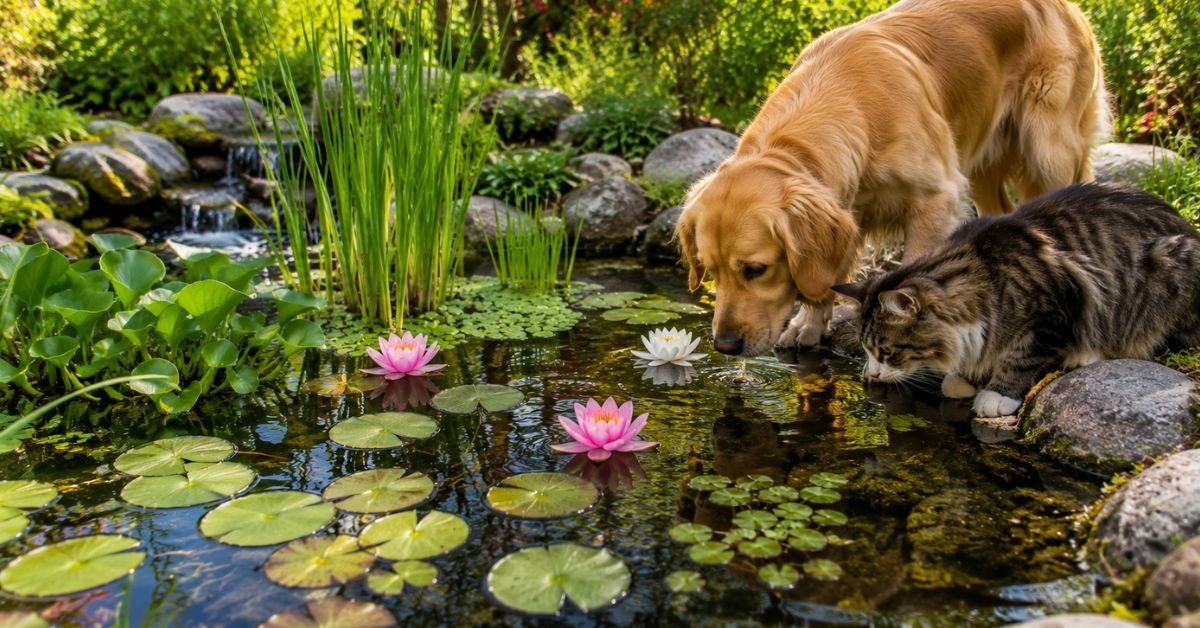
We love our pets. A thirsty Labrador is definitely going to take a sip from your backyard water feature, so you need to be careful about what you plant.
According to the ASPCA, true Water Lilies are generally non-toxic to dogs and cats.
However, Water Hyacinth can trigger heavy vomiting if your dog decides the floating bulbs look like chew toys. Similarly, Irises and Marsh Marigolds (which we use heavily on the shallow edges) contain toxins that cause bad gastrointestinal upset.
Personal Pro-Tip: I plant my pet-safe greenery (like Sweet Flag) on the easily accessible edges of the rocks. I put the riskier, toxic stuff right in the middle where my dog can’t reach it without going for a full swim.
Essential FAQs About Pond Plants
Here are the questions I constantly see popping up on Reddit and from my local landscaping clients.
Q1: How often should you water pond plants?
You don’t! That is the absolute best part. They live in the water. Just make sure the sun doesn’t evaporate the water level down below their pots during a dry spell.
Q2: Will my koi eat everything I plant?
Yes. Big koi are underwater lawnmowers. They will demolish the roots of floating vegetation. I use floating plastic rings to protect the roots, or I isolate the greens in a shallow bog area where the big fish can’t swim.
Q3: Do pond plants need fertilizer?
Your floaters and submerged oxygenators will pull everything they need straight from the fish waste in the water. Potted deep-water lilies, however, need a monthly aquatic fertilizer spike pushed into their clay from Spring through late Summer.
Q4: Can I use dirt from my own yard?
If your yard has heavy, dense clay that has never been sprayed with weed killer, yes. If you have sandy soil or use lawn chemicals, no.
Q5: Why are my floaters shrinking and dying?
Usually, your water is too clean. If you have no fish and a massive filtration system, there is no nitrogen in the water. The floaters will literally starve to death.
Q6: Can pond plants survive the winter outside?
It depends on your USDA Hardiness Zone. Hardy marginals and hardy lilies survive freezing temperatures just fine, provided their roots are below the solid ice line. Tropical varieties will turn to mush the moment the water hits 50°F.
Q7: Will adding plants really clear up my green water?
Yes. Green water is just single-celled algae feeding on sunlight and nutrients. Add floating vegetation to block the sun, and submerged oxygenators to eat the nutrients. The algae will starve, and your water will clear up naturally.
Personal Pro-Tip: In late Fall, cut all the dead, brown stems off your hardy marginals right above the water line. If you leave them to rot over the Winter, they will foul your water quality by Spring.
Final Thoughts
Creating a backyard water garden is an incredibly rewarding process, but you have to respect the biology of it.
Start small. Grab a single hardy water lily, a couple of marginals for the rocky edges, and a handful of floaters. Watch how they react to your specific yard’s sunlight. You will absolutely make a few mistakes along the way, but that is just part of gardening. Stick with it, keep an eye on your water quality, and you will eventually build a peaceful, balanced ecosystem that takes care of itself.

Amin Khalid is a professional horticulturist and the founder of LeafyWisdom. With a deep passion for home gardening and horticultural research, he specializes in providing practical, easy-to-follow care guides for indoor plants. Amin’s goal is to simplify gardening for everyone and help fellow plant lovers build their own thriving green spaces.