
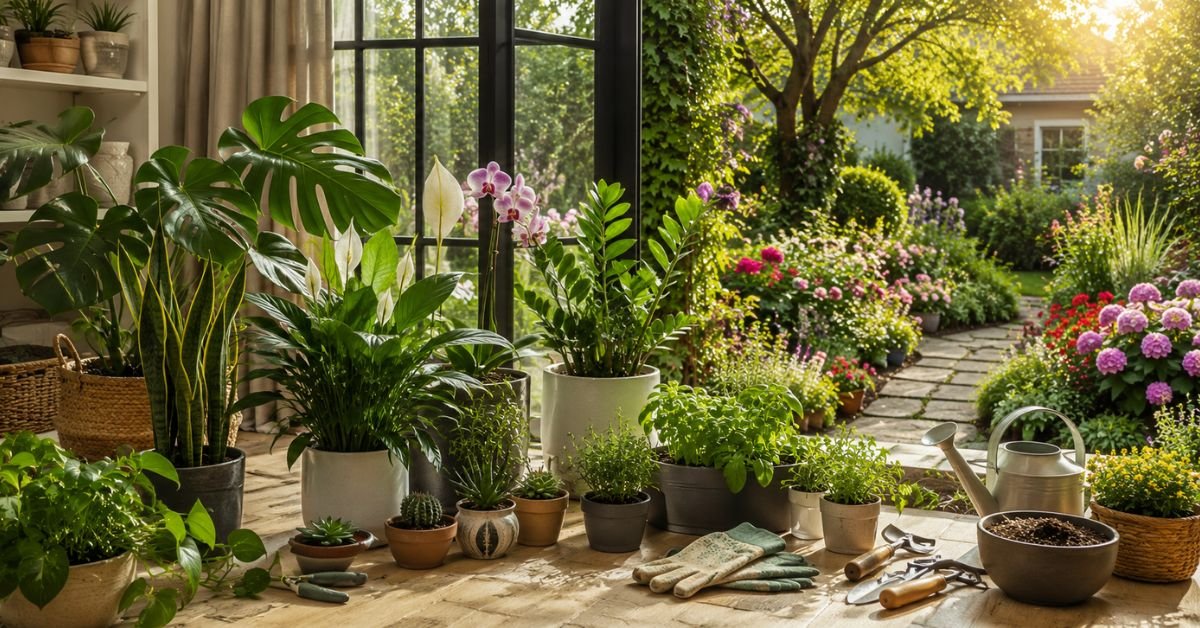
Figuring out the right types of plants for your home or yard is harder than it sounds, and I’ve spent years with soil under my fingernails watching people get it wrong in the same handful of ways. My neighbor asked me this exact question last spring while I was hauling a dying fiddle leaf fig out to the curb. Fair question. There are thousands of species out there, and most guides just dump a list on you without telling you which ones actually survive in a real American living room with a dry HVAC vent blowing on them all winter.
This guide breaks down the major types of plants you’ll actually encounter, whether you’re filling a windowsill in Ohio or planting a border bed in Zone 8b Georgia. I’m going to be blunt about what fails and why, because that’s more useful to you than another glossy list of “50 gorgeous plants.”
Quick Care Table: Types of Plants at a Glance
| Plant Category | Light Needs | Water Frequency | Difficulty | Pet Safe? |
| Succulents & Cacti | Bright, direct | Every 2-3 weeks | Easy | Mostly no |
| Tropical Foliage (Pothos, Monstera) | Bright, indirect | Weekly | Easy-Moderate | No |
| Flowering Houseplants (African Violet) | Bright, indirect | 1-2x weekly | Moderate | Varies |
| Ferns | Low-medium, indirect | Frequent, keep moist | Moderate-Hard | Mostly yes |
| Herbs (Basil, Mint) | Full sun / bright | Frequent | Easy | Yes |
| Perennial Garden Flowers | Full sun to part shade | Weekly (established) | Easy-Moderate | Varies |
| Annual Bedding Plants | Full sun | Frequent | Easy | Varies |
| Trees & Shrubs | Depends on species | Deep, infrequent | Moderate | Varies |
Keep this table bookmarked. I’ll go section by section below, because “it depends” is the honest answer to almost every plant question, and I want to actually tell you what it depends on.
Succulents and Cacti: The Types of Plants for People Who Forget to Water
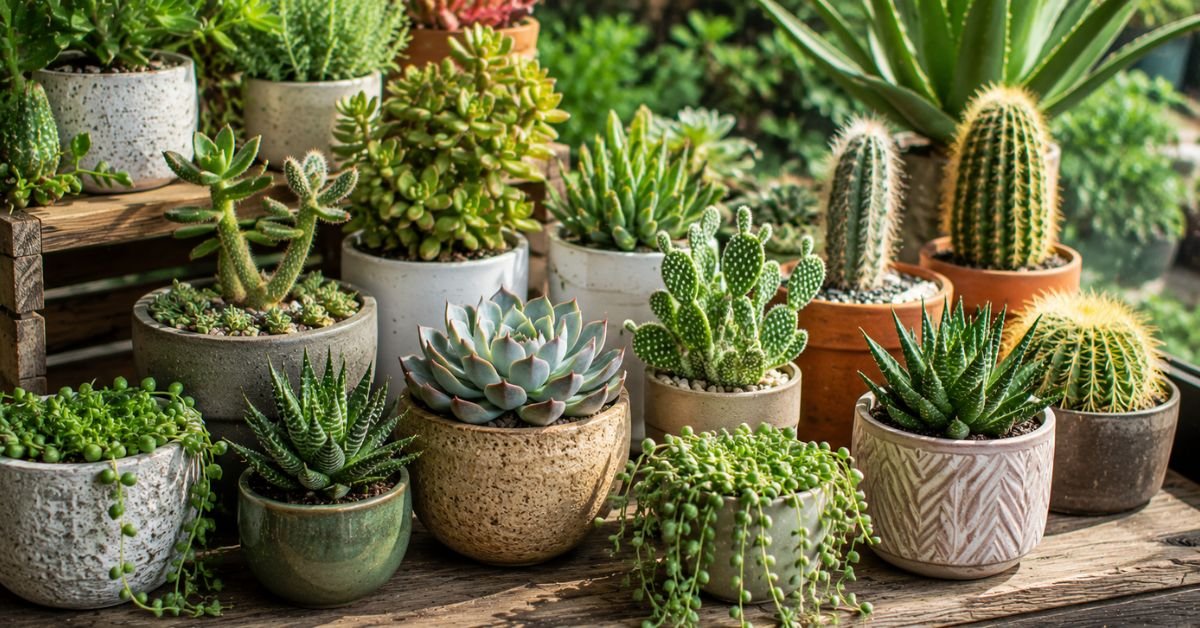
These are usually where I point beginners, and for good reason. In my years growing these, the plant almost never dies from neglect. It dies from love. Specifically, overwatering.
Succulents store water in their leaves and stems, so they evolved for drought, not for a well-meaning owner topping them off every Sunday like clockwork. Common ones you’ll find at Home Depot or your local nursery: Echeveria, Haworthia, Jade Plant, and true cacti like Barrel or Bunny Ears.
How Often Should You Water Succulents and Cacti? Only when the potting soil is bone dry, all the way down. In summer that might be every 10 days. In winter, when growth slows, you could stretch it to a month. Stick your finger two inches in before you even think about the watering can.
Personal Pro-Tip: I keep my succulents on the driest side of a south-facing windowsill, away from the AC vent that blows cold, dry air directly onto my Monstera across the room. Succulents actually don’t mind that dry blast. It’s the tropical plants that hate it.
Common Mistakes Americans Make With Succulents
Regular potting soil holds too much moisture for these guys. You need a cactus/succulent mix, or regular potting soil cut with perlite or coarse sand at about 50/50. And please, use a pot with a drainage hole. I don’t care how cute the ceramic pot without a hole is at TJ Maxx.
Troubleshooting Succulent Problems
- Leaves turning mushy and translucent? That’s overwatering, not a disease. Stop watering immediately and check the roots for rot.
- Stretching and leaning toward the window (etiolation)? Not enough light. Move it closer to a south or west-facing window.
- Brown, crispy patches? Usually sunburn from moving a plant too fast from low light to a hot window. Ease them into bright spots over a week or two.
Toxicity Warning: Most succulents are non-toxic, but Jade Plant, Aloe Vera, and several Euphorbia species (like the Pencil Cactus) are mildly to moderately toxic to cats and dogs. Check the ASPCA’s plant list before buying if you’ve got a curious pet who eats everything.
Tropical Foliage Plants: The Types of Plants That Dominate Instagram
Pothos, Monstera Deliciosa, Snake Plant (now technically Dracaena trifasciata, botanists keep renaming it), Philodendron, ZZ Plant. This category is where most “plant person” starter homes live, and it’s also where I see the most frustration.
How Often Should You Water Your Snake Plant? Honestly, less than you think. Every 2-3 weeks is plenty, and even less in winter. The Snake Plant is basically a succulent wearing a tropical plant’s clothes, and it’s one of the most forgiving plants you can own.
How Often Should You Water Your Pothos or Monstera? Weekly, roughly, but check the top inch of soil first. My rule of thumb: when the leaves start to look slightly less perky than usual, that’s your cue, not a fixed calendar day.
Personal Pro-Tip: Central heating and air conditioning are the silent killers of tropical foliage in American homes. These plants evolved under a rainforest canopy with humidity in the 60-80% range. Your living room in January is probably sitting at 20-30% humidity. I run a small humidifier near my Calathea from October through March, and it made a night-and-day difference in leaf browning.
Common Mistakes With Tropical Houseplants
Placing them directly in the path of an AC vent or a heating register is the number one mistake I see. The constant blast of dry, temperature-swinging air stresses these plants badly, even if the room temperature itself seems fine. Second mistake: watering on a schedule instead of checking the soil. Third: using a pot with no drainage and letting water pool at the bottom.
Troubleshooting Yellow Leaves and Brown Tips
- Yellow leaves, especially lower ones, feeling soft? Overwatering. Let the soil dry out more between waterings.
- Brown, crispy tips but the rest of the leaf is green? Usually low humidity or a buildup of minerals/salts from tap water. Try filtered water from your faucet or let tap water sit out overnight before using it.
- New leaves coming in small or pale? Probably needs more light, or it’s hungry. A diluted liquid fertilizer during spring and summer usually fixes this.
Toxicity Warning: This is a big one for US pet owners. Pothos, Philodendron, and Monstera all contain calcium oxalate crystals and are toxic to cats and dogs if chewed. Snake Plant is mildly toxic too. If you’ve got a chewer, look at Parlor Palm, Spider Plant, or Calathea instead, all of which are pet-safe.
Flowering Houseplants: Types of Plants That Bloom Indoors
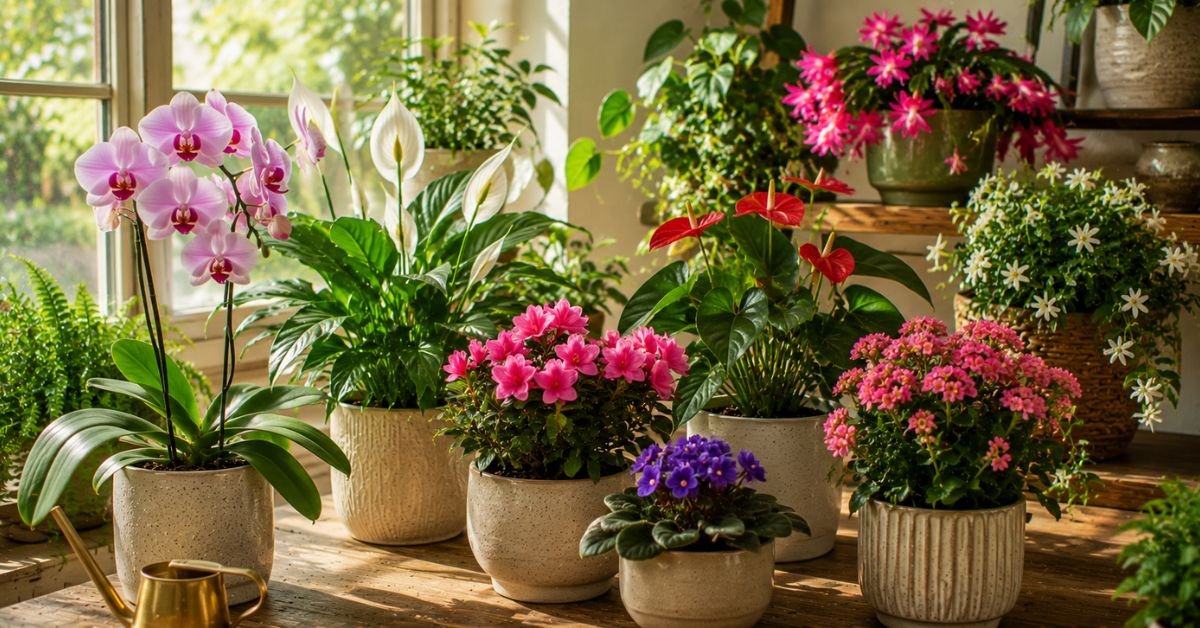
African Violets, Peace Lily, Orchids, Anthurium. These bring color indoors, but they’re generally fussier than foliage plants.
Personal Pro-Tip: African Violets hate getting water on their leaves. I water mine from the bottom, setting the pot in a saucer of water for 20 minutes and letting it wick up through the drainage hole. Water sitting on the fuzzy leaves causes ugly brown spotting.
Common Mistakes
People treat Peace Lilies like they need constant water because they’re dramatic droopers. Actually, that drooping is useful. It tells you exactly when to water. The problem is people panic-water at the first sign of a slightly less perky leaf, and root rot follows.
Troubleshooting
- Peace Lily not flowering? Needs brighter, indirect light. It’ll survive in low light but won’t bloom there.
- Orchid roots turning brown and mushy? Overwatering, almost always. Orchid roots should look silvery-green when dry and bright green after watering, never brown and soft.
Toxicity Warning: Peace Lily is toxic to cats and dogs. True lilies (Lilium species, different from Peace Lily) are extremely dangerous to cats specifically, capable of causing kidney failure from even small amounts of pollen. If you own a cat, I’d skip true lilies entirely. Orchids and African Violets are generally pet-safe.
Ferns: Types of Plants for Humid Corners and Bathrooms
Boston Fern, Maidenhair Fern, Bird’s Nest Fern. I’ll be honest, ferns are the category where I’ve killed the most plants personally, and I’m supposed to be the expert.
Personal Pro-Tip: A bathroom with a window is honestly the best spot in most American homes for a fern, because the daily shower steam gives it the humidity it’s begging for. My Boston Fern lives in my bathroom now after two failed attempts in my dry home office.
Common Mistakes
People place ferns in a typical living room and expect them to thrive with weekly watering like a Pothos. Ferns want consistent moisture, not the dry-out-between-waterings approach that works for tropicals.
Troubleshooting
- Fronds turning brown and crispy at the edges? Low humidity, almost every time. Group plants together, use a pebble tray, or move it to a steamier room.
- Whole fronds collapsing? The soil probably dried out completely at some point. Ferns don’t forgive that the way a Pothos does.
Toxicity Warning: Most true ferns, including Boston Fern and Bird’s Nest Fern, are non-toxic to cats and dogs, making them a solid pick for pet households that still want lush greenery.
Herbs: Edible Types of Plants for Kitchen Windowsills

Basil, Mint, Rosemary, Thyme, Parsley. These straddle indoor and outdoor life depending on your climate zone.
Personal Pro-Tip: Mint will take over an entire garden bed if you let it. I learned this the hard way and now I only grow mine in a container, even when it’s sitting right in the middle of my garden. Sink the whole pot into the ground if you want the look of an in-ground herb without the invasion.
Common Mistakes
Basil in a north-facing kitchen window rarely gets enough light and turns leggy and pale. It really wants 6+ hours of direct or very bright light, a south or west window at minimum, or a grow light in winter.
Troubleshooting
- Basil going to flower quickly? Pinch off flower buds as soon as you see them, or the plant redirects energy away from leaf production and the leaves turn bitter.
- Rosemary dying indoors over winter? This is incredibly common. Rosemary hates the combo of low light and constant warm, dry indoor air. A cool, bright spot works better than a warm one.
Toxicity Warning: Culinary herbs are generally safe for pets in small amounts, though large quantities of some (chives and their onion-family relatives) can cause issues. Basil, mint, rosemary, and thyme are all considered pet-safe.
Perennial Garden Flowers: Outdoor Types of Plants That Come Back Every Year
Coneflower, Black-Eyed Susan, Hosta, Daylily, Peony. This is where USDA Hardiness Zones actually matter, a lot.
Your zone tells you the average minimum winter temperature in your area, and it determines whether a perennial will survive your winter or need to be treated as an annual instead. A Peony that comes back reliably in Zone 5 Minnesota might actually struggle in Zone 9 Florida because it needs a certain number of winter chill hours to bloom well.
Personal Pro-Tip: Before I buy any perennial now, I check two numbers on the plant tag: the hardiness zone range and my own zone. If my zone falls outside that range, I either skip it or accept I’m growing it as an annual. Saves a lot of disappointment in April when nothing comes back.
Common Mistakes
Planting too early in spring before the last frost date for your region is a classic one. Also, a lot of people plant perennials too deep, burying the crown, which invites rot.
Troubleshooting
- Perennial didn’t come back this spring? Check if it was actually hardy in your zone, or if the site had poor drainage over winter, which is often a bigger killer than cold itself.
- Lots of leaves, no flowers? Usually too much nitrogen fertilizer or not enough sun.
Toxicity Warning: Daylilies are extremely toxic to cats, even causing kidney failure. Hostas are toxic to dogs and cats too. Coneflower and Black-Eyed Susan are generally considered pet-safe.
Annual Bedding Plants: Types of Plants for Instant Seasonal Color
Petunias, Marigolds, Impatiens, Zinnias. These live one growing season and then die, but they give you fast, reliable color for a Spring or Fall planting.
Personal Pro-Tip: I always deadhead my Zinnias, snipping off the spent blooms, because it tricks the plant into producing more flowers instead of going to seed. Takes five minutes a week and roughly doubles how much bloom I get out of a bed.
Common Mistakes
Planting annuals outside too early, before your last frost date, is probably the single most common mistake in American gardens every Spring. Impatiens especially sulk or die outright in a late cold snap.
Troubleshooting
- Leggy, stretched-out plants with few flowers? Not enough sun, or they need a light pinch-back early in the season to encourage bushier growth.
- Wilting despite regular watering? Check for root-bound plants that were never properly loosened at planting time.
Toxicity Warning: Marigolds and Zinnias are pet-safe. Petunias are non-toxic too. Impatiens are generally considered safe in small amounts, though I’d still discourage a pet from grazing on any ornamental.
Trees and Shrubs: The Long-Term Types of Plants for Your Yard
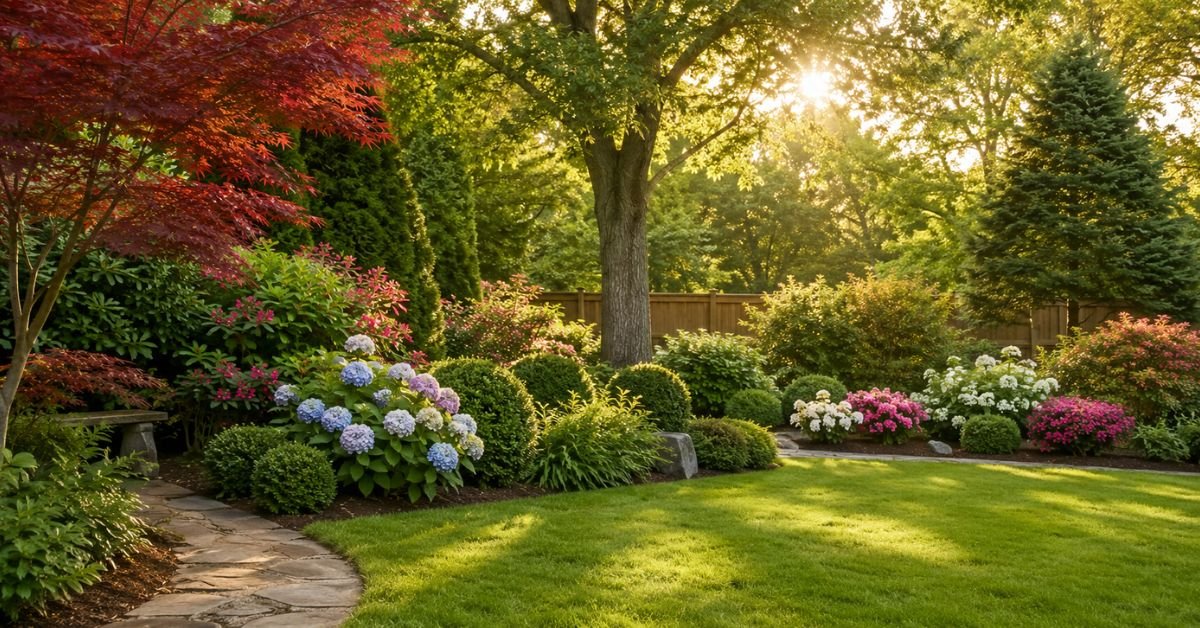
Japanese Maple, Hydrangea, Boxwood, Arborvitae. These are the bones of a landscape, and mistakes here are expensive because you’re not replacing a $4 annual, you’re replacing a $150 tree.
Personal Pro-Tip: I always dig the planting hole twice as wide as the root ball but no deeper than it. Planting too deep is the single biggest killer of new trees and shrubs I see in client yards, and it’s completely avoidable.
Common Mistakes
Overwatering a newly planted tree because people assume “more water equals faster establishment.” Actually, deep, infrequent watering that encourages roots to grow downward beats frequent shallow watering every time.
Troubleshooting
- Hydrangea not blooming? Depends on the type. Some bloom on old wood, and pruning at the wrong time of year removes next season’s flower buds entirely.
- Boxwood turning brown patches? Could be Boxwood Blight, a real problem spreading through parts of the US, or simply winter burn from cold wind and sun.
Toxicity Warning: Japanese Maple is generally non-toxic. Hydrangea is mildly toxic to pets if large amounts are eaten. Boxwood and Arborvitae contain compounds that are toxic to pets and livestock in quantity, so keep grazing animals and curious dogs away from hedges.
Frequently Asked Questions
Q1: What are the 4 main types of plants? Botanically, plants are often grouped into four broad categories: flowering plants (angiosperms), conifers, ferns, and mosses. For home gardening purposes though, most people think in terms of houseplants, perennials, annuals, and trees/shrubs, which is the breakdown I used throughout this guide.
Q2: What is the easiest type of plant to keep alive indoors? Snake Plant and Pothos are usually my top two recommendations for beginners. Both tolerate irregular watering, low light, and general neglect better than almost anything else you’ll find at a nursery.
Q3: What plants are safe if I have cats? Spider Plant, Boston Fern, Parlor Palm, and Calathea are all non-toxic and pet-safe options that still look lush. Avoid Lilies, Pothos, Philodendron, and Peace Lily if your cat likes to chew on leaves.
Q4: How do I know my USDA Hardiness Zone? You can look it up on the official USDA Plant Hardiness Zone Map by entering your zip code. It’s the single most useful piece of information before buying any perennial, tree, or shrub, since it tells you whether that plant will actually survive your winter.
Q5: Why do my houseplants keep dying in winter even though I water them the same? Central heating dries the air out drastically in winter, often dropping indoor humidity to 20-30%, far below what most tropical plants prefer. It’s usually not your watering routine that changed, it’s the air around the plant.
Q6: What type of plant grows fastest for a new gardener who wants quick results? Annuals like Marigolds or Zinnias from seed, or a fast-growing houseplant like Pothos, will show visible growth within just a couple weeks, which is encouraging for someone just starting out.
Q7: Can I keep an outdoor perennial as a houseplant, or vice versa? Generally no, not successfully long-term. Outdoor perennials are adapted to seasonal temperature swings and dormancy periods that an indoor environment doesn’t provide, and true houseplants usually can’t handle direct outdoor sun or frost. There are exceptions, like moving potted tropicals outside for summer, but they need to come back in before the first frost.
Final Thoughts
If I had to boil down everything above into one sentence, it’d be this: match the plant to the actual conditions in your home or yard, not the conditions you wish you had. A north-facing apartment in Chicago and a south-facing patio in Phoenix need completely different plant strategies, even if the plant tag says the same thing at the garden center.
Start with something forgiving if you’re new to this, a Snake Plant or a Pothos indoors, a Black-Eyed Susan outdoors. Get a feel for how your specific space behaves, the light, the humidity, the way your heating system dries the air out every winter. Then branch into the fussier categories once you’ve got a read on your own home.

Amin Khalid is a professional horticulturist and the founder of LeafyWisdom. With a deep passion for home gardening and horticultural research, he specializes in providing practical, easy-to-follow care guides for indoor plants. Amin’s goal is to simplify gardening for everyone and help fellow plant lovers build their own thriving green spaces.