
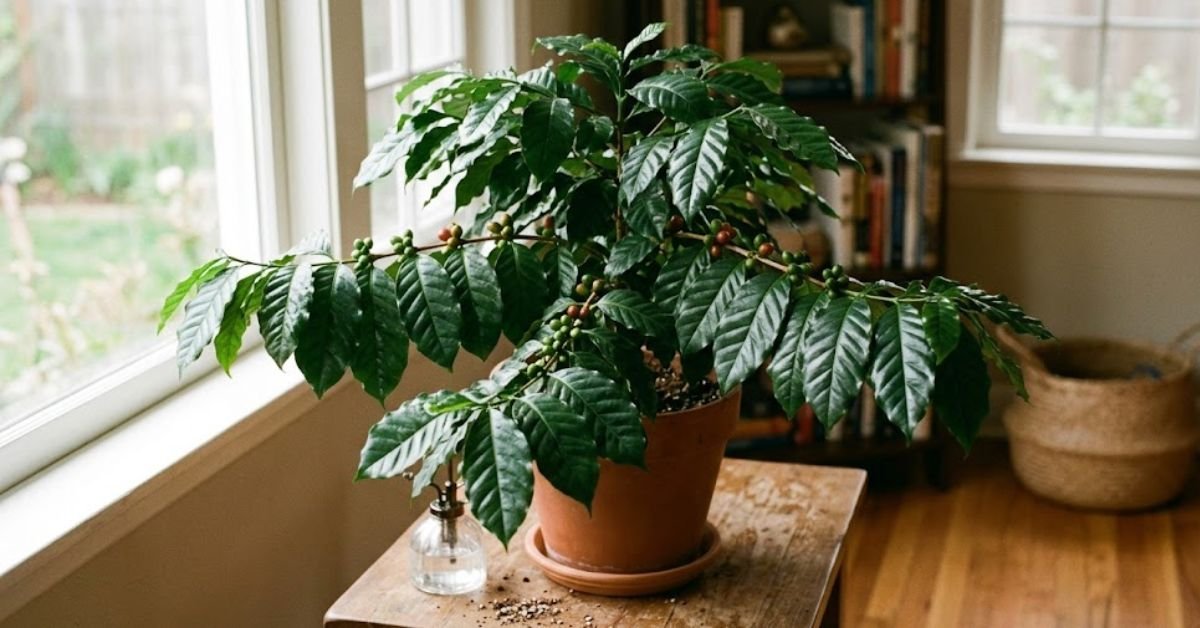
Bringing a coffee plant into your home is like inviting a piece of the tropics into your living room. I’ve been growing Coffea arabica for years, and while they can be fussy, they are incredibly rewarding. In the US, our indoor environments with their dry air and artificial heating are quite different from a misty mountain hillside. If you’re ready to master your own coffee plant, let’s get into the practical side of things.
Quick Care for Your Coffee Plant
| Feature | Requirement |
| Light | Bright, filtered light (East-facing windows are ideal) |
| Water | Keep evenly moist; never let it go bone-dry |
| Humidity | High (50%+); use a humidifier or pebble tray |
| Temperature | 65°F to 75°F; keep away from AC vents |
| Soil | Rich, acidic, well-draining potting soil |
Understanding Why Your Coffee Plant Struggles
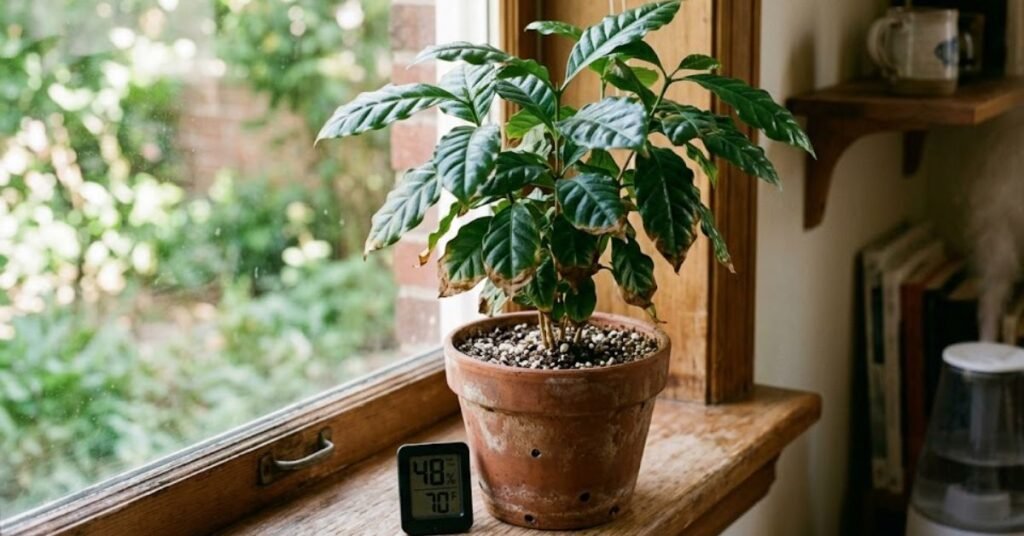
Most Americans fail with their coffee plant because we treat them like low-maintenance succulents. I remember my first one; I tucked it near a sunny window and forgot about it. Within a week, the leaves were crispy. The truth is, these plants hate erratic conditions.
Our homes often have dry, forced air in the winter and blasting air conditioning in the summer. A coffee plant senses these changes instantly. If you place yours near a drafty window or a vent, expect leaf drop.
Personal Pro-Tip: I keep a simple digital hygrometer next to my plant. If the humidity dips below 40%, I know it’s time to fire up my dedicated plant humidifier.
How Often Should You Water Your Coffee Plant?
The biggest mistake I see is “calendar watering.” Please, don’t water on a schedule. Your coffee plant needs water when the top inch of potting soil feels dry to the touch.
When you do water, soak it until you see it running out the bottom of the pot. Since most of our US tap water is treated with chlorine or minerals, I prefer using room-temperature filtered water.
Personal Pro-Tip: Use a pot with drainage holes. If you use a decorative pot without one, keep the plant in its nursery plastic container inside the decorative one. This prevents the “swampy roots” that kill so many houseplants.
Keeping Your Coffee Plant Clean and Pest-Free
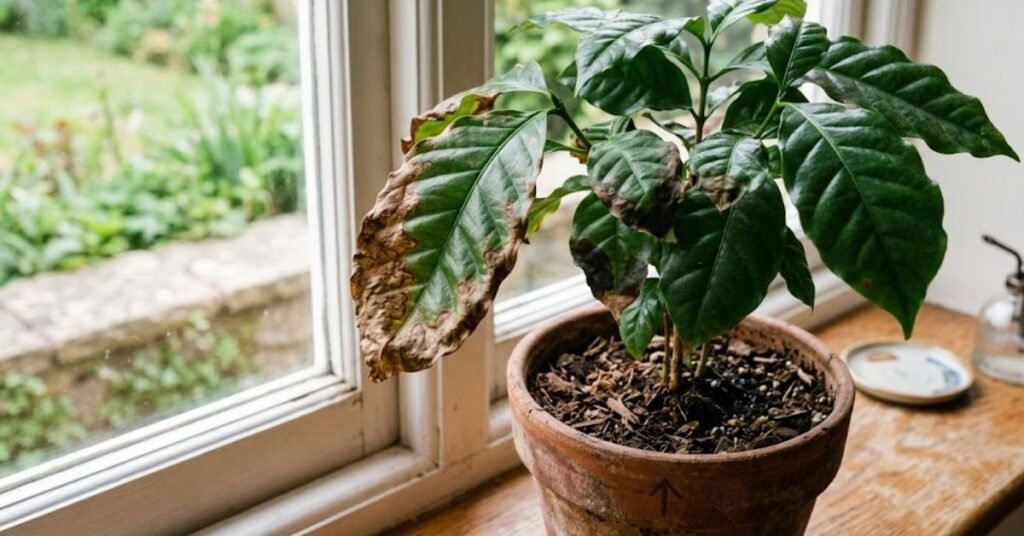
Because coffee plants have broad, shiny leaves, they love to collect dust. I gently wipe my plant’s leaves with a soft, damp cloth every month. This isn’t just for looks; dust blocks the light, preventing your plant from photosynthesizing efficiently. While I’m cleaning, I also scan for spider mites or scales. Keeping the foliage clean is the best way to discourage pests from moving in.
Personal Pro-Tip: Use a mix of a few drops of mild dish soap and water on your cloth to give the leaves a gentle shine while cleaning.
Troubleshooting: Why Are My Coffee Plant Leaves Turning Brown?
When my coffee plant starts showing brown tips or yellowing leaves, it’s usually screaming one of three things:
- Low Humidity: Those crispy brown edges are a classic sign of dry, indoor US air.
- Overwatering: If the leaves are yellowing and dropping, your roots might be suffocating.
- Mineral Buildup: If you use hard tap water, salts can build up in the soil and burn the leaf tips.
If you’re seeing these signs, take a deep breath. Move the plant away from any direct heat or AC flow and check your soil moisture.
Personal Pro-Tip: If the tips are brown, don’t just snip them straight across. Cut at an angle that mimics the natural leaf shape. It looks much cleaner!
Is the Coffee Plant Safe for Your Pets?
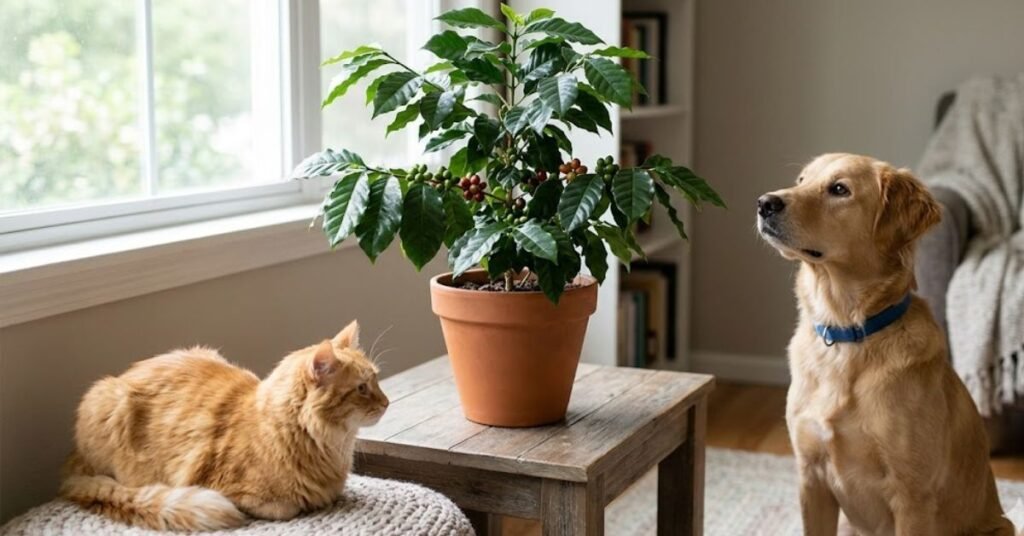
I get this question constantly. According to the ASPCA, the Coffea arabica is considered toxic to cats and dogs. The berries and leaves contain compounds that can cause vomiting or irritation if ingested. If you have curious pets, please place your coffee plant on a high shelf or in a room where your furry friends aren’t allowed.
Frequently Asked Questions
Q1: Can I grow a coffee plant outdoors in the US?
Yes, but only in warm climates (USDA Zones 10-11) or during the summer months in other zones. Bring it indoors before the first frost.
Q2: Will my indoor coffee plant ever grow coffee beans?
It’s possible! It usually takes 3-5 years for a healthy plant to flower and produce fruit, provided it has excellent light and consistent care.
Q3: How do I tell why my leaves are yellowing?
It depends on the feel. If the yellow leaves feel soft, mushy, or translucent, you are likely overwatering. If the leaves are turning pale yellow and feel thin or limp, the plant is usually starving for light or nutrients.
Q4: Do I need special soil for a coffee plant?
Use high-quality, rich potting soil. I like to add a bit of perlite to ensure it drains well so the roots don’t sit in water.
Q5: How do I handle pests on my coffee plant?
Keep an eye out for spider mites or scale. A gentle wipe-down of the leaves with a damp cloth every few weeks keeps them clean and discourages pests.
Q6: Should I prune my coffee plant?
Yes. Pruning encourages it to grow as a bushy, full plant rather than a single, spindly stem.
Q7: Can I use regular houseplant fertilizer?
Use a balanced, water-soluble fertilizer at half-strength during the Spring and Summer. Stop fertilizing in the Fall and Winter when growth naturally slows down.
Final Thoughts
Growing a coffee plant is a commitment, but one that rewards you with glossy, beautiful foliage that makes any room feel alive. Don’t be discouraged if it loses a leaf or two when you first bring it home; it’s just adjusting to your space. Take your time, observe how it reacts to your home’s unique light and airflow, and you’ll find that “sweet spot” where it really starts to take off. Happy growing up!

Amin Khalid is a professional horticulturist and the founder of LeafyWisdom. With a deep passion for home gardening and horticultural research, he specializes in providing practical, easy-to-follow care guides for indoor plants. Amin’s goal is to simplify gardening for everyone and help fellow plant lovers build their own thriving green spaces.