
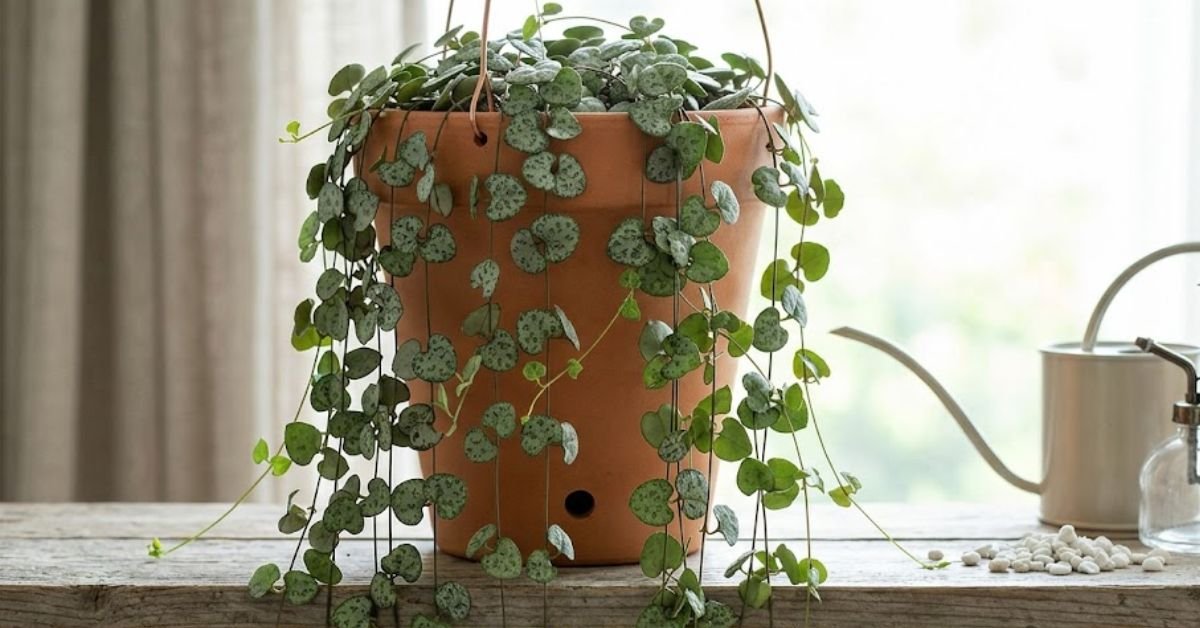
I still remember the day I brought home my first Ceropegia woodii. It looked so delicate, hanging from its tiny plastic nursery pot like a cascade of miniature, silver-veined valentine cards. At the time, I had absolutely no clue how to care for string of hearts plant collections properly.
I almost killed it within a month.
I treated it like a standard tropical houseplant, watering it every time the top layer of dirt felt dry. Big mistake. This plant is succulent at heart, hiding tiny water-storing tubers right beneath the surface. Once I changed my strategy, it started growing like absolute wildfire. Truly mastering how to care for a string of hearts plant hanging baskets comes down to avoiding that heartbreak and tailoring your routine to your actual home environment.
Quick Reference: How to Care for String of Hearts Plant at a Glance
| Care Factor | Requirements |
| Light | Bright, indirect sunlight (needs light on the top of the pot) |
| Watering | Soak and dry method; let the top 2/3 of soil dry completely |
| Potting Soil | Cactus or succulent mix with plenty of perlite or pumice |
| Temperature | 60°F to 85°F (Protect from AC vents) |
| USDA Zones | Zones 10-11 (Keep indoors for most of the US) |
| Toxicity | Safe for cats and dogs |
Personal Pro-Tip: Don’t rely on a calendar to tell you when to water. Lift the pot. If it feels light as a feather, walk it over to the faucet. If it has some weight to it, walk away.
Lighting Requirements for a Happy String of Hearts
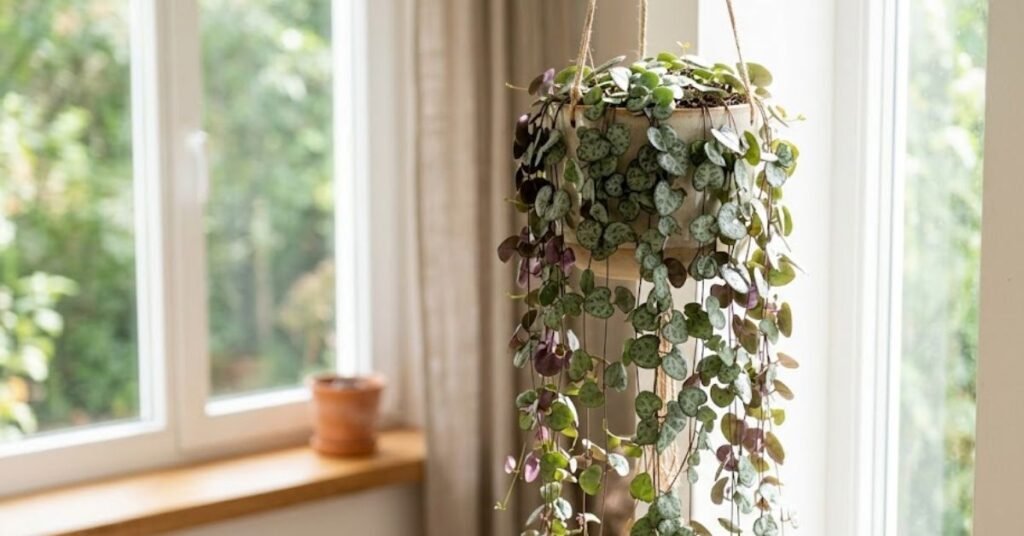
Light is the true secret behind those deep purple undersides and tight leaf spacing. In my years of growing this beauty, I’ve found that it completely rebels in low-light corners. The vines will stretch out, leaving wide, ugly gaps between the heart-shaped leaves.
It looks leggy and sad.
To keep it lush, give it four to six hours of bright, filtered sun. An East-facing window sill is an absolute paradise for them. A West window works beautifully too, just make sure a sheer curtain blocks the harsh afternoon rays so the delicate leaves don’t get scorched.
Personal Pro-Tip: Pay close attention to where the sun hits. If the vines get plenty of light but the top of the pot sits in pitch darkness, the crown will go completely bald over time. Prop it up or lower your hanger so the sun strikes the soil surface directly.
Choosing the Right Potting Soil and Container
Never use heavy yard dirt or standard dense potting mixes straight out of the bag. They retain way too much moisture for a plant that hates wet feet.
I always mix my own.
A blend of two parts succulent potting soil to one part perlite works like magic. This setup ensures that when you pour water from the faucet, it runs straight out of the drainage holes in seconds. Speaking of pots, drainage is non-negotiable. Terracotta is my absolute favorite choice because the porous clay breathes, helping the roots dry out evenly.
Personal Pro-Tip: When you repot which you only need to do every few years don’t jump up to a massive container. These guys have incredibly shallow root systems. A pot that is too large holds excess soil, which acts like a wet sponge and invites root rot.
How to Care for String of Hearts Plant in a Drafty US Home
American homes present a unique challenge for indoor plants. We love our central air conditioning in the summer and blast the forced-air heating all winter.
Your plant hates both.
During peak summer, an AC vent blowing freezing air directly onto your hanging basket will stun its growth and cause immediate leaf drop. The same thing happens in winter when dry heat toasts the soil too quickly. If you live in USDA Hardiness Zones 10 or 11, you can technically keep this plant outside on a shaded patio year-round. For the rest of us across the country, it’s strictly an indoor roommate once the chilly Fall air rolls in.
Personal Pro-Tip: If your home gets incredibly dry during the winter heating season, don’t put this plant right next to a heavy humidifier. High ambient humidity slows down how fast the potting soil dries out, which inadvertently increases your risk of overwatering.
Common Mistakes Americans Make with String of Hearts Care
Let’s talk about why so many plant parents fail with this species. The biggest culprit is treating it like a pothos or a philodendron. It is not a jungle plant.
It is a survivor from South Africa.
- Watering on a strict weekly schedule: This is a death sentence. In the dark winter months, your plant might only need water once every four to six weeks.
- Hanging it too high: We love putting trailing plants on the highest shelf possible. But if the top of the soil is completely shadowed by the ceiling, the base of the plant will die off.
- Neglecting the faucet routine: Giving it tiny sips of water from a small cup leads to weak, shallow roots. You want to drench it completely and let it drain.
Personal Pro-Tip: If you realize you’ve hung your plant too high and it’s balding, take a few of the long strands, loop them back up, and rest them directly on the soil. Use a couple of bent hairpins to clamp the nodes down. They will root into the soil and fill the top right back up.
Troubleshooting Guide: Fixing Your String of Hearts Plant Care Issues
When things go wrong, the plant usually gives you clear warning signs. Here is how to diagnose and fix the most common issues.
Yellow, Mushy Leaves
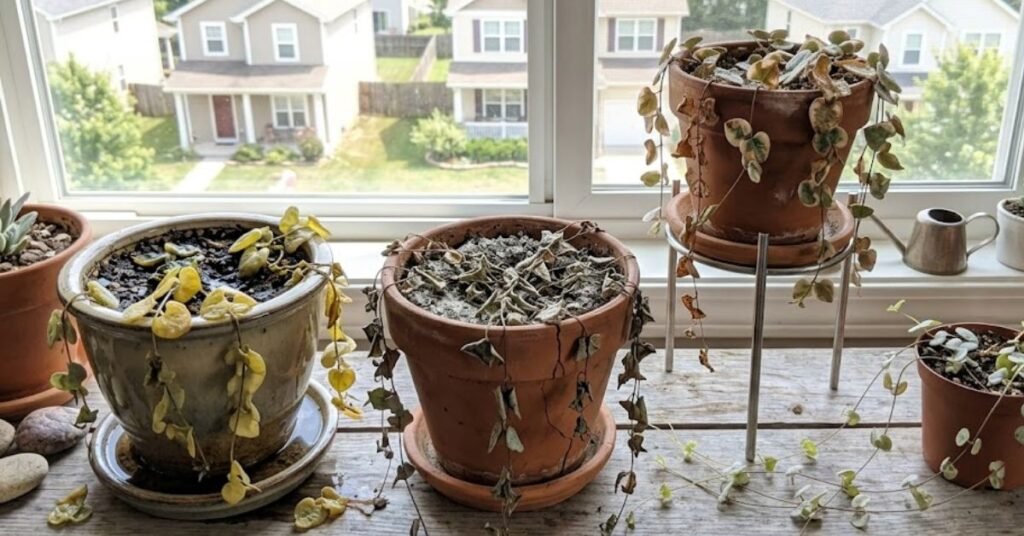
This is a classic sign of overwatering and impending root rot. Stop watering immediately. Check the bottom of the pot. If the potting soil feels like a swamp, pull the plant out of the container and check the roots. Healthy roots are pale and firm; rotted roots are black, slimy, and smell foul. Snip away the rot and repot into fresh, dry soil.
Wrinkled or Papery Hearts
Your plant is parched. When the leaves lose their plumpness and feel soft enough to fold easily, it is screaming for moisture. Take it to the sink and let the faucet run through the soil until it’s completely saturated.
Pale, Tiny Leaves with Massive Gaps
Your plant is starving for light. It is stretching its vines out to look for the sun. Move it closer to a bright window or invest in a small LED grow light to give it an extra boost during the short winter days.
Personal Pro-Tip: If a vine gets completely bare and leggy, don’t be afraid to give it a haircut. Chop the string right above a leaf node. This stimulates the plant to branch out, creating a much bushier look.
Toxicity Warning: Is the String of Hearts Safe for Pets?
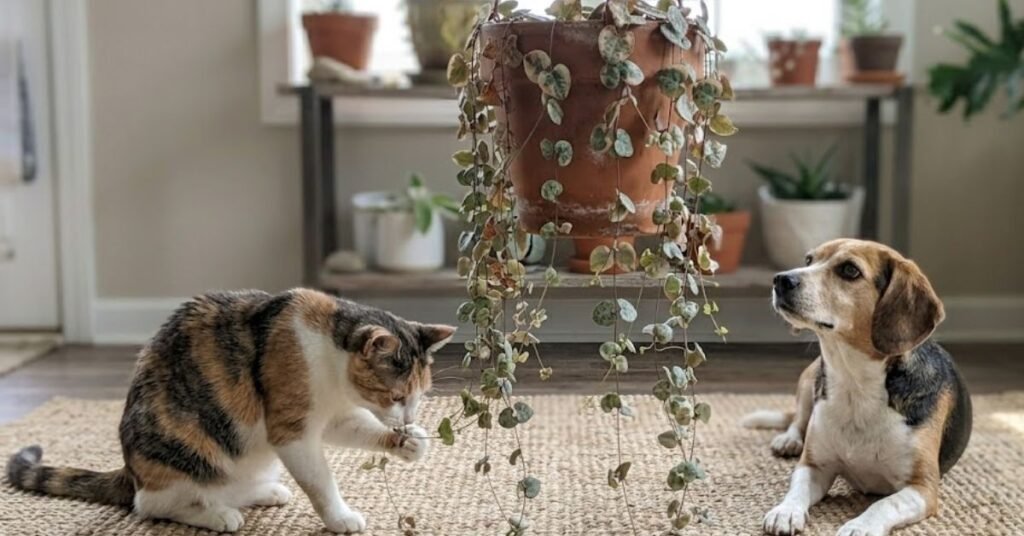
As a pet owner myself, this is always my first question before bringing a new green friend home. Fortunately, the String of Hearts is completely non-toxic to both cats and dogs.
You can breathe a sigh of relief.
Even though it won’t poison your furry friends, those long, swaying vines are an irresistible temptation for cats who love to play tetherball. A heavy yank can pull the whole plant off the shelf, breaking the delicate stems. Keep it securely out of reach for the sake of the plant’s structural integrity.
Personal Pro-Tip: If your cat does manage to snap off a long vine, don’t throw it away! Chop the broken strand into small sections with two leaves each, stick them in a glass of water on a sunny window sill, and you’ll have brand-new rooted plants in less than two weeks.
Frequently Asked Questions About How to Care for String of Hearts Plant
Q1: How often do you water a string of hearts?
There is no fixed number of days. In the hot spring and summer, it might be every 10 to 14 days. In the winter, it could easily be once a month. Always check the soil depth or use the taco test before fetching your watering can.
Q2: What does an overwatered string of hearts look like?
The leaves turn a sickly yellow, lose their firmness, and feel incredibly mushy. The stems near the soil line might also start to turn black and rot away entirely.
Q3: Can a string of hearts get direct sunlight?
Yes, but keep it limited. Soft morning sun from an East window is phenomenal. Intense, blazing afternoon sun in the middle of July will scorch the leaves and turn them crisp and brown.
Q4: Why is my string of hearts balding on top?
This happens when the top of the pot isn’t getting enough light. If the plant is hung too high near the ceiling, only the trailing vines get sun, causing the top leaves to wither and drop.
Q5: How do I make my string of hearts grow faster?
Give it plenty of bright indirect light, keep it warm (around 75°F), and apply a diluted, balanced houseplant fertilizer once or twice during the spring active growing season.
Q6: What is the “taco test” for string of hearts?
Gently squeeze a mature leaf near the base of the plant. If it’s firm and resists bending, the plant is fully hydrated. If it folds easily like a taco shell and feels flexible, it is thirsty.
Q7: Can I grow a string of hearts outside in the US?
Only if you live in a tropical climate like southern Florida, parts of southern California, or Hawaii (USDA zones 10-11). Otherwise, keep it indoors and only bring it out to a shaded porch during warm summer days.
Personal Pro-Tip: When using the taco test, always test the older leaves near the soil. The young leaves at the very tips of the vines are naturally soft and flexible because they are still developing, which can give you a false reading.
My Final Thoughts on Growing This Beautiful Vine
Caring for this gorgeous trailing succulent doesn’t require a master’s degree in botany. It just requires you to slow down, resist the urge to fuss over it constantly, and let it dry out. Once you align your watering habits with the natural flow of your US home environment, you’ll be amazed at how quickly those heart-shaped vines take over your living room.

Amin Khalid is a professional horticulturist and the founder of LeafyWisdom. With a deep passion for home gardening and horticultural research, he specializes in providing practical, easy-to-follow care guides for indoor plants. Amin’s goal is to simplify gardening for everyone and help fellow plant lovers build their own thriving green spaces.