
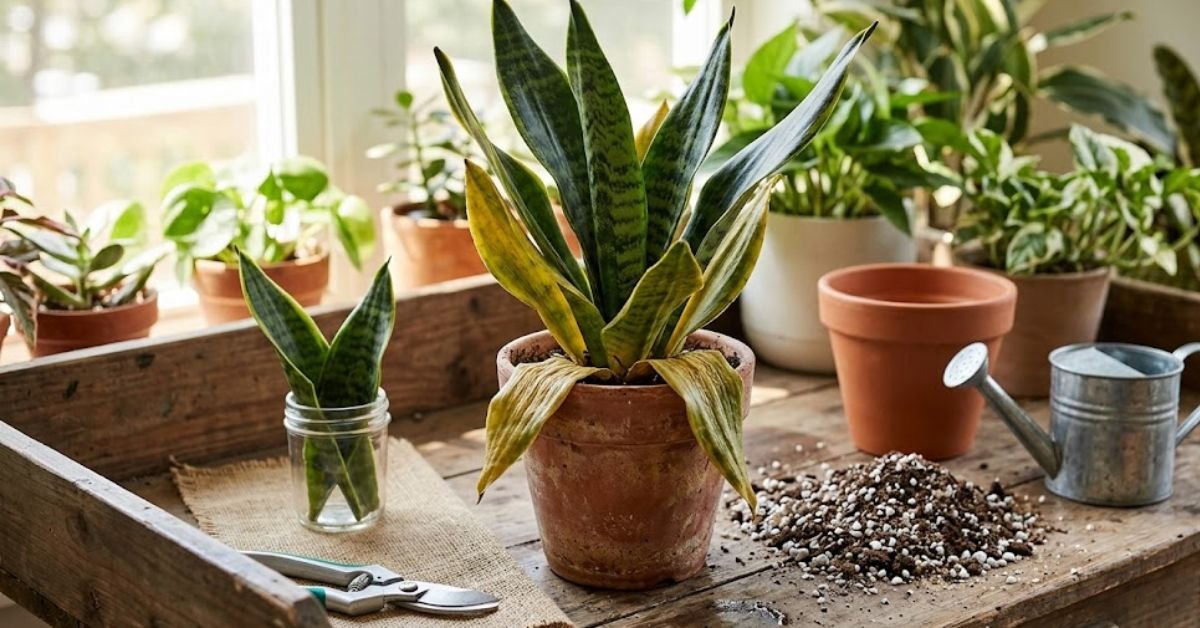
If you’ve found yourself staring at your plant shelf asking, “Why is my snake plant turning yellow?” you aren’t alone. It is one of the most common issues I see across American households.
Snake plants (Dracaena trifasciata) are legendary for being nearly indestructible. They handle low light, skipped waterings, and general forgetfulness like absolute champs. But when those stiff, architectural leaves start losing their deep green color and taking on a sickly pale yellow hue, it’s a clear cry for help.
Don’t panic. We can fix this together. Pinpointing exactly why is my snake plant turning yellow requires a little bit of detective work, but most of the time, the issue stems from a handful of easily correctable environmental factors right inside your home
Quick Care Guide for Dracaena trifasciata (Snake Plant)
For the skimmers out there, here is a fast breakdown of what your plant actually wants. If your current setup looks vastly different from this table, you’ve likely found your culprit.
| Care Element | Ideal Condition for US Homes | Danger Zone |
| Light | Bright, indirect window light; tolerates low indoor light well. | Harsh, direct afternoon sun or pitch-black corners. |
| Watering | Only when the potting soil is 100% dry. Every 2–4 weeks depending on the season. | Watering on a strict weekly schedule without checking the soil. |
| Soil Mix | Loose, fast-draining cactus and succulent mix with extra perlite. | Heavy garden soil or dense, moisture-retaining indoor potting mix. |
| Temperature | 65°F to 85°F. Standard indoor room temperatures. | Under 55°F or placed directly in front of central heating vents. |
| USDA Zones | Hardy outdoors only in Zones 10–12 (South Florida, Hawaii, parts of SoCal). | Grown outdoors in cold climates during Fall and Winter. |
Personal Pro-Tip
In my years of growing this plant, I’ve found that using a terracotta pot instead of plastic makes a night-and-day difference. Terracotta breathes. It helps moisture escape much faster from the potting soil, which protects your plant from accidental drowning.
The Top Mistakes Explaining Why Your Snake Plant Is Turning Yellow
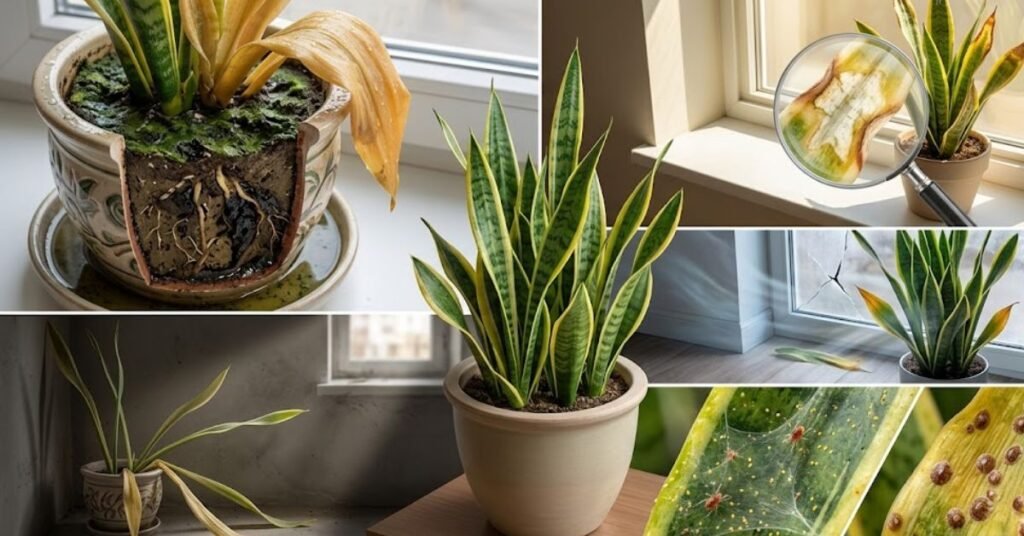
Most Americans fail with snake plants not because they don’t care, but because they treat them like traditional tropical houseplants. They aren’t. They are structural succulents native to arid regions.
Central AC Units and Winter Heating Drafts
Our homes are heavily climate-controlled. In the peak of summer, your central air conditioning blasts cold, dry air. In the winter, forced-air heating pumps out dry, roasting currents.
If you place your pot directly under an AC vent or right next to a drafty window during a northern winter, the rapid temperature fluctuations shock the plant tissue. This thermal stress causes the leaves to lose their rich green pigments and fade into a pale, uniform yellow.
How Heavy Potting Soil Suffocates the Roots
Using generic, dense indoor potting soil straight out of the bag is a recipe for disaster. These soils are engineered to hold onto water so that moisture-loving plants don’t dry out.
But snake plant roots need huge pockets of air. When packed into dense, heavy soil, the roots choke. They cannot absorb oxygen, which triggers a stress response that shows up right on the tips of the leaves.
Personal Pro-Tip
Keep your plant at least three to four feet away from any major appliance, drafty window, or HVAC register. If the air in that specific spot makes your own skin feel chilly or dry, your snake plant is likely miserable there too.
Step-by-Step Diagnostic: Why Is My Snake Plant Turning Yellow?
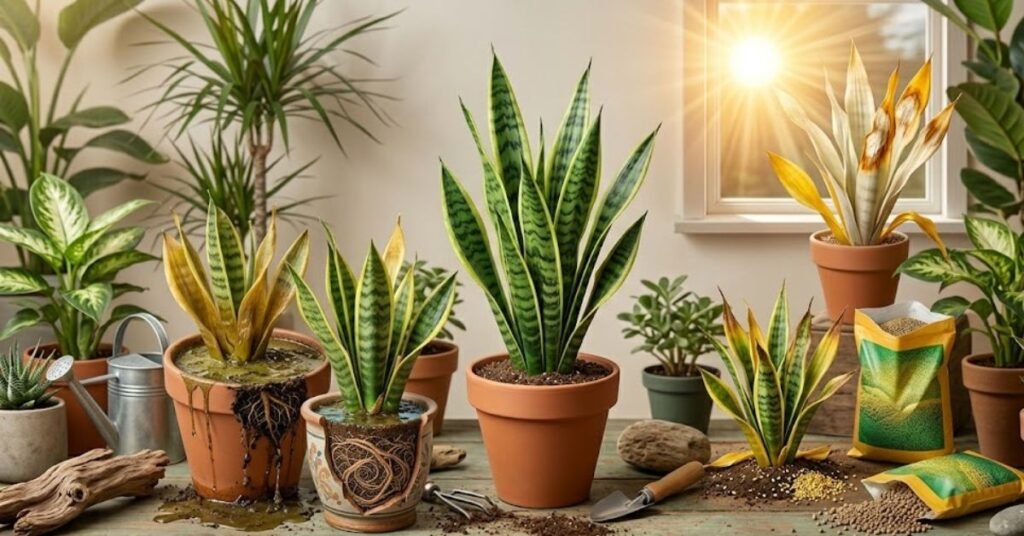
When clients call me up asking, “Why is my snake plant turning yellow?” the very first thing I ask them about is their watering routine. Let’s break down the exact visual cues so you can diagnose your plant today.
How Overwatering Leads to a Yellow Snake Plant
This is the number one killer. Hands down.
If the yellowing leaves feel mushy, soft, or look somewhat wrinkled and wept over, you are overwatering. When the soil stays constantly wet, fungal pathogens take over, causing the roots to rot away into black slime. Because the ruined roots can no longer transport nutrients up to the plant, the leaves begin to turn yellow and collapse at the base.
The Fix: Stop watering immediately. Pull the plant out of its pot and inspect the roots. If they are black and smelly, clip them away with sterile shears. Repot the remaining healthy green sections into fresh, dry potting soil mixed heavily with coarse sand or perlite.
Severe Underwatering vs. Why a Snake Plant Turns Yellow from Drought
Yes, you can actually underwater these guys, even though they tolerate drought beautifully.
If you haven’t given your plant a sip of water since last season, the leaves will eventually turn yellow. The key difference here? The leaves will feel completely dry, crispy, and light. They might even start to split vertically down the middle.
The Fix: Take the pot to your bathroom sink or kitchen faucet. Give it a thorough, deep soaking until water runs freely out of the bottom drainage holes. Let the excess drain completely before putting it back on its saucer.
Lighting Extremes That Cause Yellowing Leaves
Snake plants love bright, indirect light. If you stick them in a room with zero windows, they will slowly lose their color due to a lack of photosynthesis, turning a sickly, pale yellow-green.
Conversely, if you place them in a south-facing window under harsh, unshaded US summer sun, the intense rays will literally scorch the foliage. This looks like bleached, washed-out yellow patches, often accompanied by dry, brown scars.
The Fix: Move your plant to a spot that gets plenty of ambient light but sits a few feet back from the glass of highly sunny windows.
Quick Visual Check:
- Mushy + Yellow = Overwatered (Root Rot)
- Crispy + Yellow = Underwatered (Dehydration)
- Bleached Patches = Sunburn (Too much direct light)
Personal Pro-Tip
If you’re not sure whether the soil is dry deep down, don’t guess. Insert a plain wooden chopstick deep into the pot. If it comes out clean and dry like a perfectly baked cake, it’s safe to water. If potting soil sticks to it, walk away.
Pet Safety Rules For a Yellowing Snake Plant
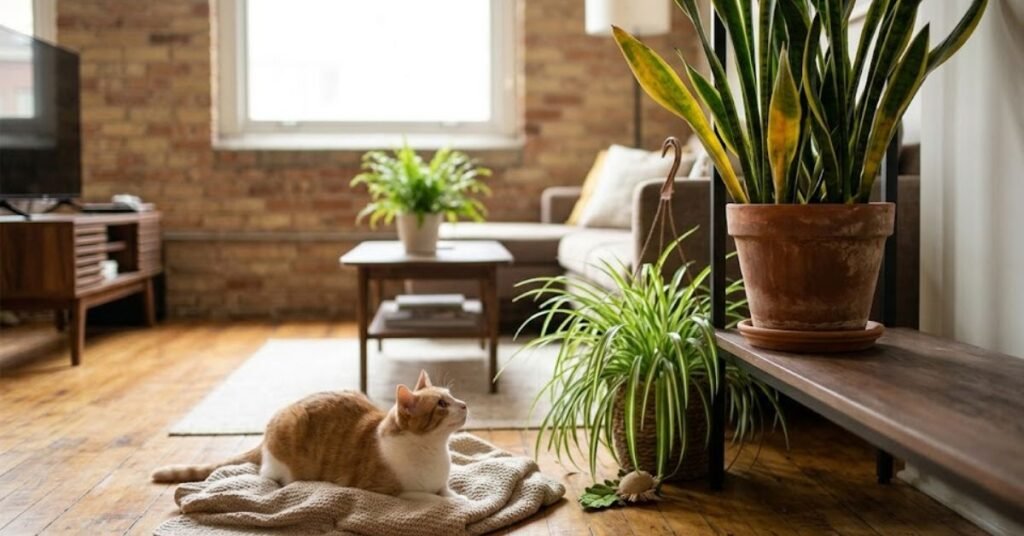
As a pet parent, you need to know what is coming into your home. Snake plants contain naturally occurring chemical compounds called saponins. These compounds serve as the plant’s natural defense mechanism against insects and fungi.
If your cat or dog decides to chew on a yellowing leaf, those saponins will cause mild to moderate toxicity.
- Symptoms: Drooling, nausea, vomiting, and diarrhea.
- Action Plan: While it is rarely fatal, it causes significant discomfort. If you notice teeth marks on your plant and a lethargic pet, move the plant out of reach and get in touch with your local veterinarian or the ASPCA Animal Poison Control center right away.
Personal Pro-Tip
If you have mischievous pets, place your pots on high plant stands or heavy floating shelves. It keeps the plant safe from curious teeth, and keeps your furry family members out of the vet’s office.
My Final Take on Restoring Your Plant’s Health
Caring for a sick plant takes patience. If your snake plant has a leaf that has completely turned bright yellow or mushy, accept that this specific leaf is not going to turn green again. The cellular structure is permanently damaged.
Grab a sharp knife or a pair of bypass pruners, wipe the blades down with rubbing alcohol, and slice that ugly yellow leaf off cleanly right at the soil line. This opens up air circulation and forces the plant to redirect its valuable energy into growing brand-new, beautifully variegated green spears from the root system. Give it time, adjust your watering habits, and watch it bounce back.
Personal Pro-Tip
Don’t rush to feed a sick plant. Fertilizing a stressed snake plant with yellowing leaves will burn the remaining healthy roots. Wait until you see brand-new, vibrant green growth emerging from the soil before adding any liquid plant food.
Frequently Asked Questions
Q1: Can a yellow snake plant leaf turn green again?
No. Once a leaf turns completely yellow, the chlorophyll has broken down permanently. The best move is to cut it away at the base so the plant stops wasting resources trying to save it.
Q2: How do I know if my snake plant is overwatered or underwatered?
Check the texture. Overwatered leaves look soggy, feel soft or mushy, and might bend over easily. Underwatered leaves look wrinkled, feel dry and crispy, and the soil will be completely shrunk away from the edges of the pot.
Q3: Should I cut off the yellow leaves on my snake plant?
Yes, you should. Use a clean, sharp blade to cut the yellow leaf off close to the soil surface. This prevents any potential fungal rot from spreading to the healthy parts of the plant.
Q4: Why is my snake plant turning yellow and mushy at the base?
This is a classic symptom of root rot, caused by water sitting around the root system for too long. You need to unpot the plant immediately, trim away any rotted black roots, and repot it into a fresh, dry potting soil mix with excellent drainage.
Q5: Can too much light cause yellowing?
Yes. While they like bright rooms, intense, direct afternoon sunlight can bleach the leaves, turning them a pale yellow or stark white. This is essentially a plant sunburn.
Q6: How long can a snake plant go without water in the summer?
Indoors, a healthy snake plant can easily go 3 to 4 weeks without water during the summer, especially if your home uses central air conditioning which cools the ambient temperature.
Q7: Does standard municipal faucet water cause yellowing?
Usually, the fluoride and heavy mineral salts found in city faucet water cause dry, brown leaf tips rather than widespread yellowing. Because modern US water grids treat water with stable chloramine instead of regular chlorine gas, letting your tap water sit out overnight won’t do a thing. If you want to keep your plant completely stress-free, switch to distilled water or captured rainwater. Alternatively, just thoroughly flush the potting soil with a heavy watering once every Spring to wash away any built-up mineral salts.

Amin Khalid is a professional horticulturist and the founder of LeafyWisdom. With a deep passion for home gardening and horticultural research, he specializes in providing practical, easy-to-follow care guides for indoor plants. Amin’s goal is to simplify gardening for everyone and help fellow plant lovers build their own thriving green spaces.