
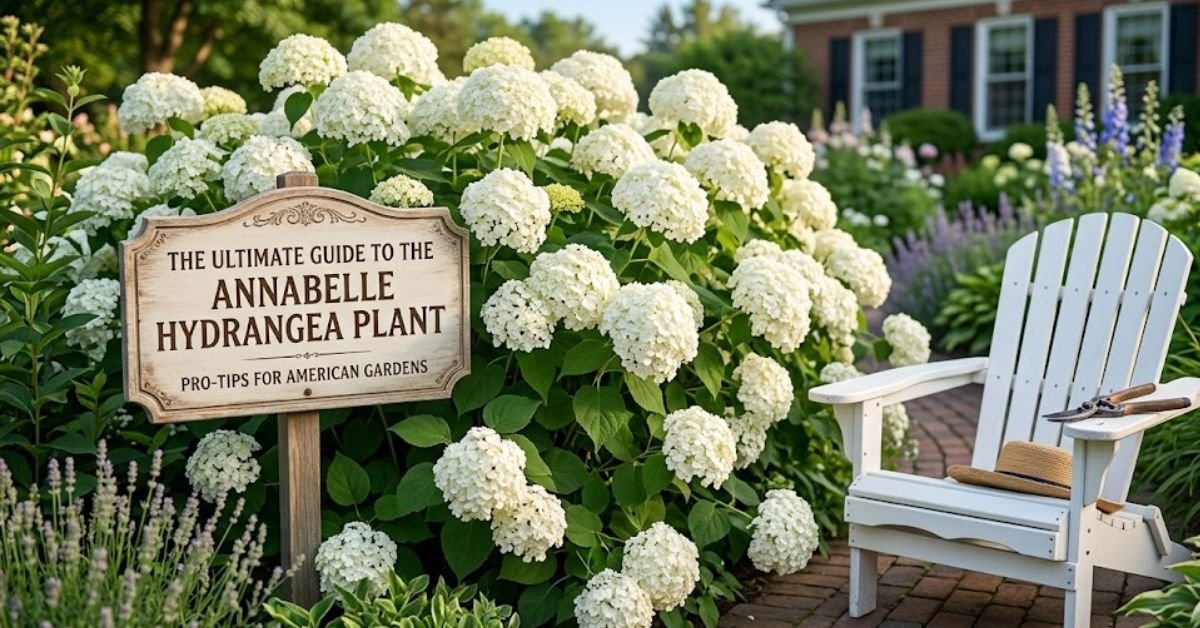
If you’ve ever driven through a neighborhood in the Midwest or Northeast during mid-summer and spotted massive, snowball-like white blooms practically glowing in the shade, you’ve met the Annabelle hydrangea plant. In my years working as a horticulturist, this native beauty (Hydrangea arborescens) remains one of my absolute favorite recommendations for homeowners who want maximum visual impact with minimum fuss.
Here is a quick-glance care guide for the skimmers out there who want the fast facts before digging in.
Annabelle Hydrangea Plant Quick Care At-A-Glance
| Care Element | Requirement |
| USDA Hardiness Zones | Zones 3 – 9 |
| Sun Exposure | Dappled shade to partial sun (Morning sun is best) |
| Soil Type | Rich, well-draining, moisture-retentive soil |
| Watering | Consistent moisture (Deep soaking weekly) |
| Bloom Time | Early summer through Fall |
| Mature Size | 3 to 5 feet tall and wide |
Personal Pro-Tip: Don’t stress about your winter weather. I’ve seen this resilient shrub survive brutal, below-zero wind chills in Minnesota and still push out magnificent blooms the following July without skipping a beat.
Why the Annabelle Hydrangea Plant is a Backyard Favorite
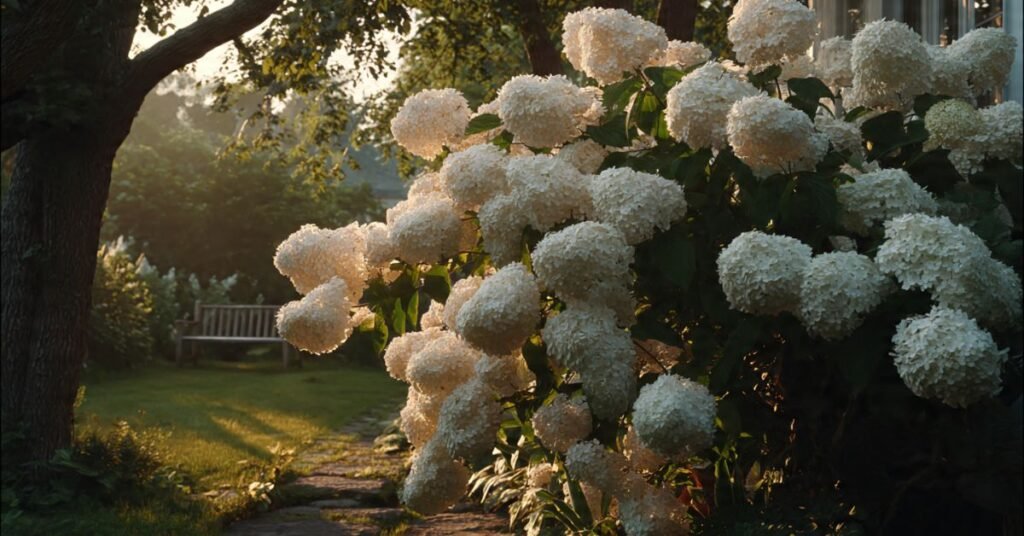
We Americans love a plant that works hard without demanding a lifestyle change, and that’s exactly what this shrub offers. Unlike its picky cousin, the bigleaf hydrangea, which can refuse to bloom if a surprise Spring frost nips its buds, the Annabelle produces flowers on “new wood” (the fresh growth it puts out in the current year). This means no matter how harsh the winter, you are virtually guaranteed a spectacular show of massive, 10-inch flower heads every single summer.
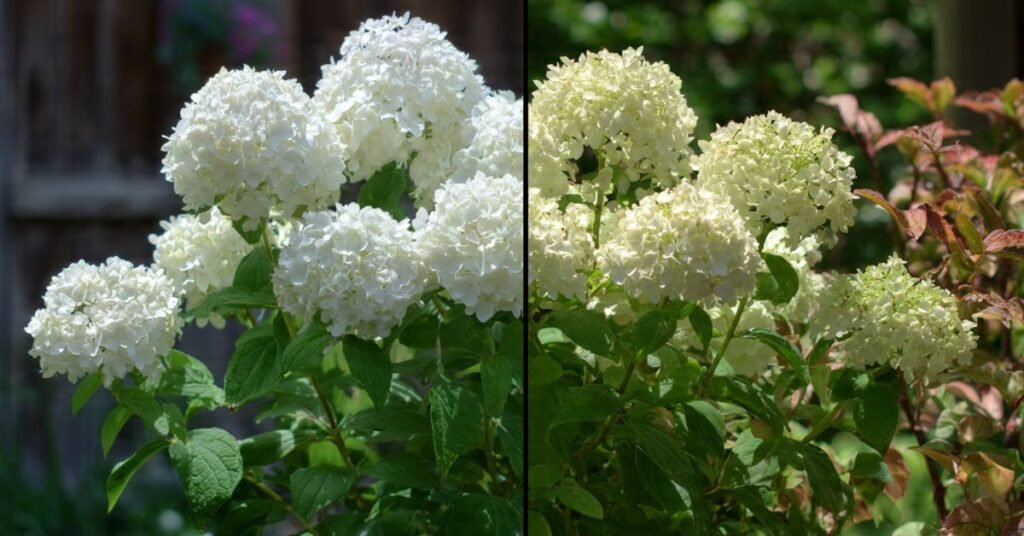
Watching this plant evolve throughout the season is pure joy. The blooms start as a soft, electric chartreuse green in June, burst into brilliant, clean white puffs by July, and gradually mellow back into a vintage, papery tan as Fall rolls around. They look stunning in the yard, but they make incredible cut flowers for your dining room table, too.
Personal Pro-Tip: If you love floral design, cut the stems in late August when the petals feel slightly papery. Hang them upside down in a dark, dry pantry for two weeks. They dry beautifully and will last on your mantelpiece all winter.
Setting Up Your Annabelle Hydrangea Plant for Success
Getting your new shrub off to a great start isn’t rocket science, but a little strategic planning during planting week pays massive dividends down the road.
Ideal USDA Zones and Sun Exposure for Your Annabelle Hydrangea Plant
This plant is highly adaptable across USDA Hardiness Zones 3 through 9. However, its daily sun requirements change dramatically depending on your geography. If you live up north in Michigan or New York, your plant can tolerate almost full sun as long as its roots stay damp.
But if you are gardening down south in Georgia or Texas, that blistering afternoon sun will scorch the foliage faster than you can flip a burger. In warmer regions, pick a spot that gets bright morning light but offers total relief from the sun after 1 PM.
Personal Pro-Tip: Walk around your yard at 2 PM during a hot July afternoon. If the spot you’re eyeing is baking in direct, unfiltered sunlight, choose a different location. Your hydrangea will thank you.
Soil and Water Requirements
Like most smooth hydrangeas, this variety loves its water, but it absolutely detests muddy, stagnant roots. If you are planting it directly in your garden bed, mix in a generous amount of organic leaf mold or aged wood bark to loosen up heavy clay.
If you are growing it in a large container on your porch, step away from the native garden dirt and grab a bag of high-quality, well-draining potting soil instead. When it comes to hydration, skip the daily light sprinkles. Instead, turn your garden hose faucet on low and give the base of the plant a deep, slow drenching once or twice a week.
Personal Pro-Tip: Lay down a three-inch layer of shredded hardwood mulch right around the root zone, keeping it an inch away from the main stems. This acts like a protective blanket, keeping the soil cool and locking in moisture so you don’t have to run to the faucet every single day.
Common Mistakes with the Annabelle Hydrangea Plant
Even experienced gardeners run into trouble with this shrub, usually because they treat it like other common landscaping plants. Over the years, I’ve noticed three classic blunders that American homeowners make:
- The Ground-Level Chop: Many folks assume that because it blooms on new growth, they should haircut the entire plant flat to the dirt every winter. Don’t do it. While it will grow back, cutting it completely to the ground results in weak, spindly stems that can’t support the weight of those massive flower heads.
- The HVAC Death Zone: I’ve lost count of how many times I’ve seen a beautiful new specimen planted right next to an outdoor air conditioning condenser unit. The continuous blast of hot, dry air from your home’s AC system will dehydrate the leaves in a matter of hours, causing severe crisping and leaf drop.
- Overcompensating with the Hose: When the large leaves droop slightly on a 90°F afternoon, people panic and drown the soil. Often, the plant is just minimizing its surface area to handle the heat and will perk back up by sunset. Constantly watering soggy soil will rot the root system out from under it.
Personal Pro-Tip: When pruning in late winter, leave a sturdy framework of old stems about 18 to 24 inches off the ground. These older, thicker stems create a rigid skeleton that holds up the new, flexible branches when they get heavy with rainwater.
Troubleshooting Your Annabelle Hydrangea Plant
If your plant is looking a little sad, don’t panic. Most issues can be diagnosed and fixed with a few simple adjustments. Here is a quick reference guide to solving the most common visual cries for help:
| What You See | The Root Cause | The Exact Solution |
| Leaves turning pale yellow with green veins | Iron chlorosis (often caused by alkaline or compacted soil). | Apply a chelated iron supplement to the soil and top-dress with organic matter. |
| Brown, crispy leaf edges | Heat scorch, windburn, or dry air from AC vents. | Increase deep watering at the base and check for hot air exposure. |
| The entire plant flops flat on the ground | Top-heavy blooms weighed down by summer rain. | Shake off excess water gently, prune less severely next winter, or install a tomato cage early in Spring. |
Personal Pro-Tip: If your plant suffers from the classic post-rainstorm “flop,” don’t try to tie the individual stems tightly to a single stake—it looks unnatural and chokes the plant. Instead, encircle the entire base with a short, green wire border fence early in the Spring so the stems can naturally lean outward against it.
Annabelle Hydrangea Plant Toxicity Warning
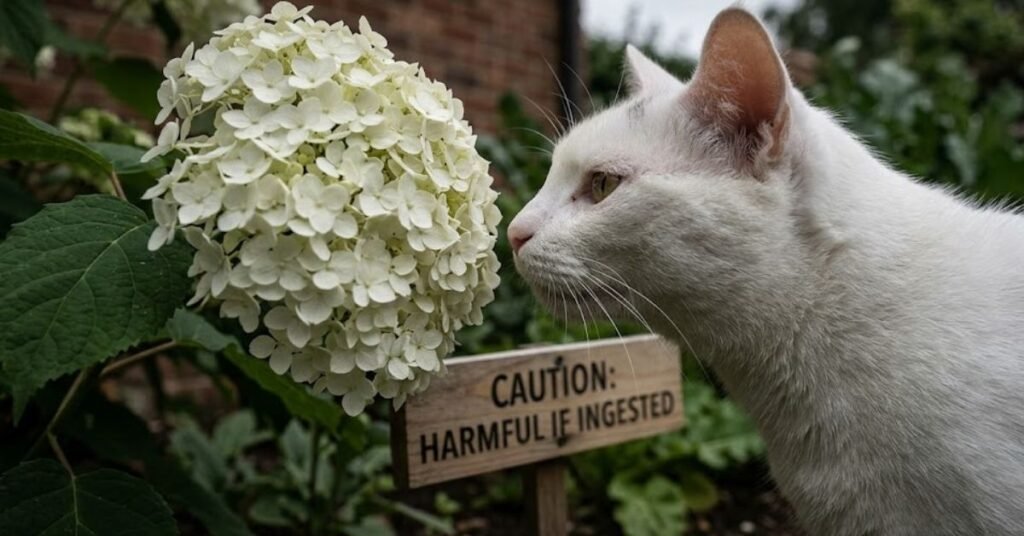
Before you head to your local garden center, we need to address a crucial safety note for pet owners. The entire Annabelle hydrangea plant contains a compound called cyanogenic glycosides. If your curious dog or cat decides to use the leaves or stems as a chew toy, it can cause gastrointestinal distress, including vomiting, diarrhea, and lethargy.
While wild birds and local pollinators absolutely love this shrub, it is definitely not pet-friendly. If you have an adventurous puppy who loves to munch on your landscaping, you’ll want to take precautions.
Personal Pro-Tip: If you have outdoor pets but still want this stunning look, plant your hydrangeas behind a decorative hardscape barrier or use raised garden beds to keep the foliage well out of reach of sniffing noses.
Frequently Asked Questions
Q1Can I change the color of my Annabelle hydrangea plant to blue?
Unlike French or bigleaf hydrangeas (Hydrangea macrophylla), smooth hydrangeas do not care about your soil chemistry. No amount of aluminum sulfate or coffee grounds will turn this plant blue or pink. It will always open chartreuse, transition to brilliant white, and fade to tan.
Q2Why is my Annabelle hydrangea plant dropping leaves in late August?
If the lower leaves are turning yellow and dropping at the end of summer, it’s usually a combination of intense heat and natural preparation for Fall dormancy. As long as the stems look healthy and the top growth isn’t completely dead, it’s just the plant conserving energy.
Q3Do Annabelle hydrangeas bloom on old or new wood?
They bloom entirely on new wood. This is a massive relief for northern gardeners because even if a freezing winter kills the plant back to the snowline, the fresh stems that emerge in the Spring will still produce a full crop of gorgeous summer flowers.
Q4How do I stop my Annabelle hydrangea plant from falling over after a heavy rain?
The secret lies in your pruning habits. Instead of cutting the stems all the way to the ground in the winter, leave about two feet of old growth intact. These older, thicker stems create a rigid skeleton that holds up the new, flexible branches when they get heavy with rainwater.
Q5Can I grow an Annabelle hydrangea plant in a container on my deck?
You absolutely can, provided the container is massive (at least 15 to 20 gallons) and has excellent drainage holes. Make sure to use premium potting soil rather than heavy garden dirt, and position the pot away from the direct exhaust blast of your outdoor air conditioning unit.
Q6How much should I water my newly planted hydrangea in the Spring?
For the first growing season, give it a deep soaking twice a week. You want to train the roots to grow deep into the ground rather than staying near the surface. Check the soil an inch down; if it feels dry, it’s time to run the hose.
Q7Can I dry the blooms for indoor decor?
Yes, and they look spectacular. The trick is timing: don’t cut them when they are brilliant white and juicy. Wait until late August or September when they turn a soft seafoam green or tan and feel dry to the touch while still on the bush. Cut them, strip the leaves, and put them in a dry vase.
Personal Pro-Tip: When checking if a dormant winter stem is still alive, do the “scratch test.” Gently scrape a tiny bit of the outer bark with your fingernail. If it’s vibrant green underneath, the stem is alive and well. If it’s brittle and brown, snip it off at the base.
Final Thoughts
Bringing the Annabelle hydrangea plant into your landscape is one of the easiest ways to elevate your home’s curb appeal with a classic, elegant look. By giving it the right amount of morning sun, ensuring its roots stay moist but not waterlogged, and avoiding the temptation to chop it entirely to the ground every winter, you will enjoy decades of those legendary snowball blooms. Grab your garden gloves, find that perfect partly shaded spot, and get ready to watch your garden transform.

Amin Khalid is a professional horticulturist and the founder of LeafyWisdom. With a deep passion for home gardening and horticultural research, he specializes in providing practical, easy-to-follow care guides for indoor plants. Amin’s goal is to simplify gardening for everyone and help fellow plant lovers build their own thriving green spaces.