
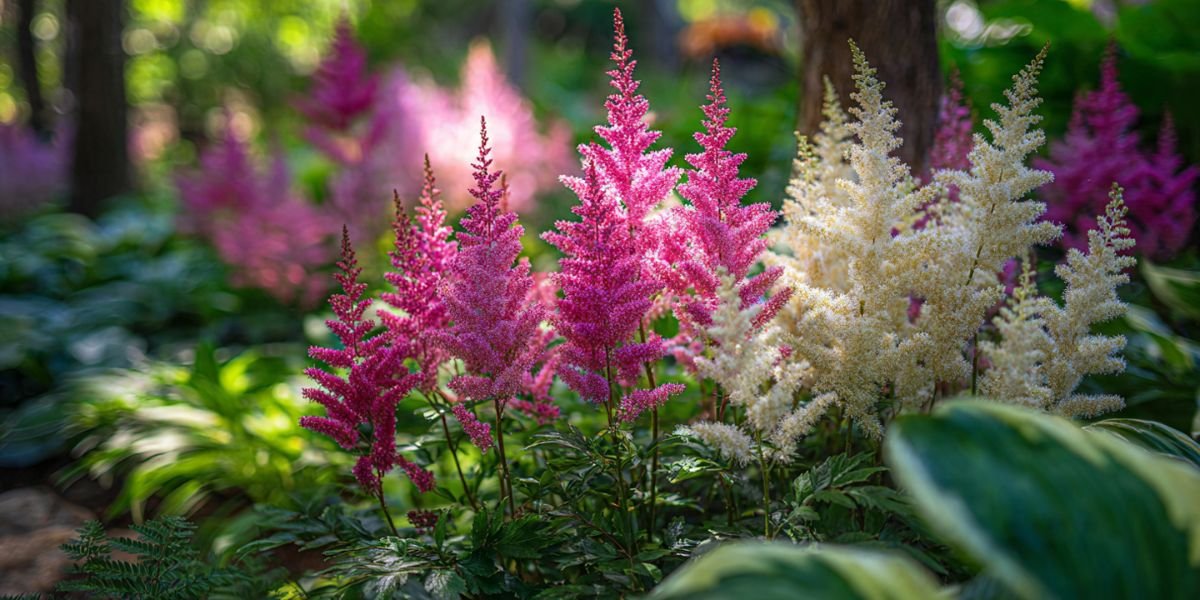
As a horticulturist who has spent countless hours getting my hands dirty in gardens across the country, I’ve recommended the Astilbe plant to more homeowners than I can count. If you have a shady spot in your yard or on your patio that looks a little sad and empty, this feathery, plume-like perennial is your best friend. In my years of growing this plant, I’ve found that its vibrant colors can completely transform a gloomy corner into a focal point.
Let’s dive into everything you need to know to keep your Astilbe thriving, skipping the complex botany jargon and sticking to what actually works in a typical American home garden.
Personal Pro-Tip: Don’t toss your plant tags! I always stick the little plastic ID tag that comes with my Astilbe plant deep into the potting soil or garden bed right next to the roots. That way, when Spring rolls around and it hasn’t sprouted yet, I know exactly where it’s sleeping.
Astilbe Plant Quick Care Reference
| Care Need | Recommendation |
| Light | Dappled shade to partial shade (Keep out of harsh afternoon sun) |
| Water | High moisture needs; keep soil consistently damp but not soggy |
| Soil | Rich, well-draining, slightly acidic. Use quality potting soil for containers |
| USDA Zones | 3 to 8 (Performs beautifully as a perennial across most of the US) |
| Toxicity | Non-toxic to cats, dogs, and horses |
Why I Love Growing the Astilbe Plant
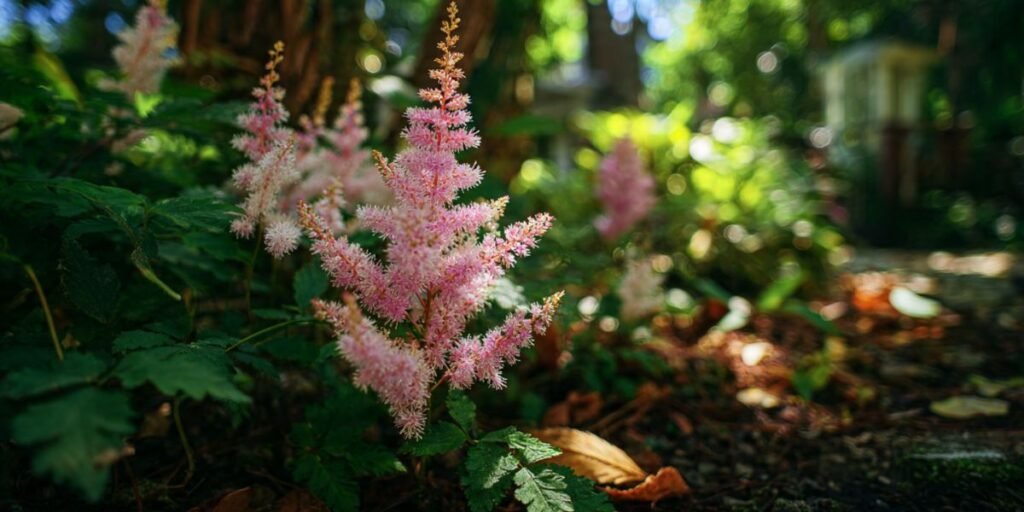
There is something incredibly rewarding about watching an Astilbe plant burst into color right when the heat of early summer kicks in. Unlike sun-worshipping flowers like Zinnias or Marigolds, Astilbes do their best work in the shadows. They bring stunning textures—ranging from soft pinks and fiery reds to crisp whites—into spaces under oak trees or along north-facing walls where most other flowers just give up.
Personal Pro-Tip: I like to plant them in clusters of three or five. A single Astilbe can look a bit lonely, but a group of them creates a stunning, cloud-like drift of color.
Essential Care Guide for Your Astilbe Plant
Finding the Right Light
Astilbes are shade lovers, but “shade” doesn’t mean pitch black. They thrive in dappled sunlight, like the light filtering through tree branches. A few hours of gentle morning sun is fantastic, but keep them away from the harsh afternoon glare.
Watering Your Astilbe Plant Perfectly
If there is one thing you must remember, it’s that this plant is incredibly thirsty. Astilbes do not handle drought well. If you are keeping them in patio planters, you might need to water them every single day during July and August. When you water, don’t just sprinkle the leaves—give them a deep soak. If you’re dragging a hose from the outdoor faucet, make sure the water goes straight to the base of the plant.
Soil and Fertilizer Needs
They love rich, loamy dirt. If you are planting them in a container, grab a high-quality, moisture-retaining potting soil. In the garden, work some rich organic matter into the ground before planting. I usually toss a handful of slow-release, balanced granular fertilizer around the base right as they start to wake up in early Spring.
Personal Pro-Tip: If your tap water is heavily softened (which adds salts), try to use water directly from an outside faucet that bypasses the softener, or collect rain in a bucket. Astilbes hate salty soil!
Common Mistakes When Growing an Astilbe Plant in the US
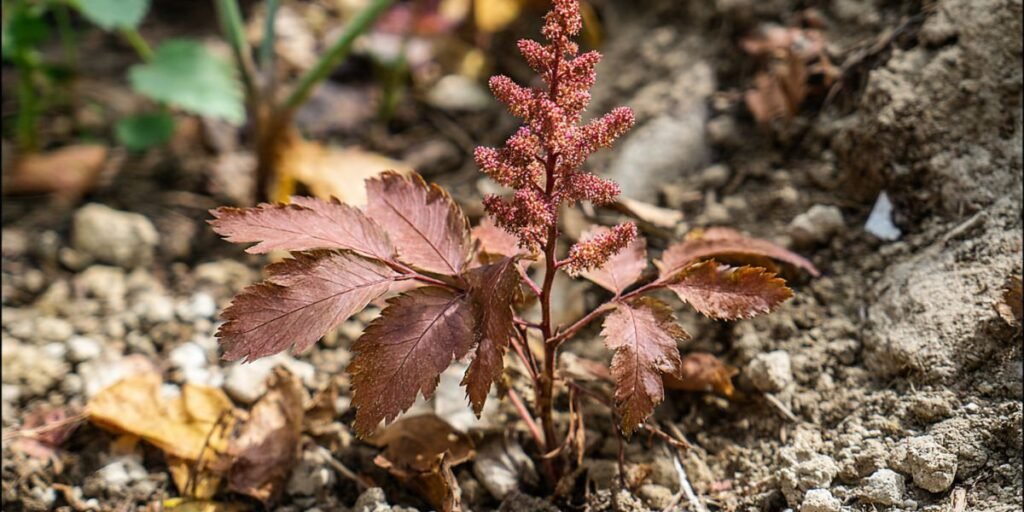
Why do Americans usually fail with this plant? The number one culprit is our intense summer heat combined with neglect. We get busy, we forget to water for a week, and suddenly the plant looks like a pile of crispy brown hay.
Another uniquely modern issue I see is the placement of potted Astilbes on covered patios right near outdoor AC unit exhausts or indoor air conditioning vents. The constant blast of dry, artificial air will strip the moisture right out of their delicate fronds, turning them brown overnight.
Personal Pro-Tip: Mulch is your secret weapon. I always lay down a thick, two-inch layer of wood chips around my outdoor Astilbes. It acts like a cozy blanket that locks the moisture into the soil, protecting them from unexpected heatwaves.
Astilbe Plant Troubleshooting: Yellow Leaves & Brown Tips
It breaks my heart to see a struggling plant, but most issues are easily fixable if you catch them early.
- Crispy Brown Tips and Edges: This is a classic cry for help. Your plant is either drying out or getting scorched by too much direct sun. The Fix: Stick your finger into the soil. If it’s bone dry two inches down, water it immediately. If the soil is wet, the sun is the issue—you may need to dig it up and move it to a shadier spot in the Fall.
- Yellowing Leaves: If the leaves are turning yellow and feeling mushy, you’ve swung the pendulum too far the other way. You are overwatering, or your soil has poor drainage, causing root rot. The Fix: Back off the watering. If it’s in a pot, ensure the drainage holes aren’t clogged. You might need to repot it with fresh potting soil mixed with a bit of perlite for better airflow.
Personal Pro-Tip: When I see crispy brown flower plumes at the end of the summer, I just snip them off right down to the foliage. It immediately makes the whole plant look tidier!
Toxicity Warning: Is the Astilbe Plant Safe for Pets?
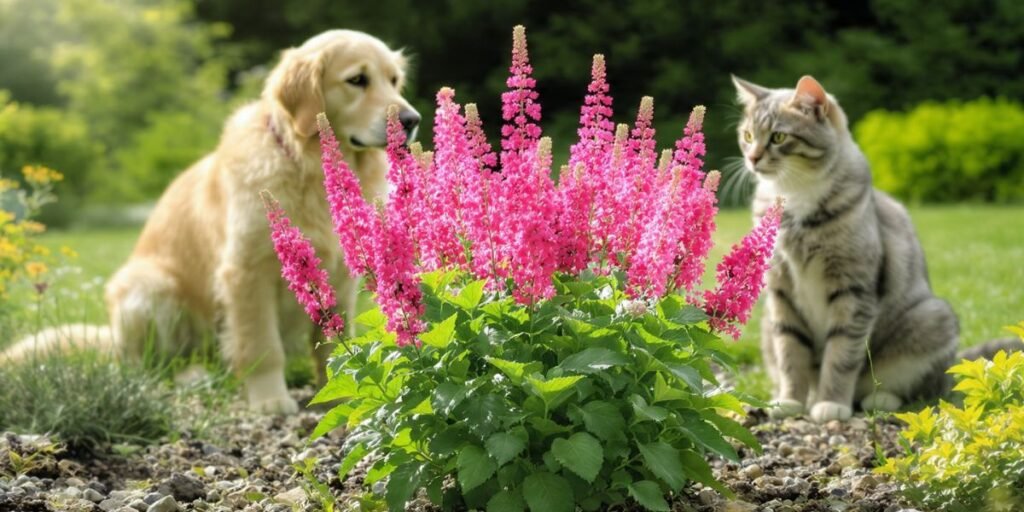
As a dog owner myself, I absolutely refuse to bring plants into my yard without checking their toxicity first. This is a massive selling point: the Astilbe plant is completely non-toxic to cats, dogs, and even horses. You don’t have to panic if your Golden Retriever decides to take a bite out of a pink plume or your curious tabby cat brushes up against the leaves.
Personal Pro-Tip: Even though they are non-toxic, if your pet has a habit of digging up your garden beds, consider placing a few large, decorative river rocks over the root zone to discourage muddy paws.
Frequently Asked Questions About the Astilbe Plant
I spend a lot of time on gardening forums and helping neighbors, and these are the questions that pop up constantly:
Q1. Does the Astilbe plant come back every year?
Yes! As long as you live in USDA Zones 3 to 8, they are hardy perennials that will reliably return every Spring.
Q2. Can it grow in complete, deep shade?
It will survive in deep shade, but it probably won’t flower well. They really need that ambient, indirect light or a little morning sun to produce those big, beautiful plumes.
Q3. Should I deadhead the faded flowers?
You don’t have to. Leaving the dried brown plumes actually adds some nice texture to your Fall and Winter garden. But if you prefer a clean look, snip them off!
Q4. Can I grow an Astilbe plant indoors as a houseplant?
I really don’t recommend it. They rely on the natural dormancy period brought on by cold Winter weather. Indoors, they tend to slowly decline and suffer from the dry air. Keep them outside.
Q5. Why didn’t my Astilbe bloom this year?
Usually, it’s a lack of moisture or a lack of light. If a tree above it grew a thicker canopy this year, the plant might be too shaded. Alternatively, it might need to be divided if it’s an older, crowded plant.
Q6. How do I divide it, and when?
Every 3 to 4 years, I dig up the entire root ball in early Spring or early Fall. I take a sharp spade and literally chop the tough root mass into quarters, then replant them. It revitalizes the plant perfectly!
Q7. Do they attract pollinators?
Absolutely. While they aren’t as much of a bee-magnet as lavender, you’ll definitely see butterflies and beneficial insects hovering around the blooms in early summer.
Personal Pro-Tip: If you’re dividing them in the Fall, make sure to do it at least six weeks before your first hard frost. The newly separated roots need time to grip the soil before the ground freezes solid!
Final Thoughts on Growing the Astilbe Plant
At the end of the day, gardening is all about finding the right home for the right plant. While some folks get intimidated by the moisture requirements of the Astilbe plant, I look at it as a fair trade-off for the spectacular reward you get in return. There simply aren’t many perennials that can light up a dark, shady corner with such dramatic, cloud-like color.
If you commit to keeping their soil damp and keeping them shielded from the blazing afternoon sun, these hardy beauties will reward you year after year. Next time you visit your local garden center, pick up a few varieties with different bloom times to stretch that gorgeous color all the way from early to late summer. Happy planting!

Amin Khalid is a professional horticulturist and the founder of LeafyWisdom. With a deep passion for home gardening and horticultural research, he specializes in providing practical, easy-to-follow care guides for indoor plants. Amin’s goal is to simplify gardening for everyone and help fellow plant lovers build their own thriving green spaces.