
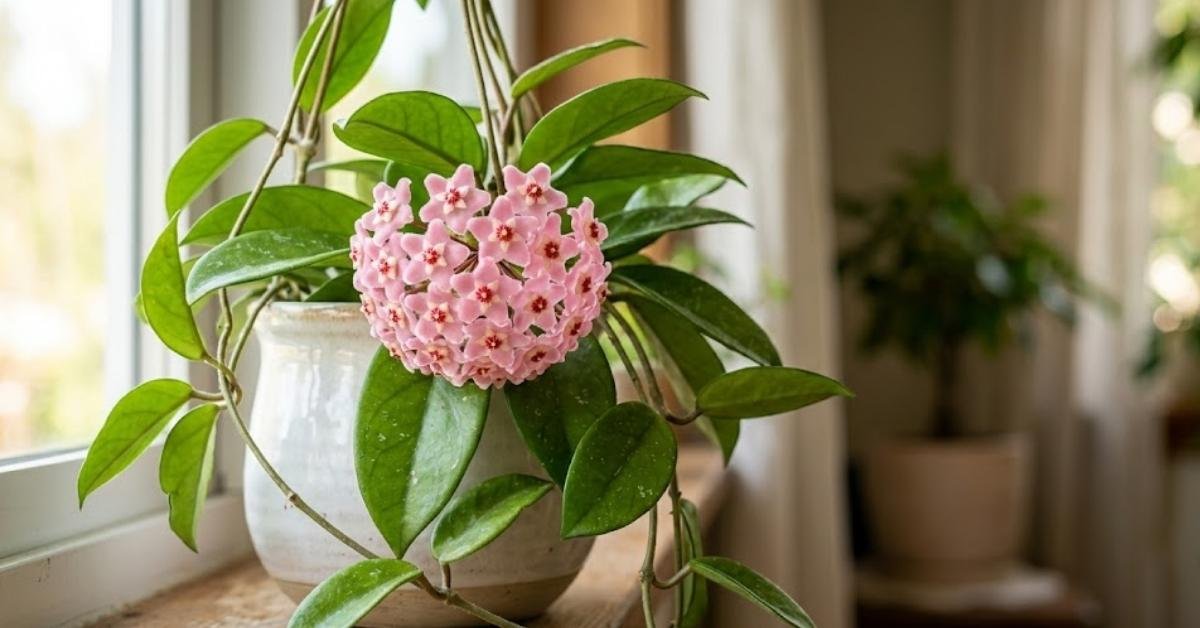
If you’ve ever seen a trailing vine with thick, shiny leaves and tiny star-shaped flowers, you were probably looking at a hoya plant. Hoya plant care is simple once you understand the basics, making it one of the most rewarding indoor plants for beginners.
Hoyas (pronounced HOY-ah) are tropical vining plants from Southeast Asia and Australia. They belong to over 600 known species and go by fun nicknames like Wax Plant, Porcelain Flower, and Hindu Rope Plant.
They’re loved for good reason:
- They live 20–30+ years with basic care
- Many produce fragrant flowers that smell like chocolate or vanilla
- They are non-toxic to dogs and cats
- They tolerate some neglect without dying
- They work as hanging, trailing, or climbing plants
Hoya Quick Care Summary Table
| Care Factor | What Hoya Needs |
| Light | Bright indirect light (4–6 hours daily) |
| Water | Every 1–2 weeks; let soil dry between waterings |
| Soil | Well-draining, chunky mix with perlite |
| Pot | Terracotta with drainage holes |
| Temperature | 60–85°F (15–29°C) |
| Humidity | 40–60% |
| Fertilizer | Balanced liquid feed every 2–4 weeks (spring/summer only) |
| Repotting | Every 2–3 years |
| Toxicity | Generally non-toxic to pets and humans |
Light Requirements
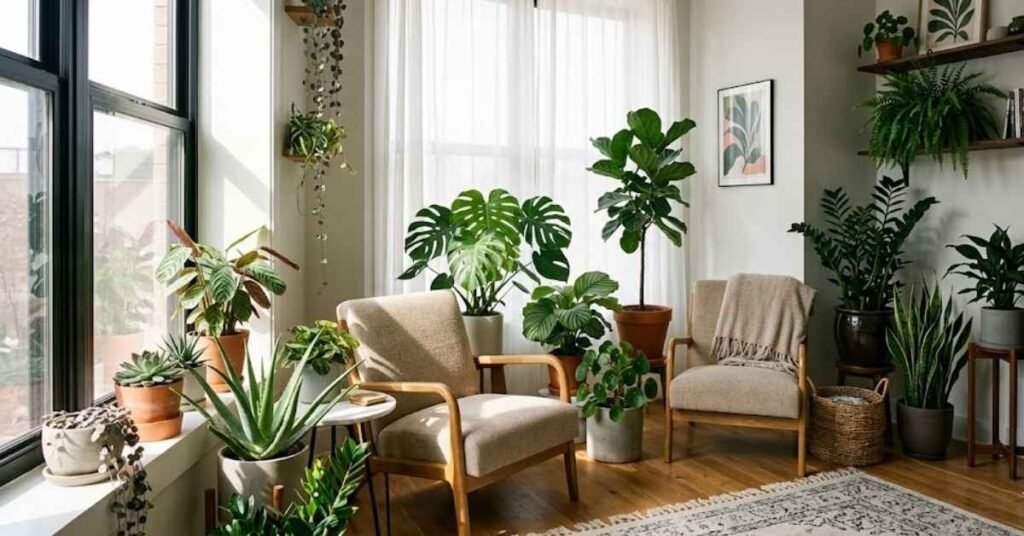
Hoyas love bright, indirect light. A south- or east-facing window with a sheer curtain is ideal. Aim for 4–6 hours of filtered light per day.
They survive in lower light but will grow slowly and rarely bloom. Midday direct sun causes leaf burn watch for pale, washed-out, or papery leaves as a warning sign.
Hoya plant care requires bright, indirect light to keep the plant healthy and encourage blooming.
Pro Tip: No bright window? A grow light set 6–12 inches above the plant for 12–14 hours daily works great as a substitute.
Watering Guide
How Often to Water
This is where most people go wrong. Hoyas store water in their thick leaves, so they need far less water than most houseplants.
Simple rule: Water when the top 1–2 inches of soil feel dry. In most homes, that means every 7–14 days in summer and every 2–3 weeks in winter.
Proper Hoya plant care depends heavily on correct watering habits, as overwatering is the most common mistake.
How to Water
- Water slowly until it drains from the bottom
- Empty the saucer within 30 minutes — never let it sit in standing water
- Wait until soil dries before the next watering
Warning Signs
| Overwatered | Underwatered |
| Yellow, mushy leaves | Wrinkled, limp leaves |
| Soft, brown stem base | Bone-dry soil pulling from pot edges |
| Musty smell from soil | Slow growth in warm season |
Pro Tip Stick a wooden chopstick 2 inches into the soil. If it comes out damp, wait a few more days.
Best Soil and Pot
Hoyas need airy, fast-draining soil — not regular potting mix alone.Good Hoya plant care also starts with the right soil mix that drains quickly and prevents root rot.
DIY Hoya Soil Mix
- 50% standard potting mix
- 25% perlite
- 25% orchid bark or coco coir
This blend dries at the right pace and mimics the loose, bark-heavy surfaces hoyas cling to in the wild.
Best pot: Terracotta. It’s porous, pulls moisture away from the roots, and reduces root rot risk. Always use a pot with drainage holes — no exceptions.
Temperature and Humidity
Hoyas grow best at 60–85°F (15–29°C). Keep them away from cold drafts, AC vents, and heating vents. Temperatures below 50°F can cause leaf drop and stress.
For humidity, 40–60% is ideal but most hoyas adapt to normal indoor levels. If tips turn crispy, try a pebble tray with water under the pot or a small nearby humidifier.
Pro Tip Skip daily misting — it doesn’t raise humidity enough and can cause fungal spots on leaves.
Fertilizing
Hoyas aren’t heavy feeders, but regular feeding in the growing season boosts both growth and blooms.
- Spring & Summer: Feed every 2–4 weeks with a balanced liquid fertilizer (10-10-10 or 20-20-20)
- Fall: Taper to once a month
- Winter: Stop completely — the plant is resting
Always dilute fertilizer to half the recommended strength to avoid root burn.
How to Get Your Hoya to Bloom
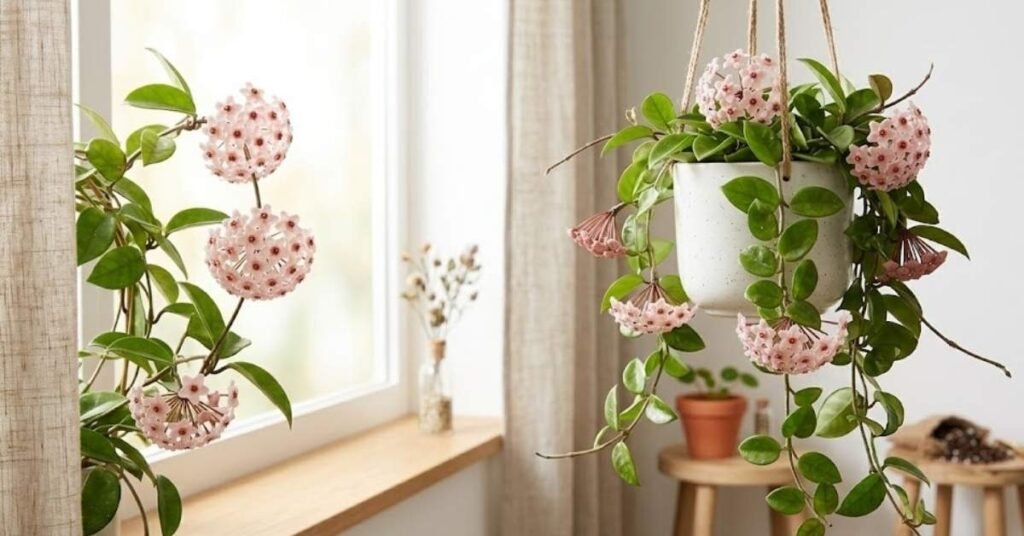
Blooms are the reward every hoya grower works toward. Here’s what actually triggers them:
- Bright light — The single biggest factor. Move it closer to a bright window.
- Be patient — Plants under 2 years old rarely bloom. Maturity matters.
- Never cut old flower stalks (peduncles) — Hoyas rebloom from the same stalks year after year. Removing them delays future flowers by 1–2 years.
- Let it get slightly root-bound — A snug pot encourages blooming.
- Winter rest — Slightly cooler temps (60–65°F) and less water in winter mimics natural seasonal cycles and triggers spring blooms.
Seasonal Care Guide
| Season | Key Actions |
| Spring | Resume regular watering, start fertilizing, repot if needed |
| Summer | Water more often, fertilize every 2–3 weeks, watch for pests |
| Fall | Reduce watering, taper fertilizer, bring outdoor plants inside |
| Winter | Water sparingly, stop fertilizing, allow cooler nights to trigger blooms |
Common Pests and How to Fix Them
| Pest | Signs | Fix |
| Mealybugs | White cottony clusters in leaf joints | Dab with 70% isopropyl alcohol; spray neem oil weekly |
| Spider Mites | Fine webbing, dull/stippled leaves | Shower the plant; apply neem oil every 5–7 days |
| Aphids | Clusters on new growth | Rinse with water; apply insecticidal soap |
| Fungus Gnats | Tiny flies around the soil | Let soil dry out; use yellow sticky traps |
| Scale | Hard brown bumps on stems | Scrape off; treat with neem oil |
For root rot (caused by overwatering): remove the plant, trim mushy roots, let dry for a day, then repot in fresh dry soil.
Common Beginner Mistakes to Avoid
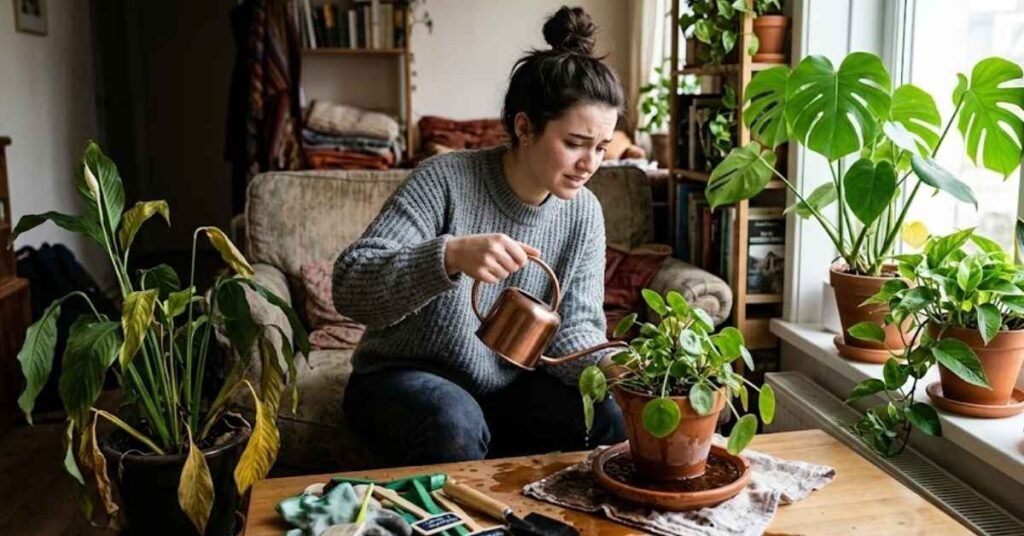
1. Overwatering The number one hoya killer. When in doubt, wait another few days before watering.
2. Cutting old flower stalks Those bare-looking stalks are where future blooms come from. Leave them alone.
3. Repotting too often Hoyas prefer to be slightly root-bound. Only report when roots escape the drainage holes or growth has stalled for a long time.
4. Moving the plant when buds appear Even turning the pot can cause flower buds to drop. Once buds form, don’t touch or move the plant.
5. Using regular potting soil alone Too dense, holds too much water, leads to root rot. Always add perlite and orchid bark.
6. Fertilizing in winter is a mistake a resting plant can’t use those nutrients. You’ll just build up salt in the soil, which damages roots.
Is Hoya Toxic to Pets?
Great news: most popular hoya varieties — including Hoya carnosa — are listed as non-toxic to dogs and cats by the ASPCA. The plant sap may cause mild skin irritation in very sensitive individuals, so wash hands after handling.
As a precaution, keep plants out of reach of pets that tend to chew on leaves.
Popular Hoya Varieties at a Glance
| Variety | Leaf Look | Difficulty | Why It’s Loved |
| Hoya carnosa | Oval, glossy | Easy | Classic, fragrant blooms |
| Hoya kerrii | Heart-shaped | Easy | Cute gift plant |
| Hoya pubicalyx | Long, lance-shaped | Easy | Fast grower, dark flowers |
| Hoya obovata | Round, silver-flecked | Easy | Stunning large leaves |
| Hoya compacta | Twisted rope-like | Moderate | Unique curled texture |
| Hoya linearis | Thin, fuzzy, pencil-like | Moderate | Unusual trailing look |
FAQ,s
1. How fast does a hoya plant grow? Hoyas are slow to moderate growers. In ideal conditions, expect 1–3 feet of new vine growth per growing season. Growth stalls in winter — that’s completely normal.
2. Why are my hoya leaves turning yellow? Almost always overwatering or root rot. Let the soil dry out fully, check if roots are mushy, and reduce watering frequency going forward.
3. Why won’t my hoya bloom? Not enough light is the top reason. Other causes: plants are too young, pots are too large, or old flower stalks were removed. Move it to a brighter spot and never cut peduncles.
4. Can I grow hoya in water only? Cuttings root easily in water. For long-term growing, a well-draining soil mix is better for overall health and bloom production.
5. Is the sticky stuff on my hoya normal? Yes! That’s nectar — a healthy, natural sign your plant may be about to bloom. Place a tray underneath to catch drips.
6. How do I know when to report? When roots grow out of drainage holes, the soil dries out unusually fast, or it’s been 2–3 years. Only size up 1–2 inches at a time.
7. Can hoyas grow outdoors? In warm climates (USDA Zones 10–12), yes — year-round. In cooler zones, move them outside in summer (morning sun, afternoon shade) and bring them inside before temperatures drop below 55°F.
Conclusion
Hoya plants are one of the most rewarding houseplants you can own. They’re forgiving, long-lived, and capable of producing stunning, fragrant blooms that will impress anyone who walks into your home.
Get four things right bright indirect light, infrequent watering, good drainage, and patience and your hoya will thrive for decades.
Start with a beginner-friendly variety like Hoya carnosa, Hoya pubicalyx, or Hoya obovata. Grab a terracotta pot, mix up a well-draining soil blend, find your brightest indirect-light spot — and enjoy the journey.
Have a question about your hoya? Drop it in the comments we’d love to help. By following this complete Hoya plant care guide, your plant can thrive for decades with minimal effort.

Amin Khalid is a professional horticulturist and the founder of LeafyWisdom. With a deep passion for home gardening and horticultural research, he specializes in providing practical, easy-to-follow care guides for indoor plants. Amin’s goal is to simplify gardening for everyone and help fellow plant lovers build their own thriving green spaces.