
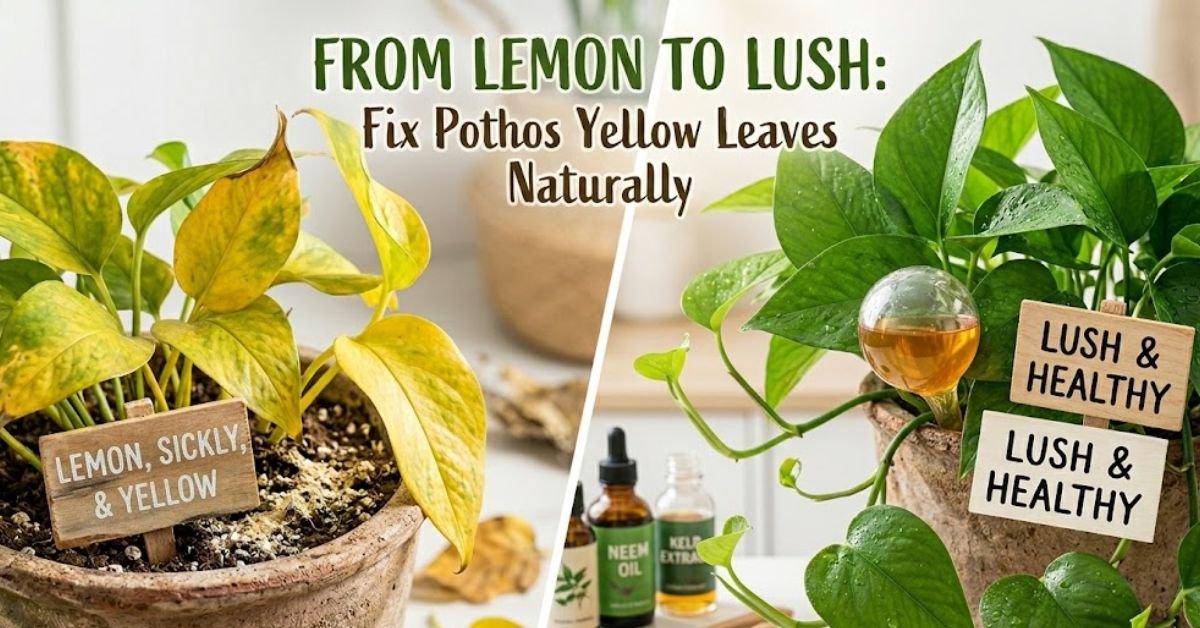
How to fix yellow leaves on Pothos naturally is a top priority for plant parents who notice their vibrant vines losing their luster. I have spent twenty years in greenhouses and suburban living rooms, and I have seen this “unkillable” plant (Epipremnum aureum) act like a total drama queen. One day it trails beautifully over your bookshelf, but the next day, you see a leaf that looks like a bright lemon.
Usually, yellowing is not a death sentence for your greenery. Instead, it is a polite request for a change in environment. If you want to restore your plant’s health without harsh chemicals, you must understand the underlying causes of foliage stress.
Pothos Quick Care Cheat Sheet
| Care Factor | Ideal Condition | US Home Consideration |
| Light | Bright, indirect light | Keep away from drafty AC vents in Summer |
| Water | Every 7–10 days | Use room-temp water from the faucet |
| Soil | Well-draining potting soil | Avoid heavy “garden soil” bags |
| Temperature | 65°F – 85°F | Protect from window frost in Winter |
| USDA Zones | Zones 10-12 (Outdoors) | Mostly kept as an indoor perennial elsewhere |
Common Mistakes Americans Make with Pothos
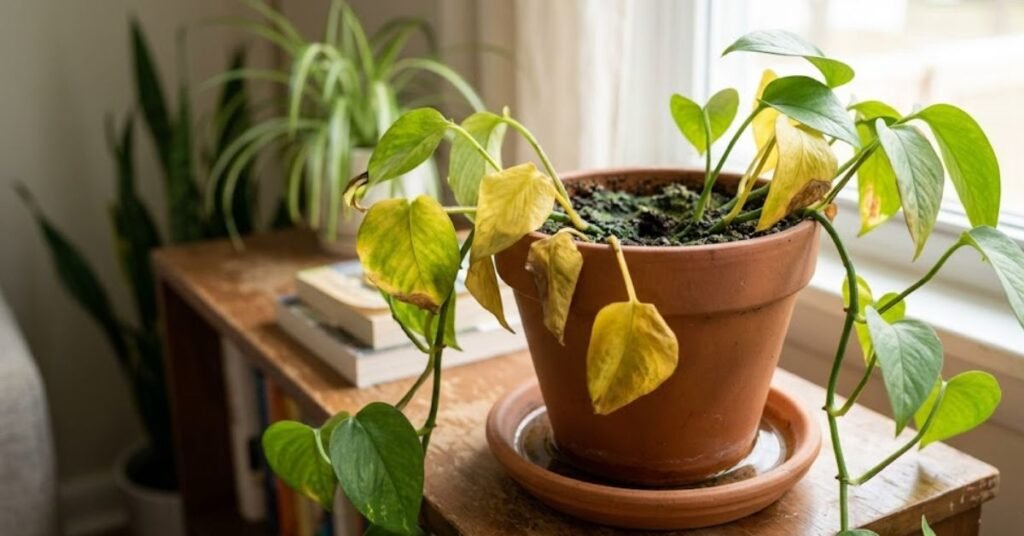
In my years of consulting for home gardeners from Florida to Oregon, I see the same three mistakes repeated. First, we tend to “love our plants to death” with the watering can. Second, we forget that our modern HVAC systems—specifically air conditioning—strip the moisture right out of the air.
Most people don’t realize that a Pothos sitting directly under a ceiling fan or near a heating vent in the Fall will lose moisture through its leaves faster than its roots can drink. This stress often leads to that dreaded yellowing. Before we look at how to fix yellow leaves on Pothos naturally, we have to stop the cycle of over-watering in heavy, peat-based potting soil that doesn’t breathe.
Personal Pro-Tip: I always tell my clients: “When in doubt, wait a day.” If the soil feels damp an inch down, keep the watering can in the cupboard.
How to Fix Yellow Leaves on Pothos Naturally by Balancing Water
The most common culprit for yellowing is “wet feet.” When the roots sit in stagnant water, they can’t breathe, and the plant expresses this by turning its oldest leaves yellow.
To fix this naturally, I recommend a “reset” period. Stop watering until the top two inches of the potting soil are bone dry. If your pot doesn’t have a drainage hole, you’re fighting a losing battle. I’ve found that moving the plant into a terracotta pot is the best natural way to regulate moisture because the clay “breathes.”
When you do water, take it to the kitchen faucet and let the water run through until it drains out the bottom. This flushes out built-up salts from tap water that can also cause leaf discoloration.
Personal Pro-Tip: If your water is heavily chlorinated, let a pitcher sit out overnight before using it. This allows the chemicals to dissipate naturally, which is much easier on the plant’s delicate root system.
Light Adjustments: A Natural Solution for Pothos Color
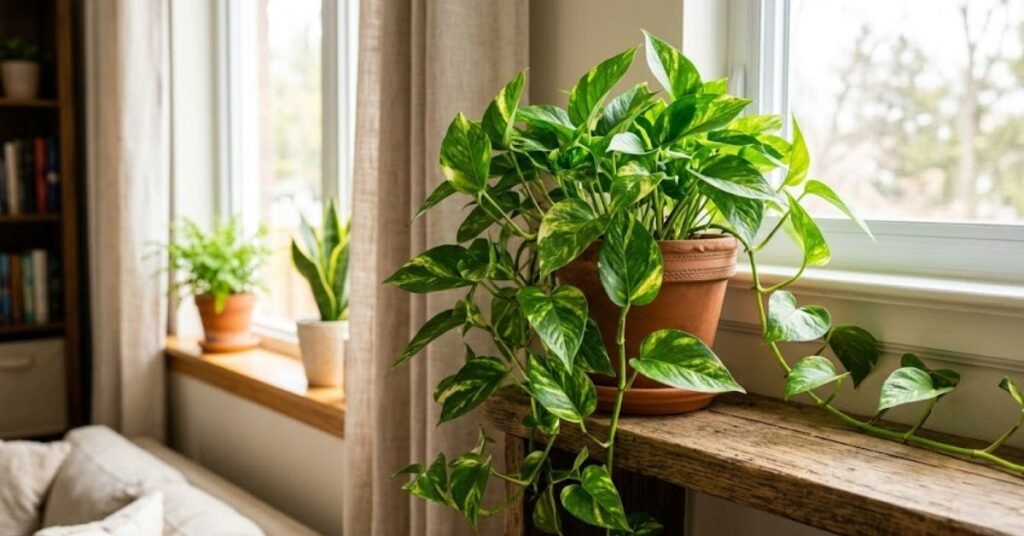
I’ve seen many Pothos plants struggle in the “low light” conditions they are often marketed for. While they survive in dim corners, they won’t thrive. If your plant is near a North-facing window in the middle of a gloomy Midwestern Win
ter, it might be shedding leaves to conserve energy.
If you want to know how to fix yellow leaves on Pothos naturally caused by light issues, simply move it closer to an East or West-facing window. You want “dappled” light—the kind that mimics a forest canopy. If the leaves are turning a pale, sickly yellow (rather than a bright, solid yellow), it’s likely asking for a bit more sun to jumpstart photosynthesis.
Personal Pro-Tip: I like to rotate my Pothos a quarter-turn every time I water. This ensures all sides of the vine get equal light, preventing one side from “balding” or yellowing.
Natural Fertilizer Hacks for a Greener Pothos
Sometimes, yellowing is a sign of a nitrogen deficiency. Instead of reaching for harsh chemical sticks, I prefer natural amendments. During the Spring and Summer growing seasons, I’ve had great success using diluted fish emulsion or even cooled “aquarium water” if you happen to have a fish tank.
Another great way regarding how to fix yellow leaves on Pothos naturally is using worm castings. I top-dress my indoor plants with about half an inch of worm castings every Spring. It’s a slow-release, odorless way to give the plant the nutrients it needs to keep those leaves deep green.
Personal Pro-Tip: Don’t fertilize in the Winter. In most parts of the US, plants go into a semi-dormancy when the days get shorter. Adding fertilizer then can actually “burn” the roots and cause more yellowing.
Troubleshooting: Why is My Pothos Leaf Yellow?
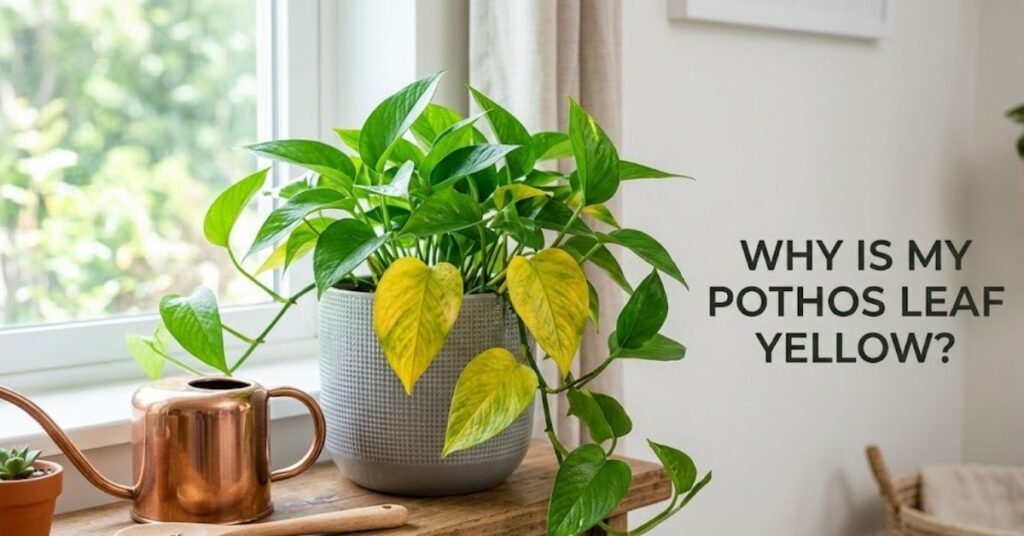
Not all yellow is created equal. I use this quick guide to diagnose my own plants:
- Solid Yellow + Soft Stems: Usually over-watering or root rot.
- Yellow Tips + Crispy Brown Edges: Usually low humidity or “hard” faucet water.
- Spotty Yellow/Yellow Halo: Could be a fungal issue; improve air circulation.
- Bottom Leaves Only: Often just natural aging (the plant “retiring” old leaves).
Knowing how to fix yellow leaves on Pothos naturally starts with identifying which of these patterns you’re seeing. If it’s just one leaf at the very base of the vine, I usually just snip it off and don’t worry—it’s just the circle of life.
FAQ: Real Questions from the Gardening Community
Q1. Should I cut off the yellow leaves?
Yes. In my experience, once a leaf has turned fully yellow, it won’t turn green again. Removing it allows the plant to send energy to new, healthy growth. Use a clean pair of scissors and snip near the main vine.
Q2. Can I use coffee grounds to fix yellow leaves?
I get asked this a lot! While coffee grounds have nitrogen, I don’t recommend putting them directly on the soil of indoor plants. They can mold and attract fungus gnats. Use a compost tea or a dedicated organic fertilizer instead.
Q3. Why is my Pothos turning yellow in the Fall?
This is often due to the “Heat Kick-on.” When we turn our furnaces on in the Fall, the humidity in our homes drops to desert levels. I find that grouping plants together creates a little “micro-climate” of humidity that helps them survive the dry air.
Q4. Can I save a Pothos with root rot?
If the stems are still firm but the leaves are yellowing, you can often save it. I suggest taking “cuttings” of the healthy green sections and rooting them in a jar of clean water on your windowsill. It’s the ultimate natural backup plan.
Q5. Does my Pothos need a bigger pot?
If you see roots growing out of the drainage holes and the leaves are yellowing despite good care, it might be root-bound. I usually repot into a container only 2 inches wider than the current one using fresh, airy potting soil.
Q6. Is Epsom salt good for yellow Pothos leaves?
Only if the issue is a magnesium deficiency, which is rare for indoor Pothos. I’d stick to a balanced organic fertilizer before trying DIY chemistry.
Q7. How often should I mist my Pothos?
Honestly? Don’t bother. Misting only raises humidity for a few minutes. I’ve found that a pebble tray (a tray of water with stones that the pot sits on top of) is a much more effective way to fix yellow leaves on Pothos naturally by providing constant moisture.
Final Thoughts: A Note from the Greenhouse
I’ve found that the biggest hurdle for most indoor gardeners is simply overthinking the process. We see a yellow leaf and our first instinct is to panic—we add more water, more food, or move the plant to a spot that’s way too bright. But usually, the best way regarding how to fix yellow leaves on Pothos naturally is to simply listen to what the plant is telling you and make one small adjustment at a time.
Pothos are incredibly resilient. Even if you lose a few leaves to a drafty AC vent or a heavy-handed watering session, these plants want to grow. By sticking to natural fixes like checking your soil moisture by hand, using room-temperature water from the faucet, and keeping an eye on your home’s humidity during the Fall, you’re creating an environment where your Pothos can truly thrive. Don’t let a little yellowing get you down—think of it as your plant’s way of having a conversation with you.
Personal Pro-Tip: I keep a “Plant Journal” on my phone. Whenever I notice a leaf turning yellow, I jot down the date and what the weather was like (e.g., “First week the heat was turned on”). It helps me spot patterns in my home’s environment that I might otherwise miss!

Amin Khalid is a professional horticulturist and the founder of LeafyWisdom. With a deep passion for home gardening and horticultural research, he specializes in providing practical, easy-to-follow care guides for indoor plants. Amin’s goal is to simplify gardening for everyone and help fellow plant lovers build their own thriving green spaces.

No responses yet