
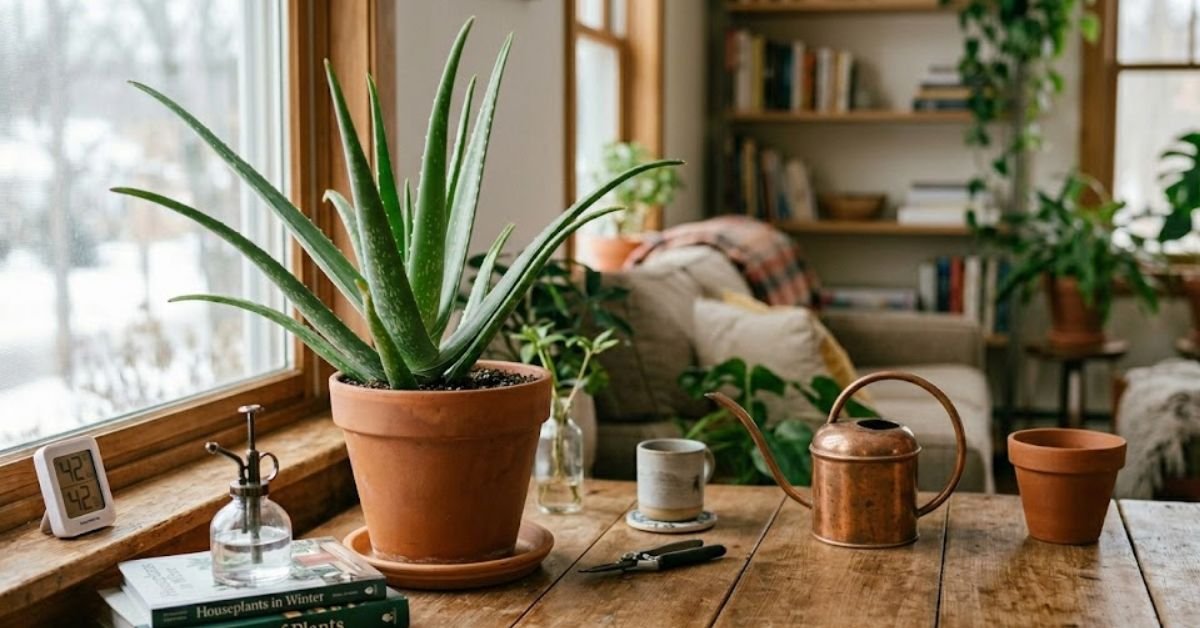
Winter is tough on all of us, but for indoor succulents, it can be downright brutal. I remember the first time I brought a gorgeous, plump aloe inside before the first frost, only to watch it turn into a sad, mushy mess by January. My mistake? I kept watering it like it was still July. As the days shorten across the country and our indoor heating cranks up, understanding exactly how often to water aloe vera in winter is the single most important skill you can master to keep your plant alive. It’s a complete shift from their summer routine, and treating them the same year-round is a guaranteed recipe for root rot. Let’s dive into the exact schedule and care routine I use to keep my succulents thriving through the chilly season.
Quick Care Table: Aloe Vera Winter Basics
| Care Element | Winter Requirement |
| Watering Frequency | Every 3 to 4 weeks (only when 100% dry). |
| Light | Bright, indirect light (South or West-facing window). |
| Soil | Fast-draining cactus/succulent potting soil. |
| Temperature | 55°F to 75°F indoors. (USDA Zones 10-12 for outdoor growing). |
| Fertilizer | None. Do not feed during winter dormancy. |
Personal Pro-Tip: I keep a wooden chopstick right next to my aloe pot. Before I even think about taking it to the sink, I push the chopstick all the way down to the bottom. If it comes out with any damp soil clinging to it, I wait another week.
The Golden Rule: How Often to Water Aloe Vera in Winter
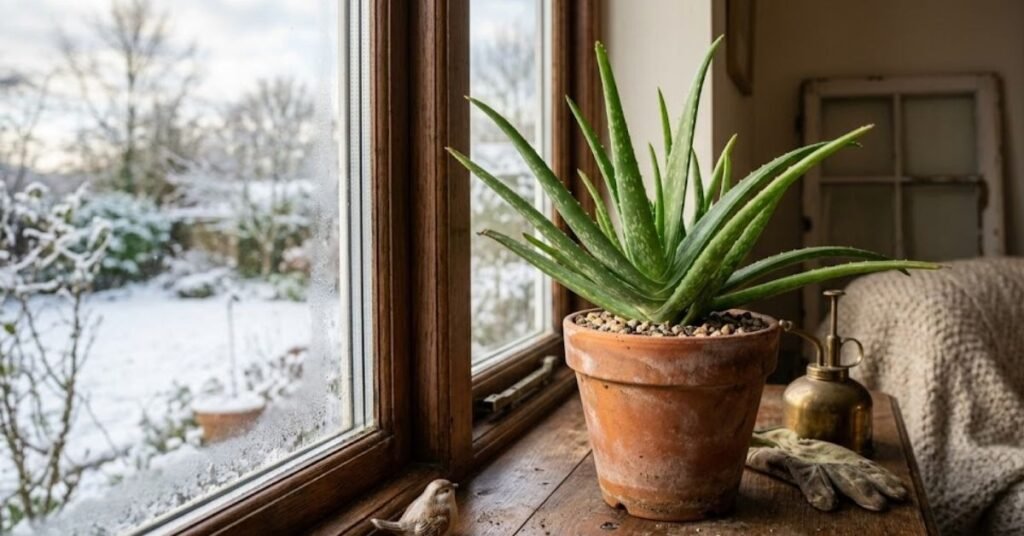
In my years of growing this plant, I’ve found that the biggest shift you need to make is respecting its dormancy period. During the winter, aloe vera plants aren’t actively pushing out new growth. Because they are resting, they use a fraction of the water they would in the spring or summer.
So, exactly how often to water aloe vera in winter? Generally, you should only be watering it every 3 to 4 weeks. Your goal isn’t to keep the soil moist; your goal is to let the potting soil dry out completely, bake a little, and then give it a thorough drench. When you do water, take it to the sink, turn on the faucet, and let room-temperature water run through the soil until it freely flows out of the drainage holes.
Personal Pro-Tip: Never let water sit in the rosette (the center where the leaves meet). I always water the soil directly. Water pooled in the crown during the cool winter months almost always causes stem rot.
Adjusting How Often to Water Aloe Vera in Winter for US Homes
Our indoor environments in the US can be incredibly confusing for plants. While the days are short, our central heating systems are kicking on, completely changing the ambient humidity.
If your aloe is sitting near a heating vent or a radiator, the forced hot air is going to dry that potting soil out much faster than if it were sitting in a chilly, drafty hallway. Conversely, if your plant was dealing with the drying effects of central air conditioning all summer, the winter indoor environment might actually feel a bit less harsh, depending on your setup. You have to read the room. If your home is kept at a toasty 75°F all winter, you might lean closer to the 3-week mark. If you keep things cool, 4 to 5 weeks might be the sweet spot.
Personal Pro-Tip: I learned the hard way to physically move my aloe pots in late October. The spot that was perfect in June suddenly gets blasted by a heating vent in December. Keep them away from direct drafts, hot or cold.
Common Mistakes When Watering Aloe in the Colder Months
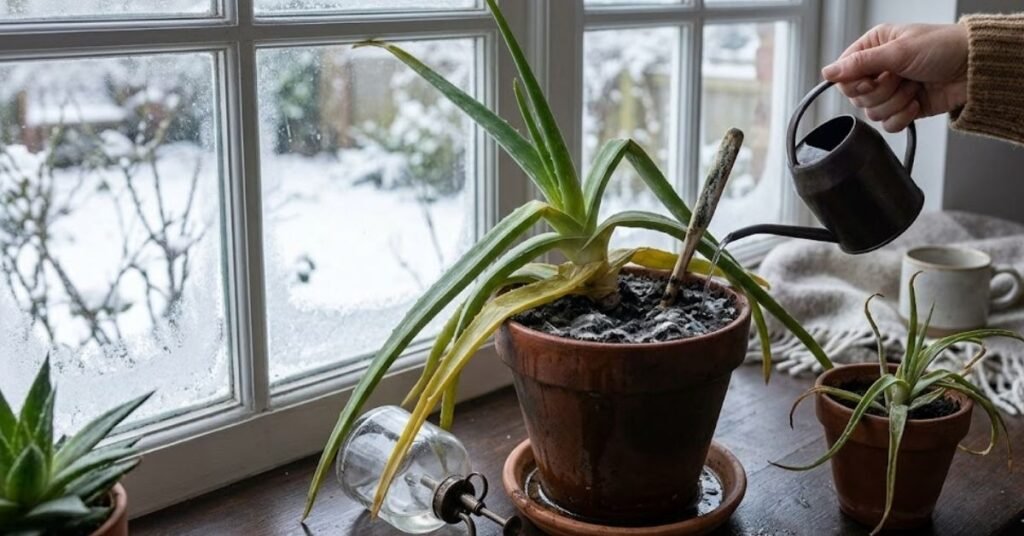
Why do so many of us fail with this incredibly tough plant? It almost always comes down to killing them with kindness.
- Overwatering: This is the number one killer. Giving them a “little sip” every week keeps the roots constantly damp, suffocating them.
- Wrong Soil: If you used standard indoor potting soil instead of a gritty succulent mix, that soil will hold onto water like a sponge. In winter, this wet blanket effect is fatal.
- Cold Water Shock: Taking water straight from a freezing winter faucet and dumping it on tropical roots causes shock. Always let your watering can sit out overnight to reach room temperature.
Personal Pro-Tip: I always use terracotta pots for my aloes. The porous clay actually breathes, allowing moisture to evaporate through the sides of the pot, which provides a great safety net if I accidentally get too heavy-handed with the watering can.
Troubleshooting Aloe Vera Winter Watering Issues
Even with the best intentions, things go sideways. Here is how I read my plant’s distress signals.
Leaves Turning Yellow and Mushy
This is the classic sign of overwatering. The leaves will feel squishy, like a water balloon, and might start drooping heavily or falling off at the base.
- The Fix: Stop watering immediately. If the soil is soaking wet, I pull the plant completely out of its pot, knock off the wet potting soil, let the roots air dry for a day or two, and repot it in fresh, dry succulent mix.
Brown, Crispy Tips or Curling Leaves
While rare in winter, if the leaves are curling inward like a taco or the tips are turning brown and brittle, the plant is too dry. It is cannibalizing the moisture stored in its own leaves to survive.
- The Fix: It’s time for a deep, thorough watering. Give it a good soak at the faucet, let it drain completely, and the leaves should plump back up within a few days.
Personal Pro-Tip: Don’t cut off a mushy leaf right at the base right away. I usually let it dry out a bit first so the wound can callous, preventing bacteria from entering the main stem.
Toxicity Warning: Keep Pets Safe
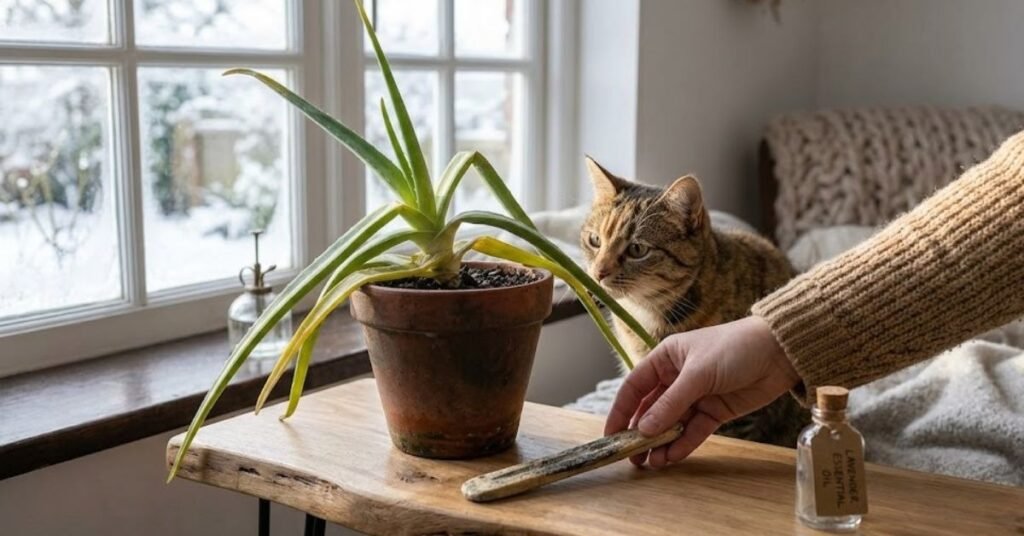
As much as we love this healing plant for human sunburns, we have to be careful with our furry roommates. According to the ASPCA, aloe vera is toxic to both cats and dogs. The sap contains compounds called saponins and aloin, which can cause vomiting, lethargy, and diarrhea if ingested.
Personal Pro-Tip: My cat loves to chew on spiky things. I keep all my aloes on a high floating shelf, completely out of jumping range, to keep both the plant and the pets safe.
FAQs on How Often to Water Aloe Vera in Winter
Q1. Exactly how often to water aloe vera in winter if I live in a cold state?
If your home is drafty and cool, you might stretch your watering out to once every 4 to 6 weeks. Always let the soil dictate the schedule—100% dry is the rule.
Q2. Should I mist my aloe vera in the winter?
No. Aloes thrive in arid environments. Misting them, especially in cooler winter temperatures, just invites fungal diseases on the leaves.
Q3. Why are my aloe leaves turning pale green in December?
This is usually a light issue. Winter days are shorter and the sun is lower. Move your plant to the brightest South or West-facing window you have.
Q4. Does the type of pot change how often to water aloe vera in winter?
Absolutely. Plastic or glazed ceramic pots trap moisture, meaning you’ll need to water less frequently. Terracotta pots breathe, so the soil dries out faster.
Q5. Can I use tap water from the faucet?
Yes, but if your city water has high levels of chlorine or fluoride, let it sit out in an open container for 24 hours before watering so the chemicals can dissipate.
Q6. Should I fertilize my aloe in the winter?
Skip the fertilizer entirely from November through March. Feeding a dormant plant causes a buildup of salts in the soil that can burn the roots.
Q7. How do I know if the soil is actually dry at the bottom?
Use a wooden skewer or chopstick, or honestly, just lift the pot. After a few weeks of growing, I know exactly what a heavy (wet) pot feels like versus a light (bone-dry) pot.
Personal Pro-Tip: When in doubt, read the leaves. A healthy aloe leaf should be firm and plump. If it looks full but the soil is dry, the plant doesn’t need water yet.
Final Thoughts on Your Aloe’s Winter Watering Needs
Getting through the colder months with your houseplants intact doesn’t have to be stressful. Once you accept that less is more, the whole process becomes incredibly easy. Figuring out how often to water aloe vera in winter basically boils down to ignoring the plant for weeks at a time, making sure it gets as much winter sun as possible, and keeping it away from those harsh heating vents. Trust your instincts, check the soil before you water, and your aloe will be ready to push out a ton of fresh green growth the moment spring arrives!

Amin Khalid is a professional horticulturist and the founder of LeafyWisdom. With a deep passion for home gardening and horticultural research, he specializes in providing practical, easy-to-follow care guides for indoor plants. Amin’s goal is to simplify gardening for everyone and help fellow plant lovers build their own thriving green spaces.