
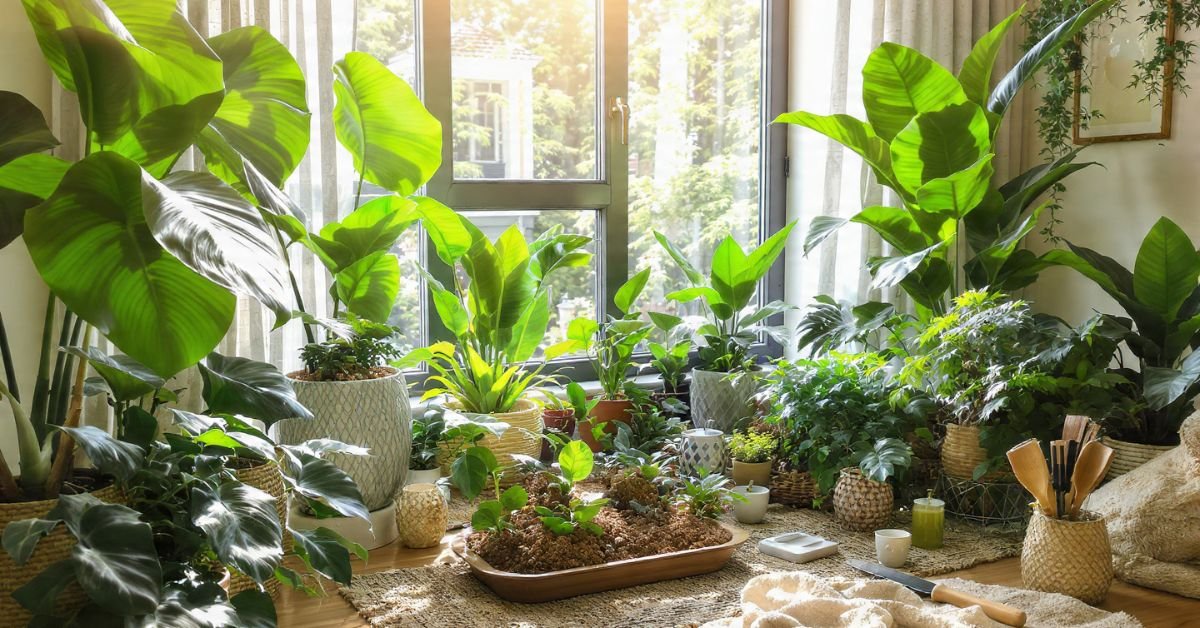
The best well-draining potting soil mix for indoor plants helps prevent root rot, improves airflow, and keeps houseplants healthy year-round. Many indoor plants struggle in heavy, soggy soil. However, the right soil mix creates the perfect balance between moisture retention and fast drainage for thriving roots and vibrant foliage.
Whether you grow Monsteras, Snake Plants, Pothos, or Peace Lilies, your soil mix matters more than most people realize. Indoor environments with air conditioning and heating systems can quickly affect soil moisture levels. Therefore, choosing the correct potting mix becomes essential for long-term plant health.
Quick Reference: The Best Well-Draining Potting Soil Mix for Indoor Plants
| Plant Type | Ideal Mix Ratio | Why It Works |
| Aroids (Monstera, Pothos) | 40% Bark, 30% Perlite, 30% Peat | High aeration for thick roots. |
| Succulents/Cacti | 50% Pumice/Sand, 50% Potting Soil | Prevents root rot in desert species. |
| General Tropicals | 60% Peat/Coir, 40% Perlite/Bark | Holds moisture but drains quickly. |
| Sensitive Ferns | 70% Peat, 30% Perlite | Keeps soil damp but never soggy. |
Why You Need the Best Well-Draining Potting Soil Mix for Indoor Plants in US Homes
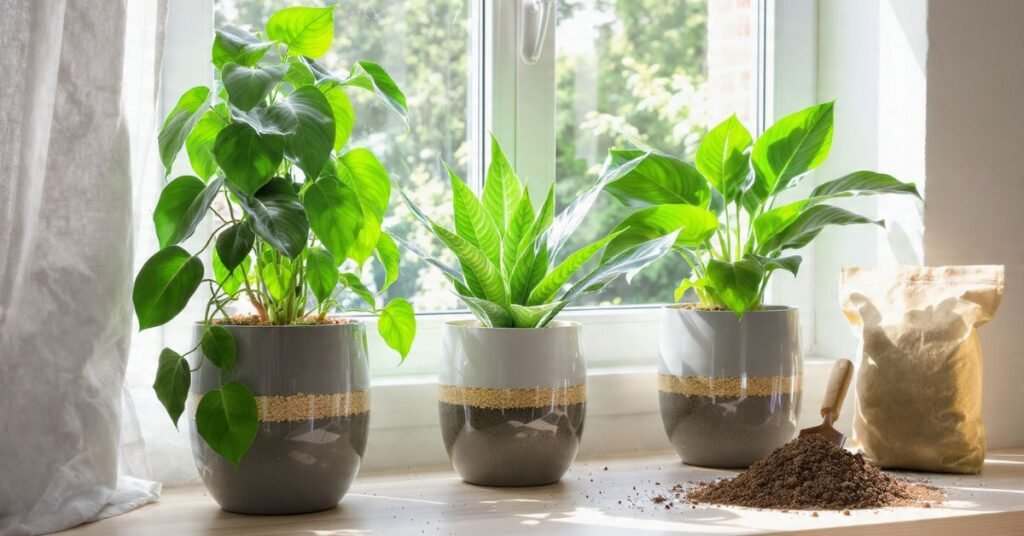
In my experience, the biggest killer of houseplants in the USA isn’t neglect—it’s “loving them to death” with a heavy hand at the kitchen faucet. Most standard retail “potting soils” are actually peat-heavy mixes that hold onto water like a sponge. While that’s great for a thirsty petunia in a hanging basket on a hot Georgia porch, it’s a death sentence for a Philodendron sitting in a cool, air-conditioned living room.
When your AC is running, the air is dry, but the soil stays cool. If that soil isn’t “well-draining,” the water sits around the roots, cutting off oxygen. Roots need to breathe just as much as they need to drink (Agarwal et al., 2021). Without enough air-filled porosity, you’re basically drowning your green friends in slow motion.
Personal Pro-Tip: I always do the “Squeeze Test.” Take a handful of damp soil and squeeze it. If it stays in a hard, muddy ball, it needs more drainage. If it falls apart easily when you poke it, you’ve got a winner.
Ingredients for the Best Well-Draining Potting Soil Mix for Indoor Plants
To build a professional-grade substrate, you need to look past the “dirt.” High-quality horticultural crops grown in containers require specific mineral and organic components to stay healthy (Clark & Zheng, 2020).
1. The Foundation: Peat Moss or Coconut Coir
Peat is the gold standard for moisture retention in the US, though many of my “eco-conscious” gardener friends are switching to coconut coir. Both provide the “fluff” your roots need to grow through easily.
2. The Drainage: Perlite and Pine Bark
This is where the magic happens. In the Southeastern USA, pine bark is a common byproduct used to enhance drainage and improve aeration in substrates (Agarwal et al., 2021). Perlite (those little white “Styrofoam-looking” bits) creates air pockets.
3. The Nutrient Boost: Compost (With Caution)
While compost is rich in nutrients, be careful using it for indoor pots. Some composts can have high salinity or soluble salts, which can lead to “leaf burn” or nutrient lockout in sensitive indoor species (Gondek et al., 2020). If you use it, I recommend keeping it to less than 20% of your total mix.
Personal Pro-Tip: Stop using “Play Sand” for drainage! It’s too fine and actually clogs up the air holes in your soil, turning your pot into a brick. Stick to coarse horticultural sand or pumice.
Customizing the Best Well-Draining Potting Soil Mix for Indoor Plants by Zone
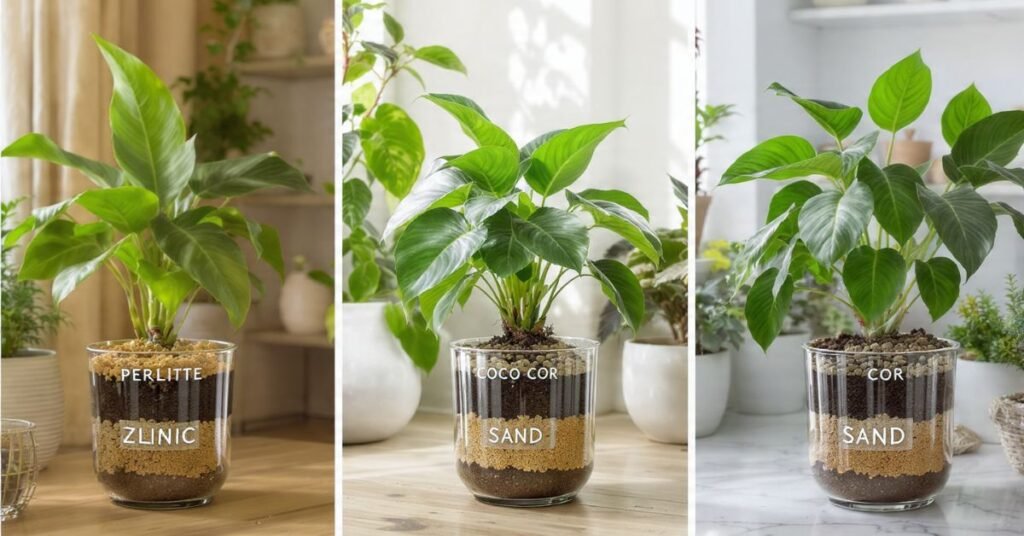
While your plants are “indoor,” your local climate (USDA Hardiness Zone) still matters.
- Zones 9-11 (Florida, Texas, SoCal): If you live somewhere with high ambient humidity, your soil will dry out slower. I’ve found I need to add an extra 10-15% perlite to my best well-draining potting soil mix for indoor plants to compensate for the muggy air.
- Zones 3-5 (The Midwest, Northeast): In the winter, your heater will act like a giant hairdryer for your plants. You might actually want a bit more peat or coir to help the soil hold onto water for an extra day or two so you aren’t watering every 48 hours.
Common Pitfalls When Using the Best Well-Draining Potting Soil Mix for Indoor Plants
Even with the perfect soil, I see Americans make these three mistakes constantly:
- The “Pot with No Hole” Trap: You bought that beautiful ceramic pot from a boutique, but it has no drainage hole. I don’t care how good your soil is; if the water has nowhere to go, your plant will rot.
- AC Vent Placement: I once lost a gorgeous Calathea because I put it directly in the path of a cold AC vent. The moving air dried the leaves, but the soil stayed wet because the plant “shut down” from the cold.
- Compacting the Soil: When you’re repotting in the Spring, don’t press the soil down with all your might. You’re crushing those vital air pockets we worked so hard to create!
Personal Pro-Tip: If you love a pot that has no hole, use it as a “cachepot.” Keep your plant in its plastic nursery liner and just drop it inside the fancy ceramic one. It’s a lifesaver for cleaning and watering.
Troubleshooting & Toxicity Warning
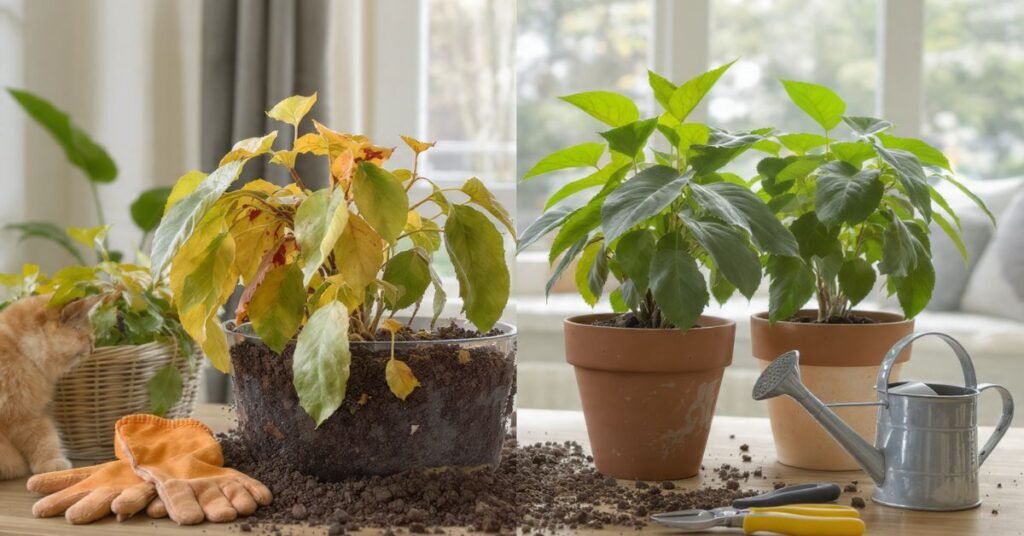
Leaf Watch
- Yellow Leaves + Mushy Stems: Classic overwatering. Your soil isn’t draining fast enough. Add more bark or perlite.
- Brown, Crispy Edges: Usually a humidity issue (AC/Heater) or your water has too many minerals. Try using filtered water from your fridge or faucet.
- Interveinal Chlorosis (Yellowing between green veins): This can be a sign of nutrient deficiency, sometimes caused by poor-quality retail mixes (Clark & Zheng, 2020). Time for some fertilizer or a fresh report.
Toxicity Warning for Pet Owners
Many popular plants that thrive in the best well-draining potting soil mix for indoor plants (like Monsteras, ZZ plants, and Snake Plants) are toxic to cats and dogs if chewed. Always check the ASPCA list before bringing a new green friend home to your fur babies.
FAQs About Indoor Plant Soil
Q1. Can I use outdoor garden soil for my indoor plants?
Absolutely not. Garden soil is way too heavy and often contains pests (fungus gnats, anyone?) that will thrive in your warm US home.
Q2. How often should I replace my potting soil?
I usually refresh my pots every 1-2 years. Over time, the peat breaks down and the “well-draining” properties vanish as the mix becomes compacted.
Q3. Is perlite better than vermiculite?
For drainage, yes. Perlite helps water move through. Vermiculite actually holds water, which is better for starting seeds but risky for established houseplants.
Q4. Why is there white mold on top of my soil?
It’s usually harmless saprophytic fungus. It means your soil is stayng too wet—increase your drainage or cut back on the watering.
Q5. Does the best well-draining potting soil mix for indoor plants need fertilizer?
Most “homemade” mixes are low in nutrients. I recommend a balanced, water-soluble fertilizer applied during the growing seasons (Spring and Summer).
Q6. Can I reuse old potting soil?
I don’t recommend it. Old soil can harbor pathogens and has likely lost its structure. Toss it in your outdoor flower beds instead.
Q7. What is “Aroid Mix”?
It’s just a fancy name for the best well-draining potting soil mix for indoor plants that is heavy on chunky bark and charcoal, specifically for plants like Monsteras that grow on trees in the wild.
Final Thoughts
At the end of the day, your plants are living things that just want a comfortable place to “sit.” By taking the time to mix the best well-draining potting soil mix for indoor plants, you are giving them the foundation they need to survive our modern, climate-controlled homes. It might take a little more effort than just dumping a bag of dirt into a pot, but seeing that first new leaf unfurl in the Spring makes it all worth it.
Happy planting!

Amin Khalid is a professional horticulturist and the founder of LeafyWisdom. With a deep passion for home gardening and horticultural research, he specializes in providing practical, easy-to-follow care guides for indoor plants. Amin’s goal is to simplify gardening for everyone and help fellow plant lovers build their own thriving green spaces.