
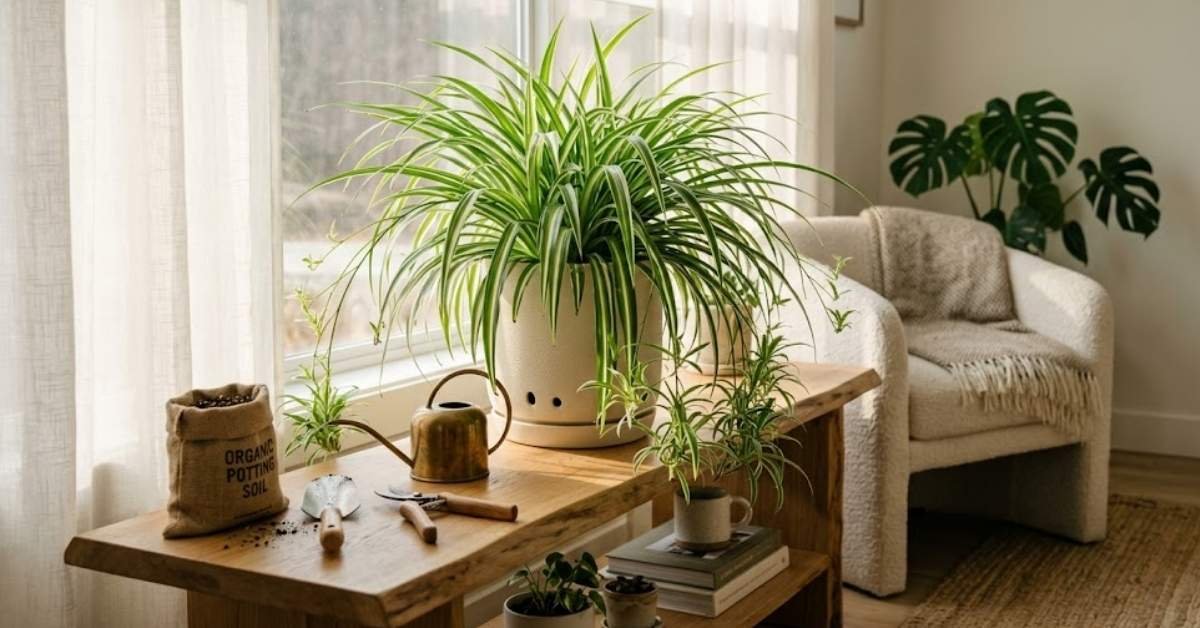
I still remember the first plant I ever owned. It was a scraggly Spider Plant (Chlorophytum comosum) that I kept in my college dorm room. Despite my lack of experience back then, that plant didn’t just survive; it thrived and eventually produced dozens of “babies” that I gave away to friends. That’s the beauty of this species it’s forgiving, architectural, and incredibly rewarding.Spider plant care is easier than most people think. However, small mistakes can stop your plant from thriving. If you want fuller leaves, no brown tips, and fast-growing babies, you need the right strategy. This guide shows you exactly how to grow a healthy spider plant indoors.
In my years of working as a horticulturist across the US, I’ve found that while spider plant care is often marketed as “foolproof,” there are a few uniquely American household habits (like our love for ice-cold AC) that can trip up even a well-meaning plant parent. If you’re looking to turn your brown thumb green, this guide is designed to help you master the nuances of keeping these classic beauties happy.
Quick Care Reference for Skimmers
| Feature | Requirement | Expert Note |
| Light | Bright, Indirect Sun | Too much direct sun can scorch the “leaves.” |
| Water | Moderate | Prefers to dry out slightly between soakings. |
| Potting Soil | Well-draining | Use a standard indoor mix with extra perlite. |
| Temperature | 60°F – 80°F | Sensitive to sudden drafts from AC vents. |
| Feeding | Monthly (Spring/Summer) | Use a balanced liquid fertilizer at half strength. |
| USDA Zones | 9–11 | Can live outdoors year-round in the South/California. |
Understanding Your Home’s Light for Better Spider Plant Care
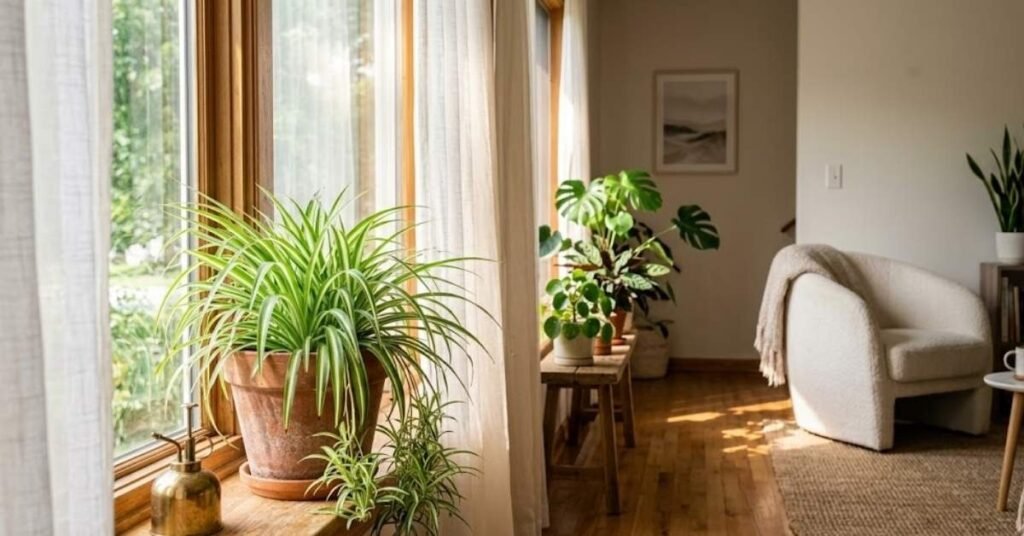
One of the most common questions I get is, “Where should I put this thing?” I’ve noticed that many people assume “low light” means a dark corner with no windows. In reality, successful spider plant care starts with bright, filtered light.
If you live in a typical US suburban home with North-facing windows, you can place your plant right on the sill. However, if you have big, South-facing windows, move the plant a few feet back. In my experience, those intense afternoon rays can actually “bleach” the beautiful variegation right out of the leaves.
Personal Pro-Tip
If you notice your plant’s leaves looking pale or translucent, it’s likely getting too much sun. If the stripes are fading and the plant looks “leggy,” it’s begging for more light. I always recommend a West-facing window filtered by a sheer curtain for the perfect balance.
Mastering the Water Faucet: The Key to Spider Plant Care
Watering is where most Americans go wrong. We tend to be “over-carers,” reaching for the watering can every time we see a speck of dry dirt. But the thing about these plants is that they have thick, tuberous roots that store water like a camel.
I’ve found that the best way to handle the watering aspect of spider plant care is the “finger test.” Stick your finger an inch into the potting soil. If it’s dry, head to the faucet. If it’s still damp, walk away. Another huge factor in the US is our tap water. Many municipalities add fluoride, and Spider Plants are notoriously sensitive to it.
Personal Pro-Tip
If you start seeing brown tips on your leaves, it’s probably not a “watering” frequency issue—it’s a water quality issue. I suggest using distilled water or even just collecting rainwater. If that’s too much work, let your tap water sit in an open container overnight before using it; this helps some chemicals dissipate.
Choosing the Right Soil and Pots for Spider Plant Care
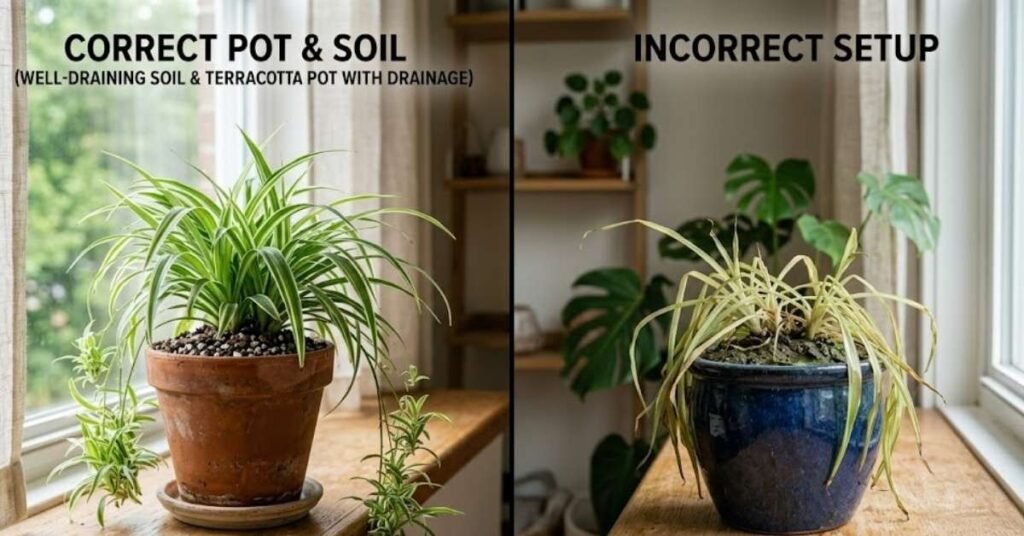
You don’t need fancy, expensive substrates for this plant. I usually suggest a high-quality, peat-based potting soil mixed with a handful of perlite for extra drainage. Because their roots grow so aggressively, they can actually crack plastic pots if they get too crowded!
In my years of repotting these, I’ve found they actually enjoy being a little “snug” in their pots. Being slightly root-bound often triggers the plant to send out those long runners with white flowers and “babies” (spiderettes).
Personal Pro-Tip
When you do repot, only go up one size (e.g., from a 6-inch to an 8-inch pot). If the pot is too big, the excess potting soil holds onto too much water, which can lead to root rot before the plant has a chance to settle in.
Avoiding Common Pitfalls in Spider Plant Care
Every home environment in the US has its own challenges. I’ve seen plants thrive in humid Florida porches and struggle in dry, heated Chicago apartments.
- The AC Vent Trap: We love our central air, but a Spider Plant sitting directly in the path of an AC vent will dry out and drop leaves. I’ve noticed that the constant “blast” of dry air mimics a drought, even if the soil is wet.
- The “Fall Frizzle”: As we transition into Fall and turn the heaters on, the humidity in our homes plummets. This is when those brown tips usually start appearing.
- Fertilizer Burn: I’ve seen many people over-fertilize in an attempt to get more “babies.” Too much “food” actually causes salt buildup in the soil, which hurts the roots.
Personal Pro-Tip
To combat dry indoor air during the Winter months, I don’t bother with misting—it doesn’t actually do much for humidity. Instead, group your plants together or use a small humidifier. I’ve found that grouping plants creates a little “micro-climate” that keeps everyone happier.
Troubleshooting: Why is My Spider Plant Struggling?
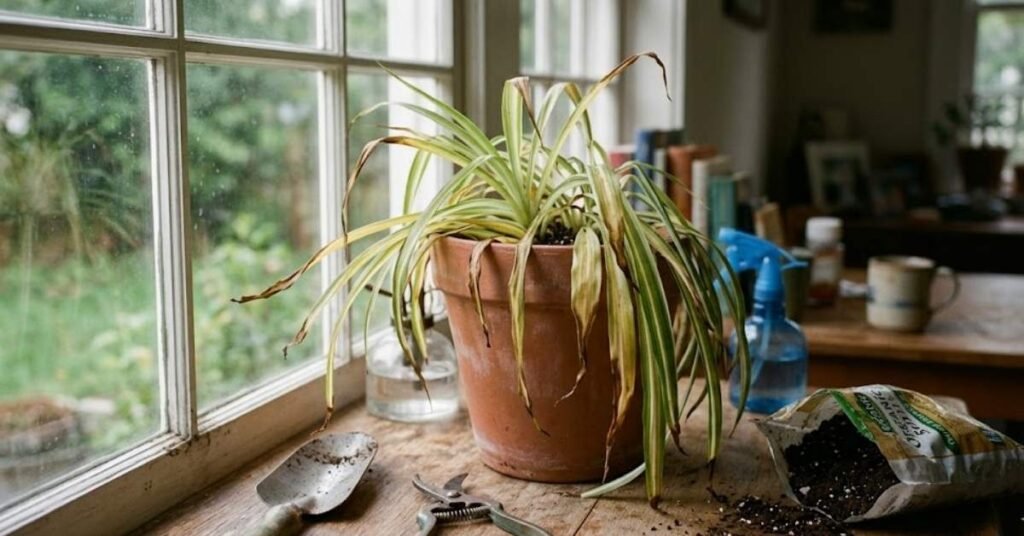
Even with the best spider plant care, you might run into a few hiccups. Here is how I handle the most frequent complaints:
- Brown Leaf Tips: As mentioned, this is usually fluoride in the water or low humidity. Snip them off with sharp scissors at an angle to mimic the leaf shape.
- Yellowing Leaves: This is almost always a sign of overwatering. Check the roots; if they are mushy and brown instead of white and firm, you’ve got rot.
- The Plant is “Greying”: If the leaves look dull and grayish, the plant is likely thirsty or has a pest issue like spider mites. Give the leaves a good wipe with a damp cloth.
Is the Spider Plant Safe for Cats and Dogs?
Good news for my fellow pet owners: The ASPCA lists the Spider Plant as non-toxic to both cats and dogs. However, there is a catch. I’ve noticed that cats, in particular, are obsessed with this plant. The leaves are “grassy” and dangle perfectly for swatting. Interestingly, Spider Plants contain compounds that are mildly hallucinogenic to felines (think catnip but different). If your cat eats too much, they might end up with an upset stomach or some “trippy” behavior.
Personal Pro-Tip
To keep your cat from treating your plant like a buffet, I recommend hanging your Spider Plants. They look better cascading from a height anyway, and it keeps your feline friends from shredding the foliage.
Advanced Spider Plant Care FAQs
1. Why isn’t my plant producing any “babies”?
Usually, this is a light issue. I’ve found that plants kept in lower light will grow leaves but won’t have the energy to produce runners. Move it closer to a window.
2. Can I grow a Spider Plant outdoors?
If you are in USDA Zones 9-11, absolutely! They make great groundcovers or hanging basket plants for porches. Just bring them inside if a rare frost is predicted.
3. My plant is flowering, but where are the babies?
The “babies” (spiderettes) form at the tips of the long stems after the small white flowers fade. Be patient; it takes a few weeks for the little plantlets to start looking like miniatures of the parent.
4. How often should I repot my Spider Plant?
I typically repot every two years. These plants have “aggressive” roots that will eventually push the soil up and out of the pot.
5. Should I cut off the long runners?
It’s up to you! If you want a bushier plant, cut them off. If you like the “jungle” look or want to propagate new plants, let them grow.
6. Can I use water from my “Tap” if I have a softener?
I wouldn’t. Water softeners replace minerals with salts, which can be even harder on spider plant care than standard tap water.
7. Why are the leaves on my plant folding in half?
This is a defense mechanism. The plant is likely extremely thirsty or under heat stress. Give it a deep soak in the sink and it should perk up within a few hours.
My Final Takeaways for Long-Term Spider Plant Care
Looking back at that first scraggly plant in my dorm room, I realize the best part of spider plant care isn’t just keeping a plant alive—it’s the community it creates. These plants are the ultimate “pay it forward” greenery. Once you get the hang of their light and water preferences, you’ll find yourself with an endless supply of spiderettes to gift to neighbors, coworkers, or that friend who claims they “kill everything.”
In my years of consulting for homes across the US, I’ve seen these plants survive a lot—from dark basements in Ohio to drafty lofts in Seattle. They are resilient, but they truly thrive when you treat them like a partner rather than a decoration. Don’t stress the occasional brown tip or a leaf that gets “trimmed” by a curious cat. Just keep an eye on your faucet habits, keep them out of the direct path of your AC vents, and enjoy the lush, jungle-like vibes they bring to your space.
Personal Pro-Tip
Don’t be a perfectionist! I’ve seen too many people throw away a perfectly healthy plant because of a few brown tips. In our dry American homes—especially during the Fall and Winter when the heat is cranking—a little browning is almost a rite of passage. Just give them a quick “haircut” with sharp scissors and move on. As long as the center of the plant is pushing out new, green growth, your spider plant care routine is doing just fine.

Amin Khalid is a professional horticulturist and the founder of LeafyWisdom. With a deep passion for home gardening and horticultural research, he specializes in providing practical, easy-to-follow care guides for indoor plants. Amin’s goal is to simplify gardening for everyone and help fellow plant lovers build their own thriving green spaces.