
Day: April 30, 2026

  • Why Gravel Gardening for Water Conservation USA is the Future of Your Backyard
    Why Gravel Gardening for Water Conservation USA is the Future of Your Backyard

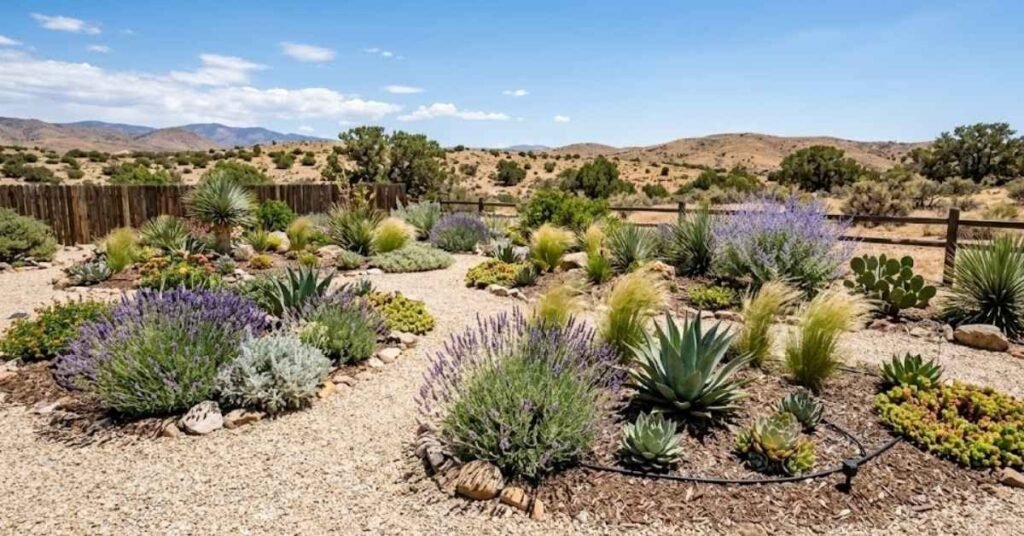
    I’ve spent years watching American lawns struggle. From the scorching high deserts of Arizona to the humid suburbs of the Mid-Atlantic, I’ve seen homeowners dump thousands of gallons of water from the faucet just to keep a patch of thirsty grass alive. It’s a cycle that’s getting harder to maintain as water restrictions become the new normal across the country.Gravel gardening for water conservation USA is quickly becoming the future of sustainable landscaping. Across the United States, homeowners are replacing thirsty lawns with water-saving gravel gardens that require less maintenance and dramatically reduce water use

    That is why I’m such a massive advocate for gravel gardening for water conservation USA. This isn’t just “throwing rocks over dirt.” It’s a specialized horticultural technique where we plant directly into a deep layer of crushed stone. In my experience, it’s the single most effective way to have a lush, vibrant garden without the massive water bill or the constant weekend maintenance.

    Quick Stats: Gravel Gardening at a Glance

    FeatureRequirementExpert Observation
    Gravel Depth4 to 5 inchesThinner layers allow weeds to poke through easily.
    MaintenanceUltra-LowForget mowing; just occasional weeding and debris removal.
    Water SavingsUp to 80%Drastically reduces reliance on the garden hose.
    Best ZonesUSDA Zones 3–11Versatile across almost all US climates.
    Soil TypeLean, unamended soilAvoid rich potting soil or organic fertilizers.

    The Core Benefits of Gravel Gardening for Water Conservation USA

    When most people think of gravel, they think of a hot, sterile parking lot. But in the world of professional horticulture, a gravel garden is a living sponge. By using a deep layer of aggregate, we create a mulch that never breaks down, keeps the soil cool, and prevents evaporation.

    In my years of designing these spaces, I’ve found that gravel gardening for water conservation USA works so well because it forces plants to grow deep, resilient root systems. Instead of being “spoiled” by surface water, they dig deep into the earth to find moisture, making them much more likely to survive a brutal American Summer heatwave without drooping.

    Personal Pro-Tip

    Always use “crushed” stone rather than “pea” gravel. Crushed stone has angular edges that lock together, providing a stable surface to walk on. Pea gravel is round and feels like walking through a ball pit—it’s incredibly frustrating when you’re trying to move a wheelbarrow or a lawn chair!

    Choosing the Right Plants for Gravel Gardening for Water Conservation USA

    The “secret sauce” to a successful gravel garden is picking plants that actually like “lean” living. In the US, we have a tendency to over-fertilize, but gravel-loving plants actually hate that. They want sharp drainage and very little organic matter around their crowns.

    I always recommend starting with North American natives. If you’re in USDA Hardiness Zone 6 or 7, plants like Asclepias tuberosa (Butterfly Weed) or Echinacea (Coneflower) thrive in gravel. They look stunning against the gray or tan stone and provide a feast for local pollinators. If you are in a warmer, drier zone, agaves and yuccas are your best friends.

    Personal Pro-Tip

    When you plant, don’t just dig a hole in the gravel. Pull the gravel back, dig into the soil below, and then—this is the crucial part—wash the root ball of your plant entirely free of its original potting soil. If you leave that peat-heavy soil on the roots, it acts like a sponge that rots the plant in a gravel environment once the Fall rains hit.

    Common Mistakes Americans Make with Gravel Gardening
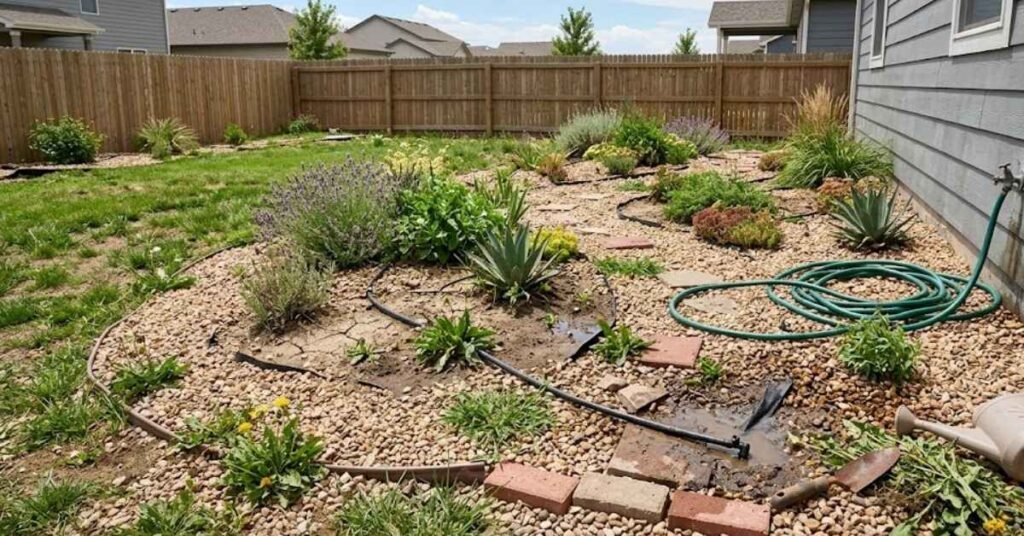
    Even with the best intentions, I see the same three mistakes popping up in suburban yards from coast to coast.

    1. Using Weed Fabric: This is the #1 mistake. Weed fabric eventually clogs with fine silt, preventing water from reaching the roots and making it impossible for your plants to self-seed. In a proper setup, the gravel is your weed barrier.
    2. Over-watering in the Fall: As temperatures drop, your gravel garden needs almost zero supplemental water. I see many people forget to turn off their automatic timers, leading to root rot during the dormant Fall and Winter seasons.
    3. Using the Wrong Soil: If you add rich “garden soil” or compost under your gravel, you’re inviting weeds to a five-star buffet. These gardens thrive on “poor” soil that lacks nitrogen.

    Personal Pro-Tip

    If you’re worried about weeds, don’t reach for the chemical sprays. A quick pass with a propane torch or a specialized “hula hoe” in early Spring is all you need to keep the gravel clean without hurting the local ecosystem.

    Troubleshooting Your Water-Wise Gravel Garden

    Is your garden looking a little lackluster? Here is how I diagnose the most common issues:

    • Yellowing Leaves: This is usually a sign of too much moisture. If we’ve had a rainy Spring, the soil beneath the gravel might be holding onto water. Ensure your site isn’t in a “low spot” where water pools.
    • Stunted Growth: Remember, plants grow slower in gravel than they do in a pampered flower bed. Be patient! It usually takes about two full seasons for a gravel garden to truly “fill in.”
    • Plants Flopping Over: This usually happens if you’ve been too generous with the faucet. If you water too much, the plants grow tall and “soft” instead of sturdy and “tough.”

    Toxicity Warning: Is Gravel Gardening Safe for Your Pets?
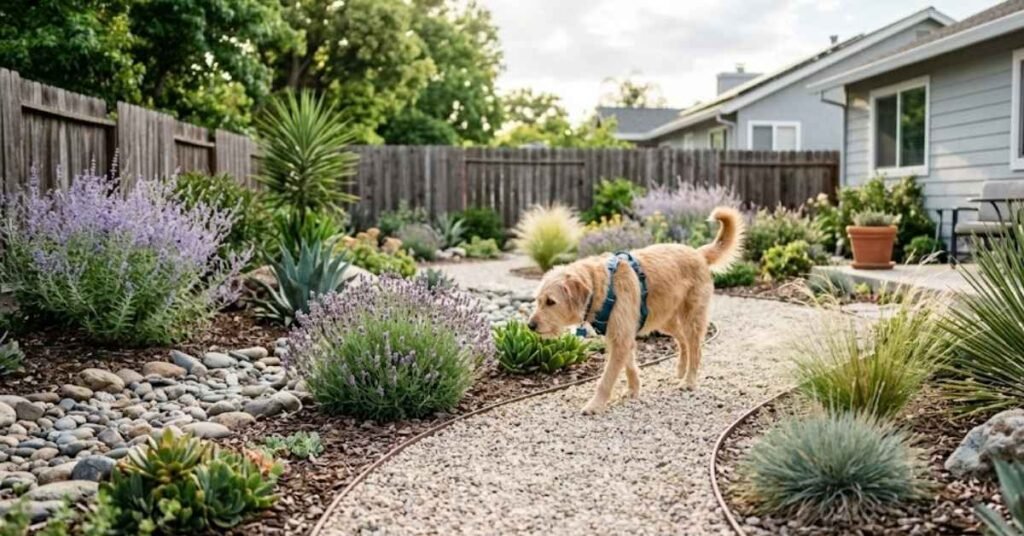
    While the gravel itself is safe, you must be careful about the species you choose for your gravel gardening for water conservation USA project.

    • Safe for Dogs/Cats: Blue Fescue, Coreopsis, and Sedums (most varieties).
    • Toxic to Dogs/Cats: Yucca (can cause stomach upset if chewed) and certain varieties of Euphorbia (the milky sap can irritate skin and eyes).

    Since these gardens encourage “exploring,” I always tell my clients to double-check the ASPCA toxic plant list before heading to the nursery to fill their cart.

    FAQ: What People Are Asking About Gravel Gardening for Water Conservation USA

    1. Does gravel gardening make my yard hotter?

    Actually, if done correctly with plenty of plantings, the transpiration from the leaves keeps the area cool. However, a field of only rocks will create a heat island effect. Aim for at least 50% plant coverage.

    2. Can I do this in a rainy climate like the Pacific Northwest?

    Yes! Gravel gardening is actually fantastic for high-rainfall areas because it prevents the “mushy” soil issues that kill many drought-tolerant plants during wet winters.

    3. Do I ever have to replace the gravel?

    No. Unlike wood mulch that disappears and needs refreshing every year, gravel is a one-time investment. You might need to “top it off” every 5–10 years if it settles into the soil, but that’s it.

    4. How do I clean leaves out of the gravel in the Fall?

    I find that a leaf blower on a low setting works perfectly. It lifts the light leaves but leaves the heavy stone in place. Avoid raking, as it mixes the gravel with the soil below.

    5. Is gravel gardening expensive to install?

    The upfront cost of the stone and the labor to move it is higher than wood mulch, but you save thousands over the long term in water bills, mowing costs, and replacement mulch.

    6. Will my HOA allow a gravel garden?

    Many modern HOAs in the USA are becoming “Xeriscape-friendly” due to new state laws. If you show them a professional design that looks like a garden rather than a rock pit, they are usually much more receptive.

    7. Can I grow vegetables in a gravel garden?

    Not really. Most veggies need high-nutrient soil and constant water from the faucet. Gravel gardening is best suited for ornamental perennials, native grasses, and hardy shrubs.

    Final Thoughts

    Transitioning to gravel gardening for water conservation USA is one of the most rewarding shifts you can make as a gardener. It moves us away from the “struggle against nature” and toward a partnership with our local environment. Once those roots hit the cool soil beneath the stone, you’ll be amazed at how little your garden asks of you—and how much it gives back in beauty.

  • Tired of Fruit Flies? The Best Carnivorous Plants for Gnats in Kitchen Spaces

    Tired of Fruit Flies? The Best Carnivorous Plants for Gnats in Kitchen Spaces

    We’ve all been there. You bring home a beautiful bunch of bananas from the grocery store, and three days later, your kitchen feels like a landing strip for fungus gnats and fruit flies. In my 15 years of professional horticulture, I’ve seen people try everything from vinegar bowls to those sticky yellow cards that look like a middle school art project. But if you want a solution that actually adds beauty to your home, you should look into the best carnivorous plants for gnats in kitchen environments.

    Using plants as pest control isn’t just “cool”—it’s effective. However, these aren’t your typical houseplants. You can’t just stick them in a pot of hardware-store dirt and hope for the best. To make this work, you need to understand how these specialized plants survive in the wild and how to mimic those conditions right next to your fruit bowl.

    Quick Care Guide for Kitchen Carnivores

    FeatureRequirementExpert Observation
    LightBright, Direct/IndirectMost need a sunny South-facing windowsill.
    WaterDistilled or RainwaterNever use water straight from the faucet.
    SoilPeat/Perlite MixNever use standard potting soil with fertilizers.
    Humidity50% – 70%High humidity is key, especially when the AC is blasting.
    Temperature65°F – 80°FKeep them away from cold drafts or heater vents.

    Why the Best Carnivorous Plants for Gnats in Kitchen Areas Outperform Sprays

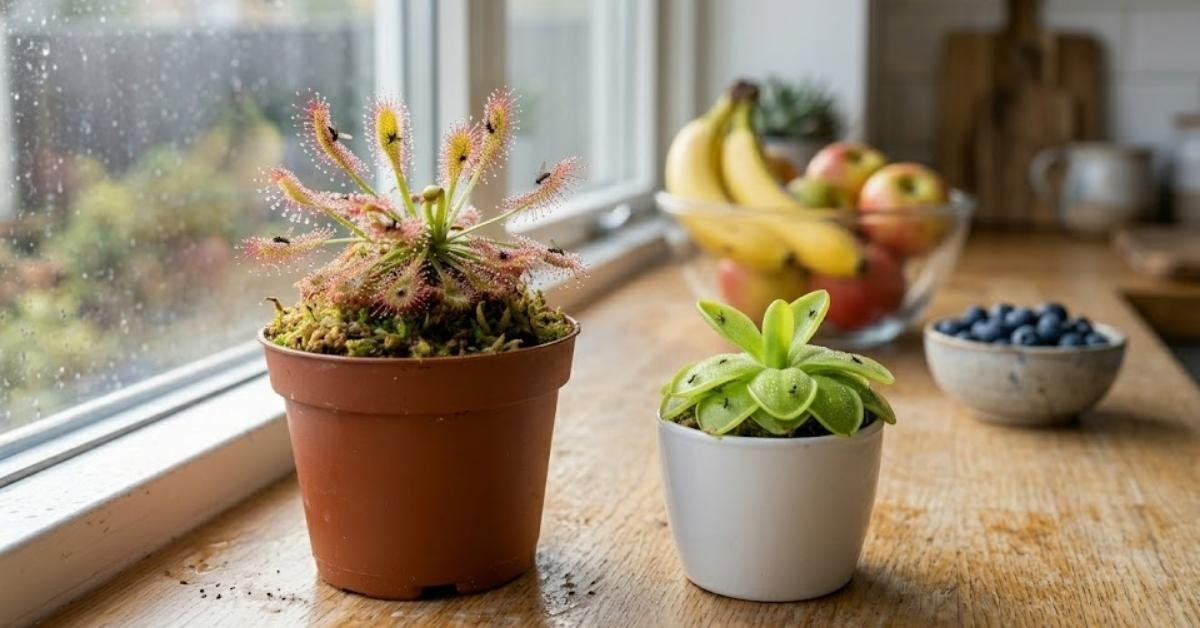
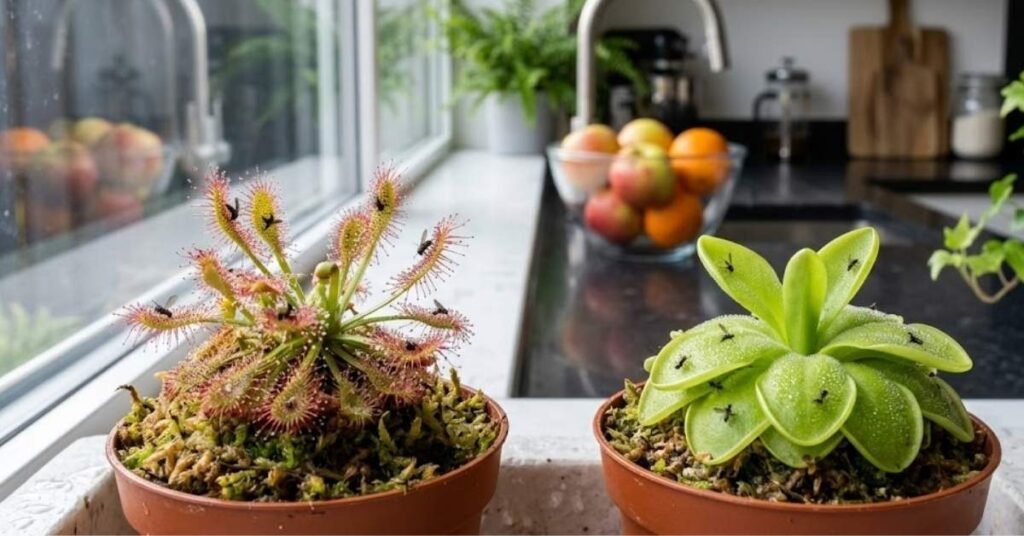
    Two carnivorous plants, a Sundew and a Butterwort, in brown pots on a kitchen windowsill with small insects trapped on their sticky leaves.

    When I first started outfitting kitchens with “predatory plants,” I realized that most people think of the Venus Flytrap first. While iconic, a flytrap is actually a poor choice for gnats—their traps are designed for larger bugs like spiders or flies. For the tiny, annoying gnats that plague American kitchens, you need plants with “passive” traps—sticky surfaces that act like living flypaper.

    The best carnivorous plants for gnats in kitchen settings are those that lure insects with sweet-smelling nectar and then trap them in a permanent embrace. Not only do these plants help clear the air, but they also don’t involve spraying chemicals near your food prep areas.

    Personal Pro-Tip

    If you live in a drier climate or run your Air Conditioning year-round, your indoor air is likely too dry for these bog-dwellers. I suggest sitting your pots in a shallow tray of distilled water. This “tray method” keeps the roots wet and boosts local humidity around the leaves.

    Which are the Best Carnivorous Plants for Gnats in Kitchen Environments?

    If you’re serious about clearing out the pests, you have to pick the right “tool” for the job. In my experience, two specific genera stand head and shoulders above the rest for small insect control.

    Sundews (Drosera): The Sticky Solution

    Sundews are, bar none, the best carnivorous plants for gnats in kitchen windows. They are covered in tiny tentacles tipped with “dew” (which is actually a super-strong mucilage). When a gnat lands, it’s stuck instantly. My personal favorite is the Drosera capensis. It’s hardy, and I’ve seen a single plant catch dozens of gnats in a single week during a bad Spring outbreak.

    Butterworts (Pinguicula): The Living Flypaper

    Often called “Pings,” these look like innocent succulents with slightly greasy leaves. Don’t let the cute appearance fool you; those leaves are a death trap for gnats. They are perfect for kitchen counters because they are low-profile and produce beautiful flowers that look like violets. I’ve found that Pinguicula gigantea is particularly effective because both sides of the leaves are sticky.

    Personal Pro-Tip

    When you buy a Butterwort, check its “cycle.” Many species go through a “succulent phase” in the Fall and Winter where they stop being sticky. If you want year-round gnat control, look for tropical Pings that don’t require a hard dormancy.

    My Top Pick: Sundews as the Best Carnivorous Plants for Gnats in Kitchen Spaces

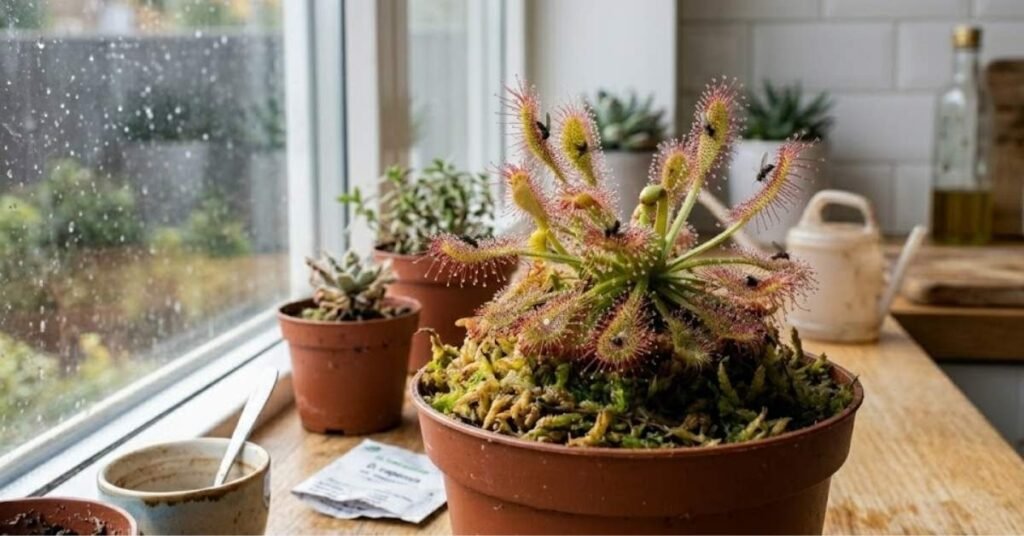
    A Cape Sundew carnivorous plant in a brown pot on a wooden kitchen counter, with several small flies trapped on its sticky, red-tipped leaves near a window.

    If I had to pick just one plant to handle a gnat infestation, it’s the Cape Sundew. Why? Because they are incredibly communicative. If the “dew” on the leaves disappears, the plant is telling you it’s too dry or needs more light. I’ve grown these in everything from small apartments to large greenhouses, and they are the most reliable hunters I’ve ever seen.

    To get the most out of them, place them exactly where the gnats congregate—usually near the sink or the fruit basket. Just make sure that spot gets at least 4-6 hours of sunlight. Without light, the plant won’t produce the nectar that lures the bugs in the first place.

    Avoiding Common Mistakes with Your Kitchen Carnivores

    I’ve had so many people come to me wondering why their “bug-eater” died after two weeks. In the US, our homes are often set up in ways that accidentally kill these plants.

    • The Faucet Mistake: Most American tap water is full of minerals like calcium and sodium. These plants evolved in nutrient-poor bogs. If you water them from the faucet, the minerals will “burn” the roots. You must use distilled water, reverse osmosis water, or collected rainwater.
    • The Wrong Dirt: If you use a bag of “Miracle-Gro” or any standard indoor potting soil, your plant will likely die within a month. The fertilizers in those soils are toxic to carnivorous plants. They need a 50/50 mix of unenriched peat moss and perlite.
    • AC Vent Placement: We love our Air Conditioning, but these plants hate the dry, moving air it creates. If your kitchen windowsill is directly under an AC vent, your plant will lose its “sticky” dew and won’t be able to catch a single gnat.

    Personal Pro-Tip

    If you’re wondering if your water is okay, get a cheap TDS (Total Dissolved Solids) meter. If the reading is above 50 ppm, don’t use it. Stick to the bottled distilled water you find at the grocery store.

    Troubleshooting: Why is my plant struggling?

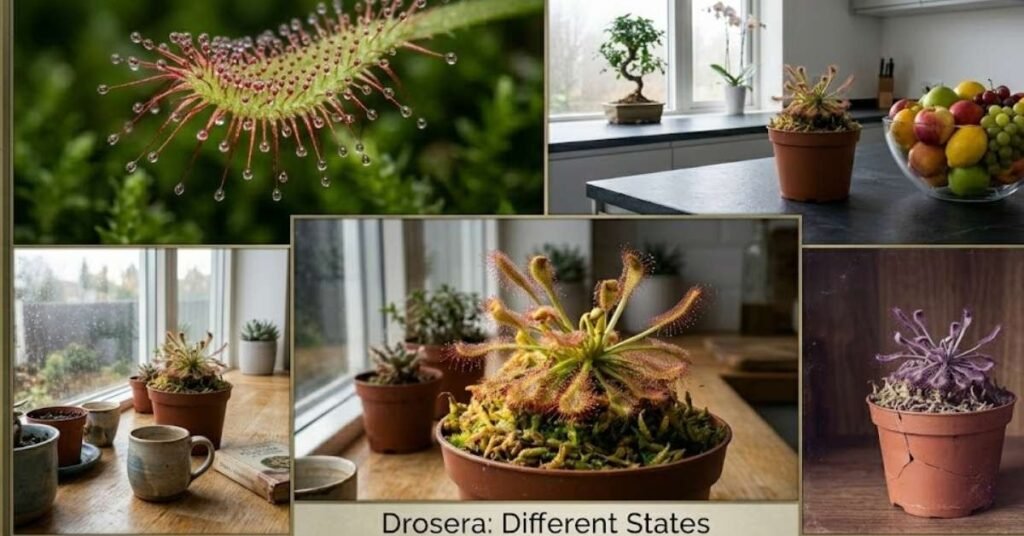
    A collage titled "Drosera: Different States" showing various stages and settings of Sundew plants, including a macro shot of dew-covered tentacles and several potted specimens on kitchen counters and windowsills.

    If your best carnivorous plants for gnats in kitchen corners aren’t looking their best, check these common symptoms:

    • No “Dew” on Sundews: This usually means the humidity is too low or the light is too dim. Try moving it to a brighter window or placing it in a glass terrarium (with an open top).
    • Turning Black/Brown: If the whole plant is turning black, it’s likely root rot (if it’s sitting in too much water) or mineral burn (from the wrong water). If it’s just one leaf, don’t worry—old leaves die off naturally as new ones grow.
    • Stretching/Pale Color: This is “etiolation.” The plant is hungry for light. American kitchens can be dark, so you might need a small LED grow light to keep the plant vibrant.

    Toxicity Warning: Are they safe for your pets?

    This is a major concern for US pet owners. I’m happy to report that Sundews and Butterworts are generally considered non-toxic to cats and dogs. Unlike a Lily or a Poinsettia, these plants won’t cause an emergency vet visit if your curious cat takes a nibble.

    However, the “dew” can be a bit of a sticky mess on fur, and some specialized carnivorous plants (like certain Pitcher plants) have digestive enzymes that might cause a mild stomach upset if ingested in large quantities.

    Personal Pro-Tip

    Even though they aren’t toxic, I keep my plants on a higher shelf or in a hanging glass orb. Cats love the “sparkly” look of Sundews and will often bat at them, which ruins the delicate sticky tentacles the plant uses to catch gnats.

    FAQS: What People Actually Ask About Carnivorous Plants for Gnats

    1. Can I use these plants instead of bug spray?

    Yes! I’ve seen a healthy collection of Sundews and Pings completely replace the need for chemical traps. They won’t wipe out an infestation overnight, but they provide constant, long-term “background” control.

    2. Do I need to “feed” them if there are no gnats?

    In most US homes, there’s always a bug or two. But if your kitchen is surgically clean, you can use a highly diluted foliar spray (like Maxsea) once a month. Just be careful not to overdo it.

    3. Do these plants smell bad?

    Not at all. Unlike the “Corpse Flower” or some large tropicals, Sundews and Butterworts have a very faint, sweet scent that is undetectable to humans but irresistible to gnats.

    4. My Venus Flytrap isn’t catching gnats. Why?

    As I mentioned, the “best” carnivorous plants for gnats in kitchen settings aren’t flytraps. Flytraps are like a bear trap—gnats are just too small to trigger the hairs. Stick with Sundews or Butterworts for the tiny stuff.

    5. Do they need to go outside in the Summer?

    Depending on your USDA Hardiness Zone, they can! Most of these plants thrive outdoors in Zones 8-10. However, if you live in Zone 5 or 6, keep them inside or they’ll freeze.

    6. Can I use “Spring” water from the store?

    No! “Spring” water actually has more minerals added for taste. Stick to Distilled or Purified water labels.

    7. Why do the traps on my plant keep turning black?

    Each trap has a “shelf life.” After it eats 2-3 bugs, that specific leaf or trap will die off. It’s totally normal! Just snip it off with clean scissors to keep the plant looking tidy.

    Final Thoughts on Your Kitchen Jungle

    Finding the best carnivorous plants for gnats in kitchen windows is a rewarding journey. It turns an annoying household problem into a fascinating hobby. Just remember: keep them wet, keep them bright, and keep that faucet water far away from their roots!